Chicks in China — Shanghai to the Pandas
Four friends, one month in China and Tibet, and an itinerary involving planes, boats, bullet trains, mountains, pandas and eventually the Great Wall. We started in Shanghai and almost immediately discovered that China was going to be nothing like we expected.
April 1 — We Made It to Shanghai
We survived the flight, survived our first day and, importantly, wer’e still friends.
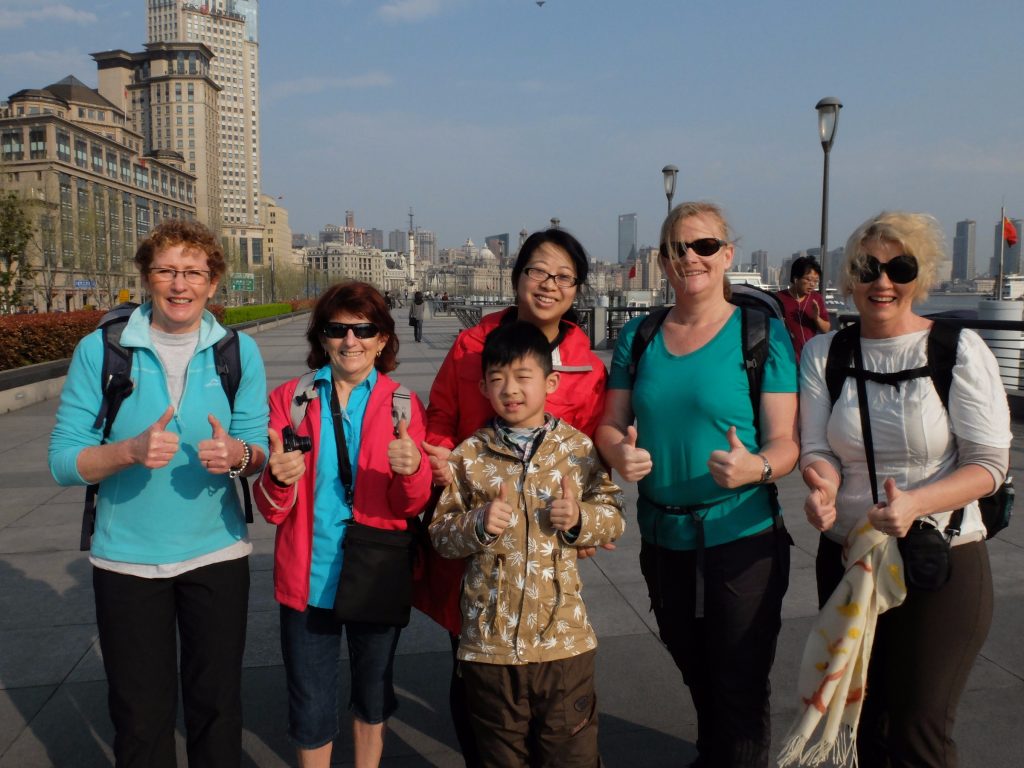
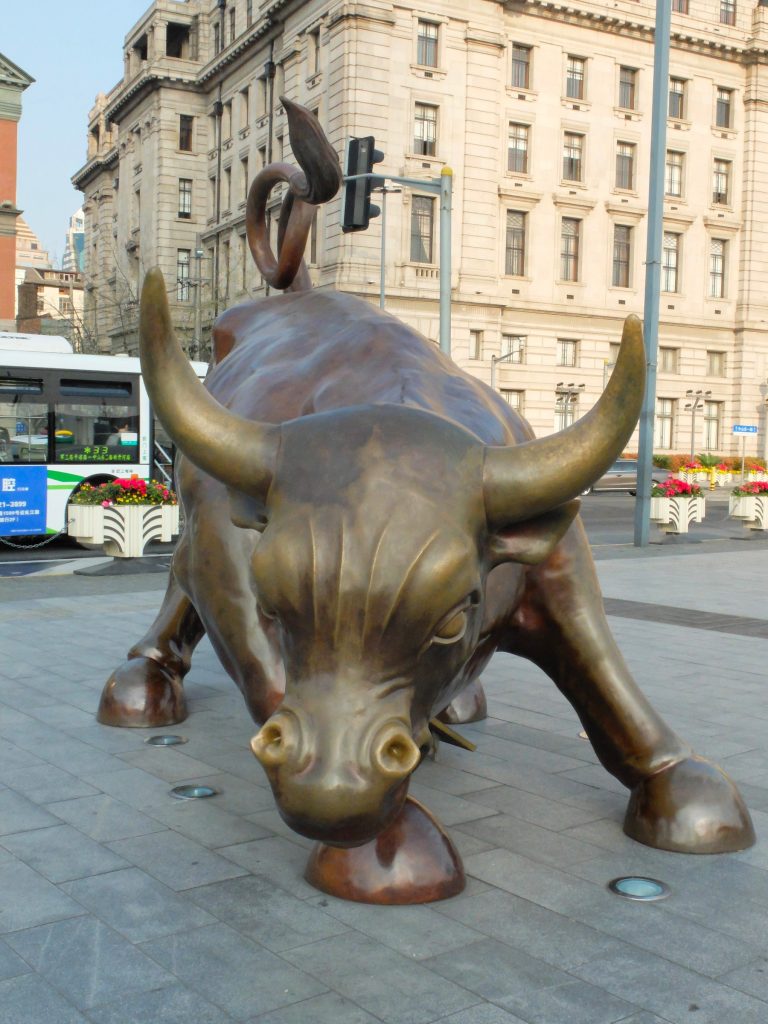
Jet lag had us out of the hotel by 7.30am and walking along The Bund, where Shanghai was already waking up in its own peculiar way. Groups were doing Tai Chi, people were flying kites and an extraordinary number were walking backwards while performing elaborate clapping routines.
The Bund follows the Huangpu River, with the historic buildings of old Shanghai on one side and the futuristic towers of Pudong across the water. Barges constantly moved along the river and random people kept asking to have their photos taken with us.
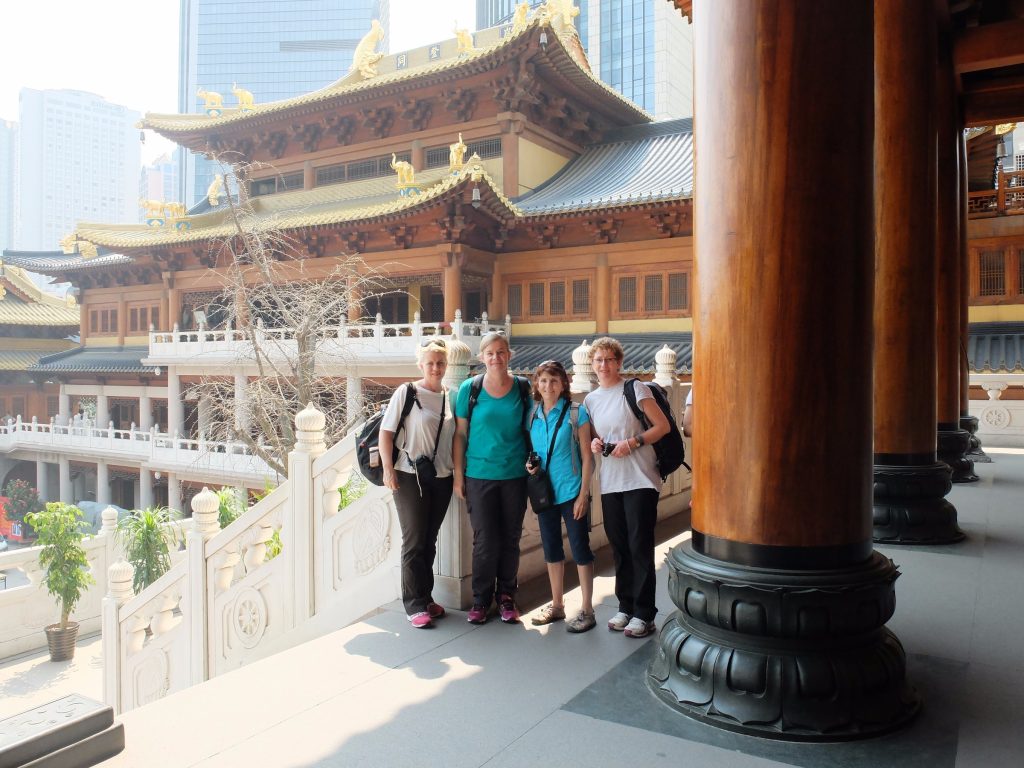
We used the hop-on hop-off bus to explore the city, visited temples, including the Jade Buddha Temple, and found time for some silk shopping. A local friend introduced us to a tiny noodle shop that didn’t look particularly promising from the outside, but the freshly made noodles were excellent.
That evening we crossed the river to Pudong and eventually found the Shanghai World Financial Center. After taking two lifts to the 100th floor, we stepped onto its glass-floor observation deck just as the weather closed in around us.
Wet, tired and hungry, we finished with takeaway from FamilyMart.
China had begun.
April 2 — Shanghai Airport Adventures
One last morning walk along the Bund brought more Tai Chi, backwards walking and photographers setting up along the river.
Then things became interesting.
Our taxi driver took us to the wrong airport.
Once he realised, our quiet taxi ride became something resembling the Shanghai Grand Prix as we raced across the city. Somehow, we made the flight.
Then airport security found a large folding knife in my hand luggage.
I had absolutely no idea it was there.
After surviving that little incident, we raced to the gate — only to discover the flight was delayed anyway.
Eventually we flew to Yichang, where our guide Kitty met us. The delay meant missing our planned sightseeing, so instead she took us to a local supermarket.
It was brilliant.
Packets of dried fish, meat snacks, unfamiliar fruits and foods we couldn’t identify filled the shelves, while we seemed to be almost as interesting to the local shoppers as the supermarket was to us.
After an enormous Chinese dinner, we travelled another 1½ hours towards the Yangtze because maintenance on the Three Gorges locks meant our cruise ship couldn’t dock in its usual location.
Late that night we finally boarded the Victoria Anna.
April 3 — Three Gorges Dam and the Bamboo Forest
Our first cruise excursion took us to the enormous Three Gorges Dam.
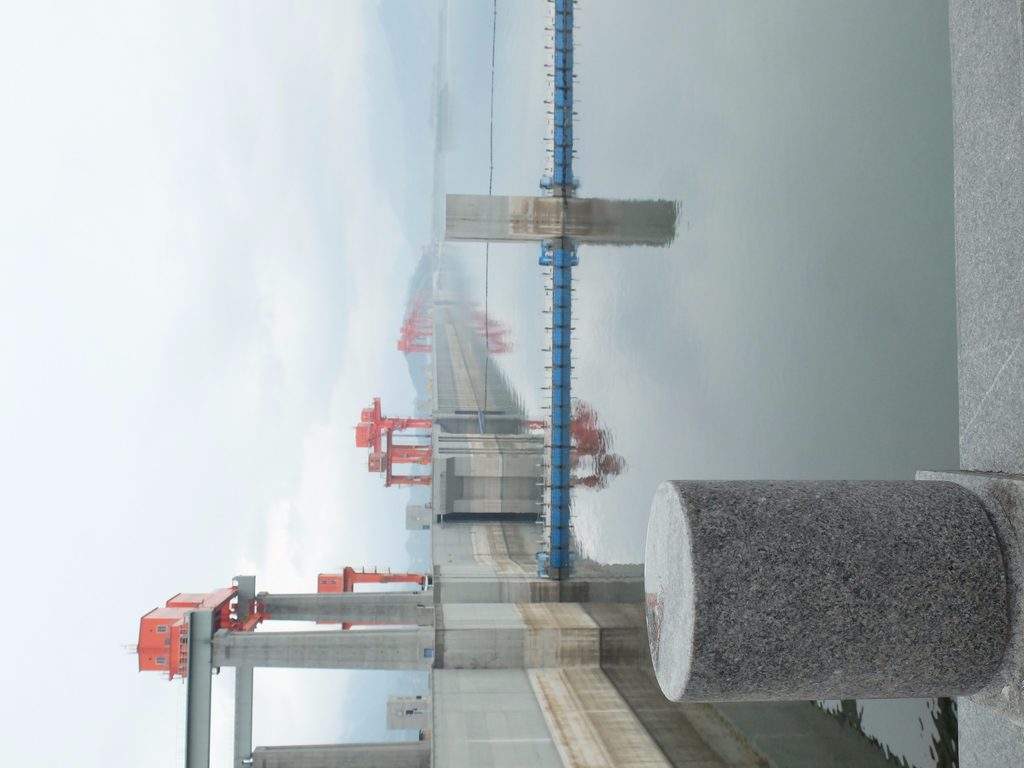
Whatever you think about its environmental and social impact, the scale of the engineering is extraordinary. The project dramatically changed the Yangtze landscape and required the relocation of more than a million people.
Normally cruise ships pass through the five-stage locks, but annual maintenance meant we had to bypass them by road.
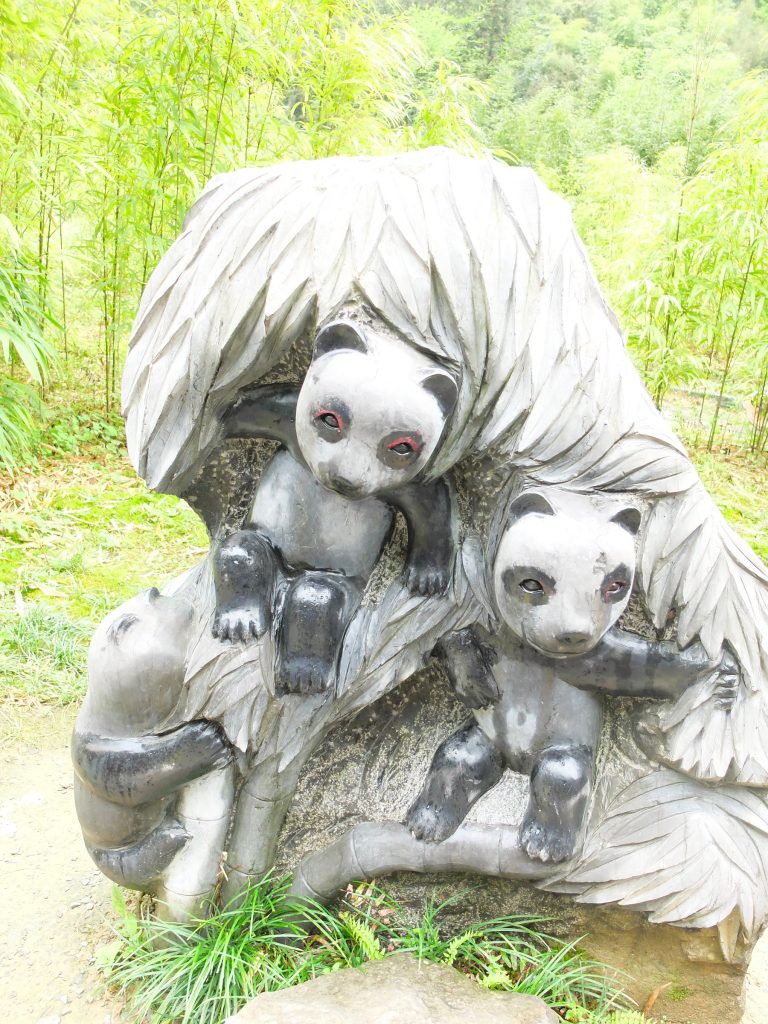
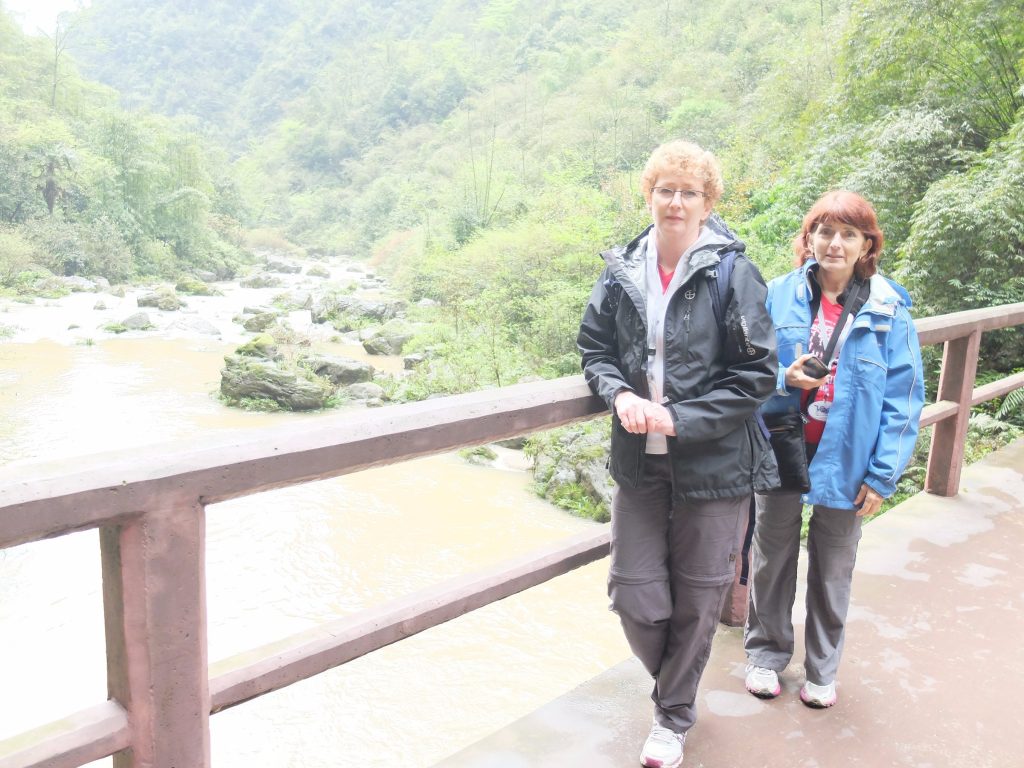
In the afternoon we paid extra for an excursion into a nearby bamboo forest, and it became one of the highlights of the cruise.
The drive passed tea plantations, vegetable gardens and small communities before we entered a landscape of towering mountains, waterfalls, gorges and seemingly endless varieties of bamboo.
We also visited the Qu Yuan Ancestral Hall, relocated to higher ground before flooding from the dam reached the original site.
After around 19,000 steps, we returned to the boat for the captain’s welcome, dinner and a colourful cultural show.
[
April 4 — Through the Three Gorges
We started with Tai Chi on the ship’s deck before cruising through the spectacular Wu Gorge and past Goddess Peak.
Small boats then took us into the narrower Goddess Stream, where our guide explained how trackers once physically hauled boats through the shallow water. Grooves left by their ropes can still be seen in the rock.
Back on the Yangtze we passed through Qutang Gorge and the Kui Gate, the dramatic landscape pictured on China’s 10-yuan banknote.
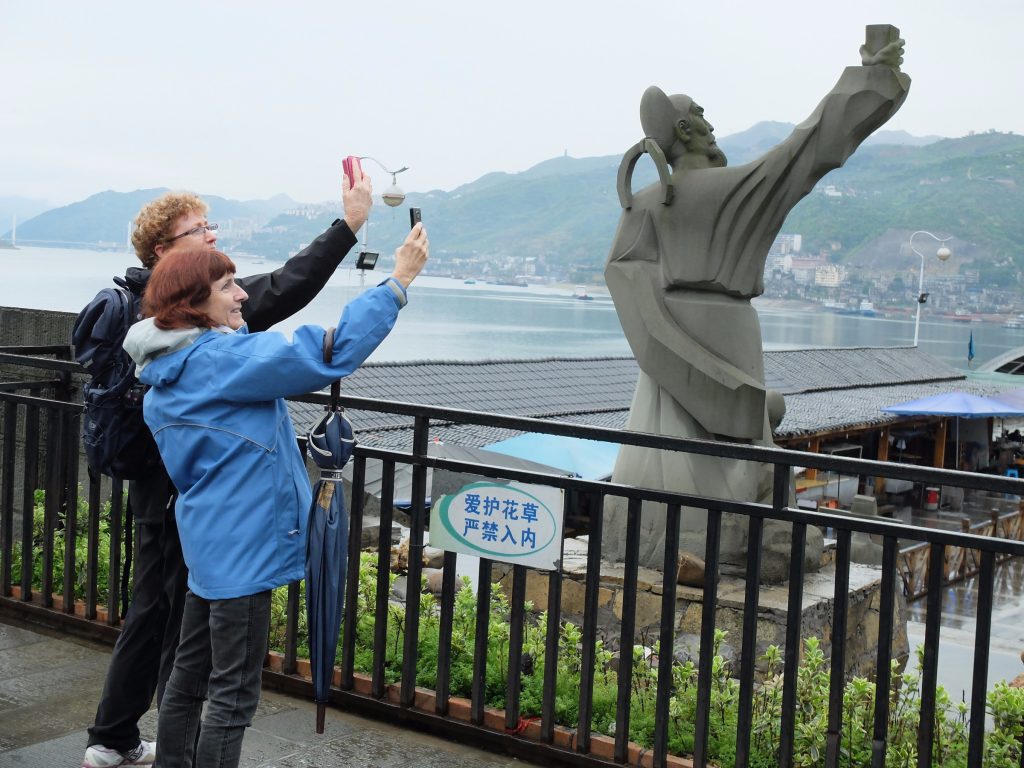
Later we visited White Emperor City, an ancient temple complex overlooking the gorge. This was also where we inexplicably decided everybody needed a Chinese name.
Mine became Fluro Green Emperor Yeung Yeung.
Don’t ask.
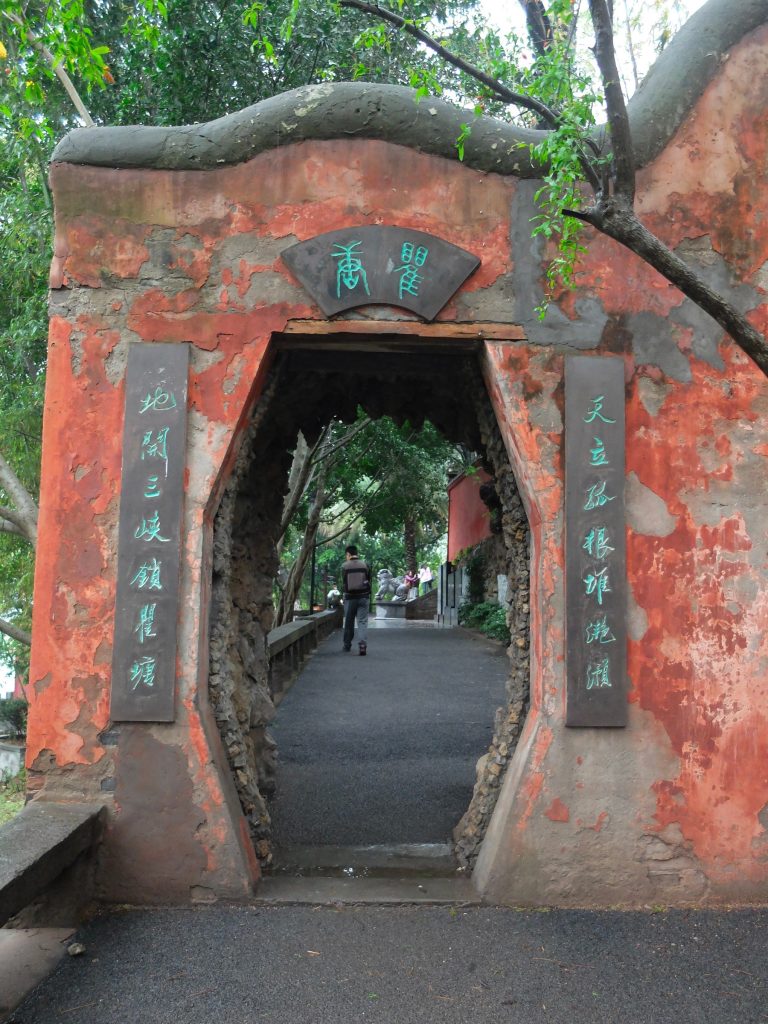
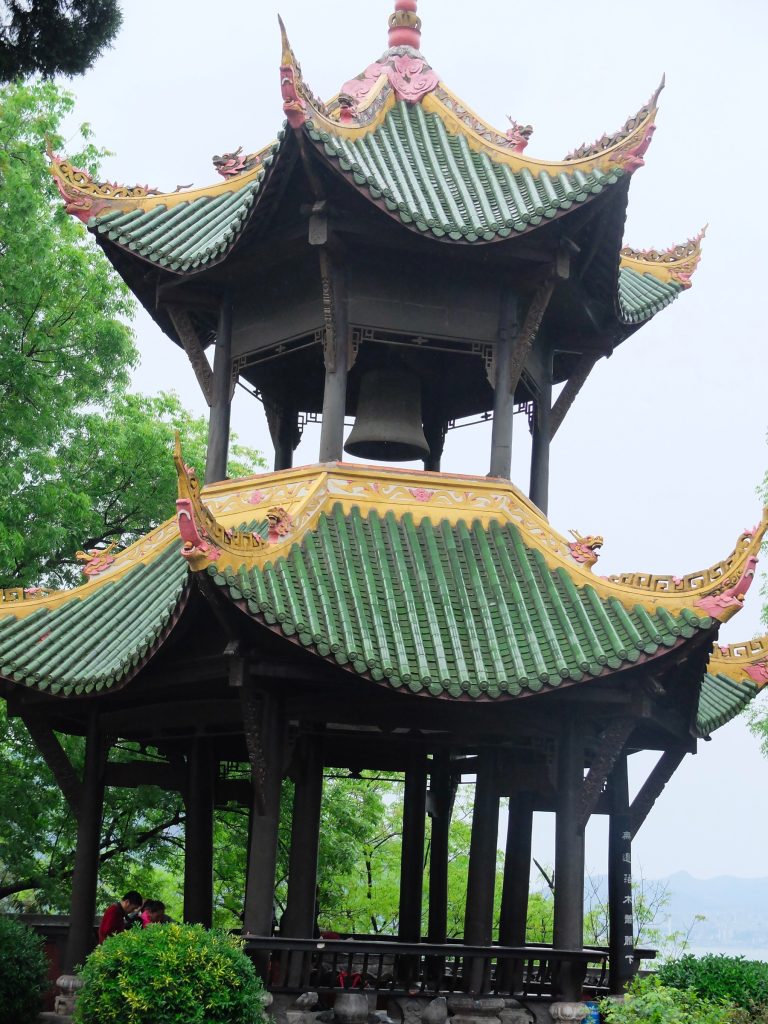
The site contained temples, poetry carved into rock, stories of emperors and examples of the ancient hanging coffins once placed high on the cliffs above the river.
Then it was back to the ship for happy hour.
A very civilised end to another long day.
April 5 — Shibaozhai and the Ghost City
Our morning excursion took us to Shibaozhai, famous for its striking red multi-storey pavilion built against the side of Jade Seal Hill.
To reach it we crossed what was appropriately known as the Drunk Bridge, a suspension bridge that moved enough to make everyone feel slightly unstable.
The red pavilion was built to provide access to the temple at the top of the cliff. Inside were plenty of legends, including a mysterious rice hole that supposedly once supplied enough rice each day to feed the monks — until a greedy monk enlarged it and the rice stopped forever.
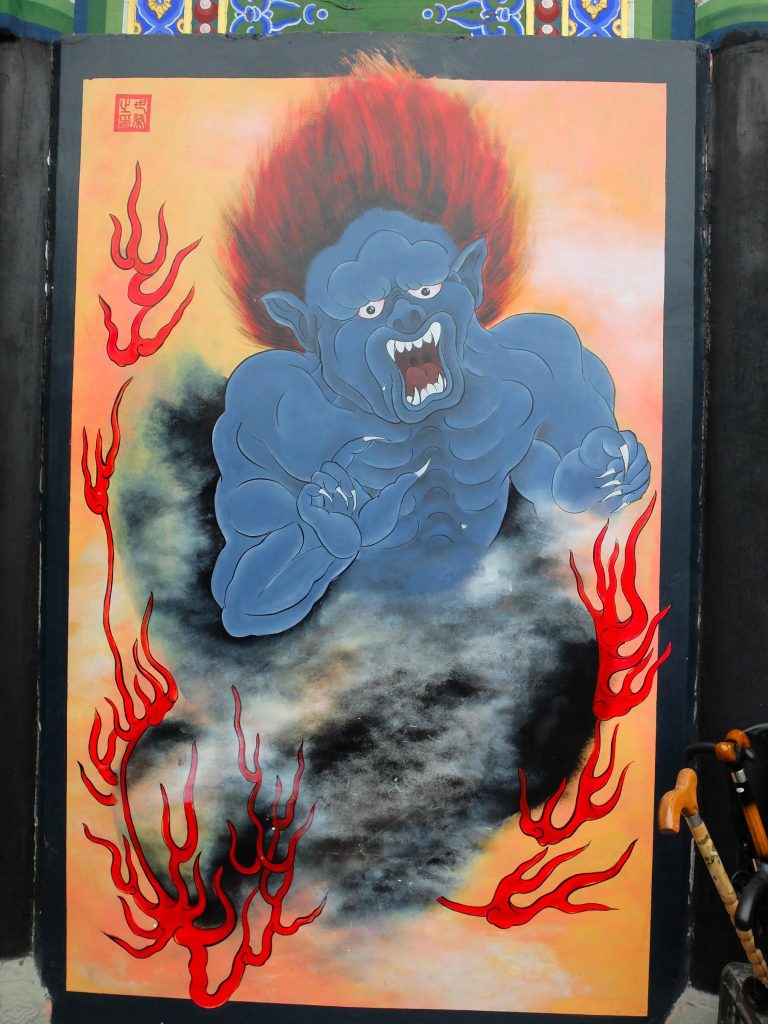
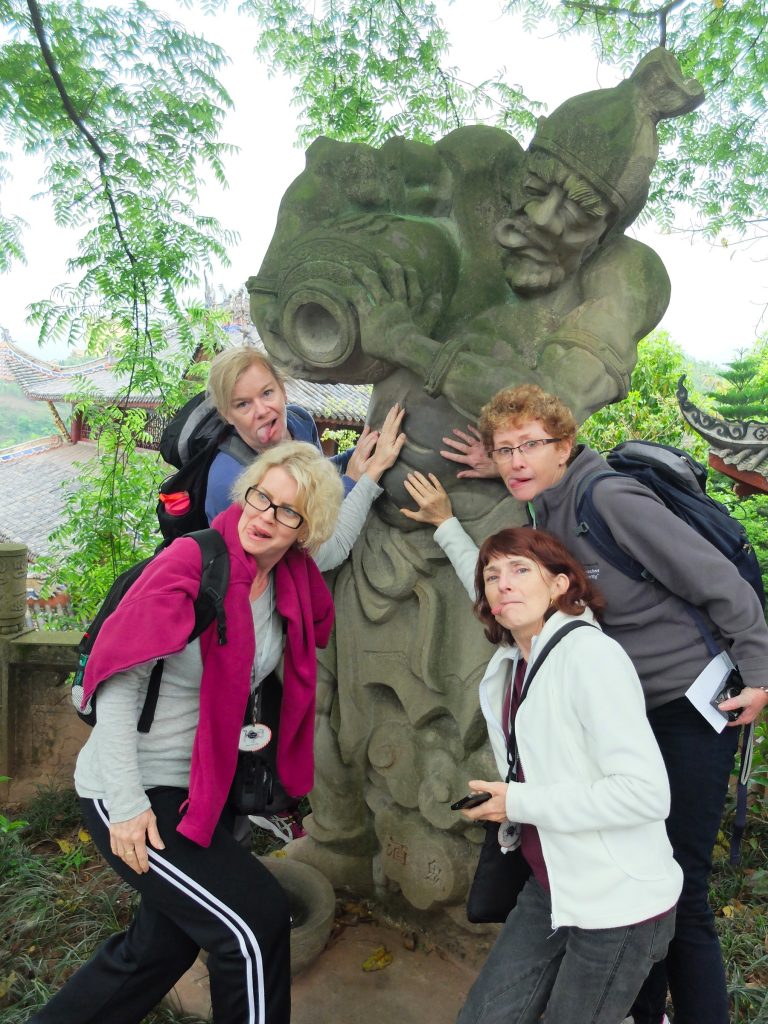
In the afternoon we visited Fengdu Ghost City, a fascinating collection of Taoist and Buddhist temples associated with the Chinese underworld.
The visit involved several symbolic challenges, including climbing the mountain, passing through the gates of hell and balancing on one foot on a brass hemisphere.
We finished our final night aboard with an enormous banquet and, naturally, champagne.
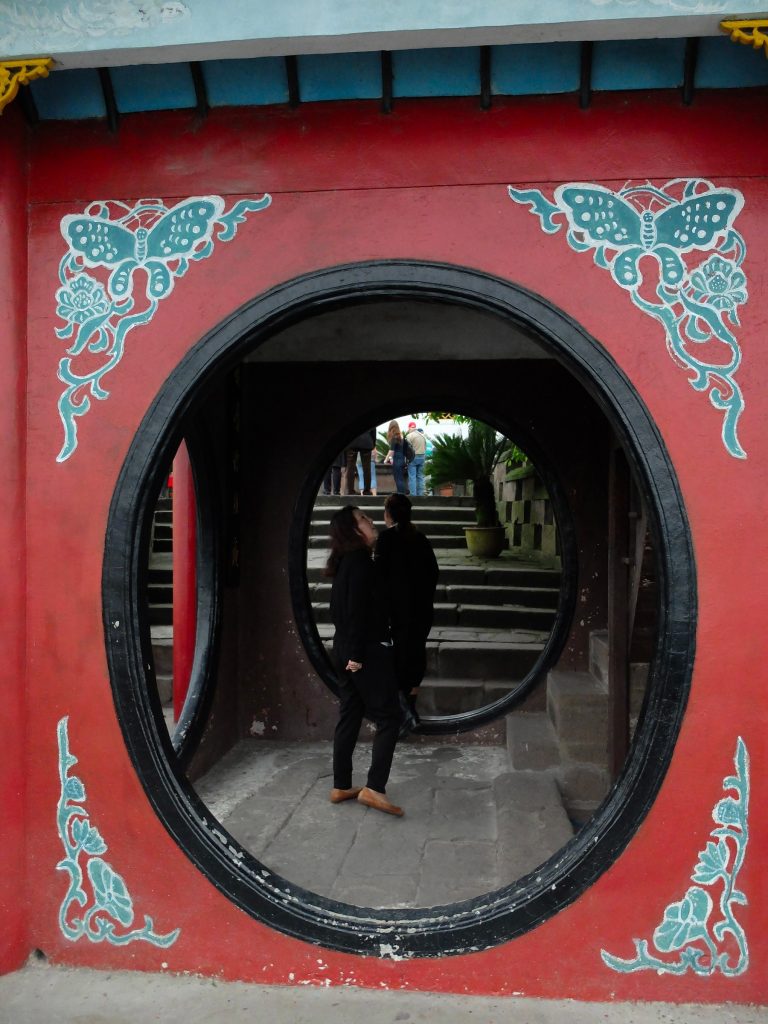
April 7 — Chongqing and the Bullet Train
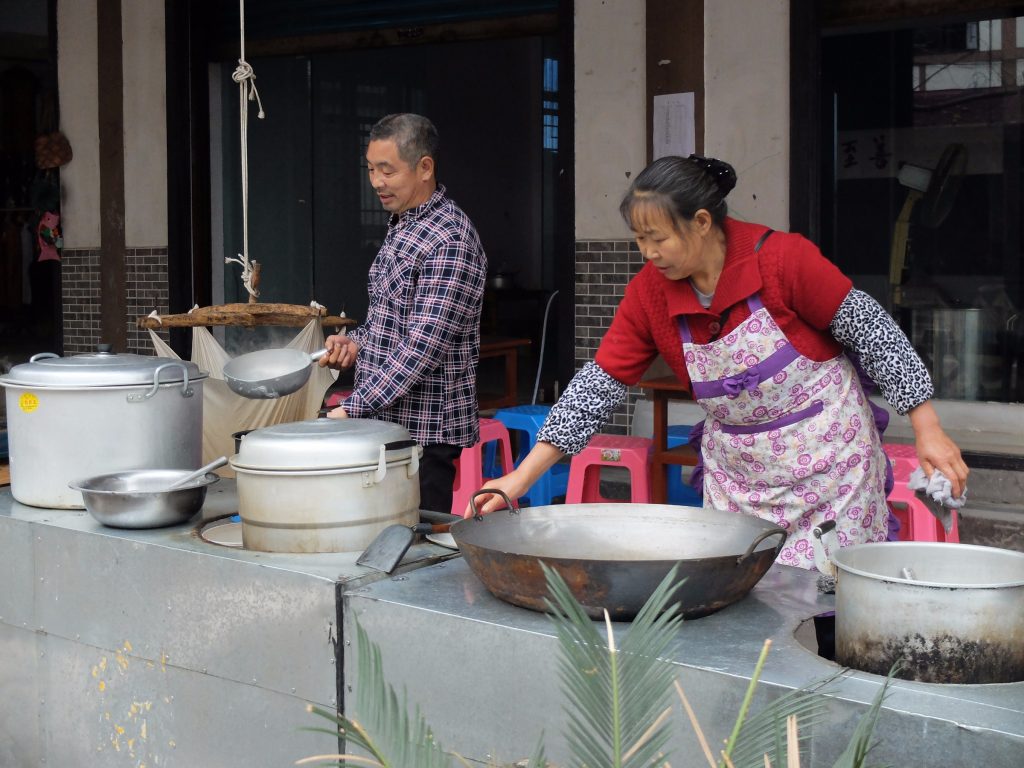
We left the Victoria Anna after breakfast and watched porters carry our luggage up around 100 stairs using poles balanced across their shoulders.
Welcome to Chongqing.
Our guide took us through the old city and then to Ciqikou Ancient Town, where narrow streets were packed with traditional-style buildings, food stalls and shops.
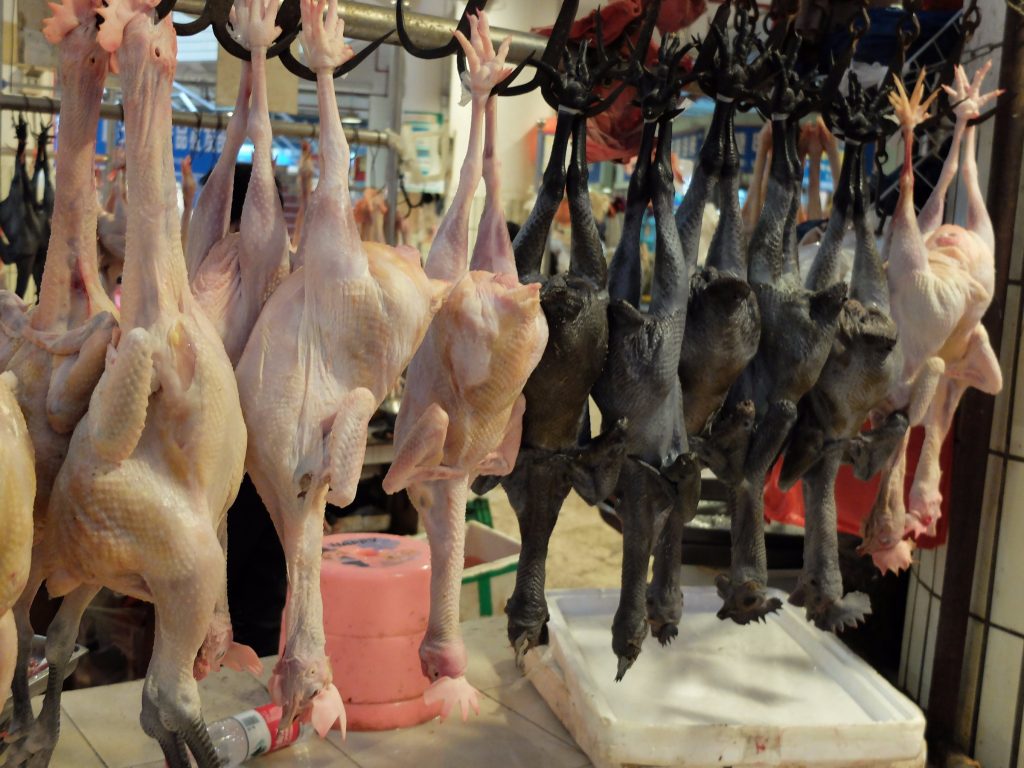
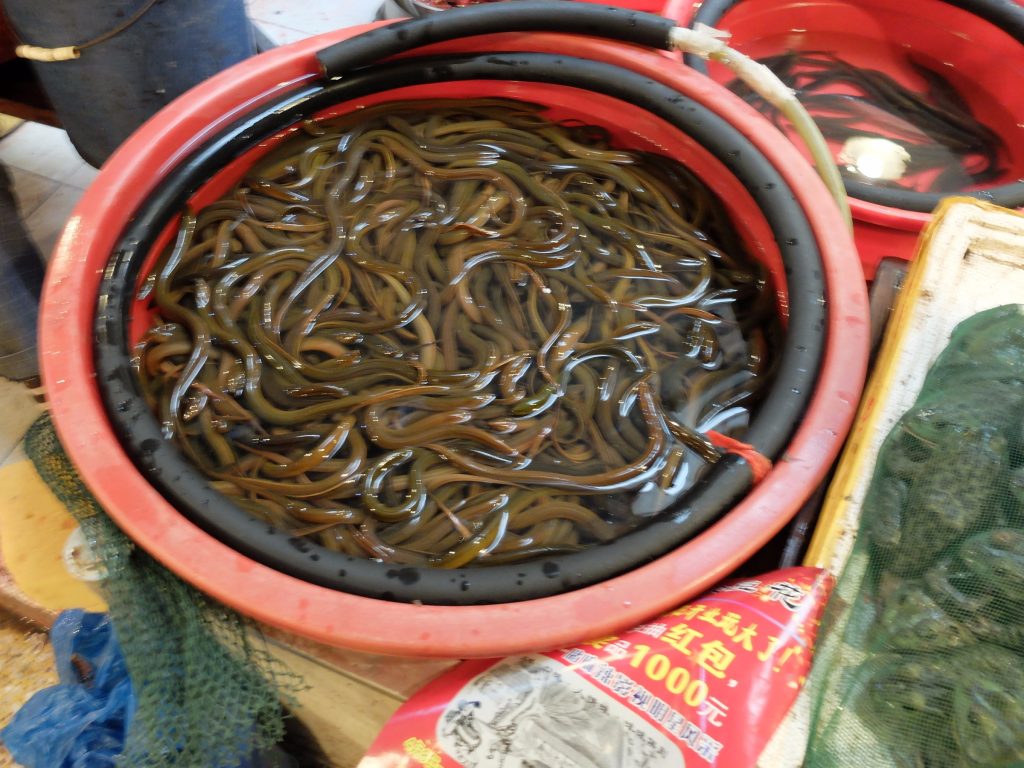
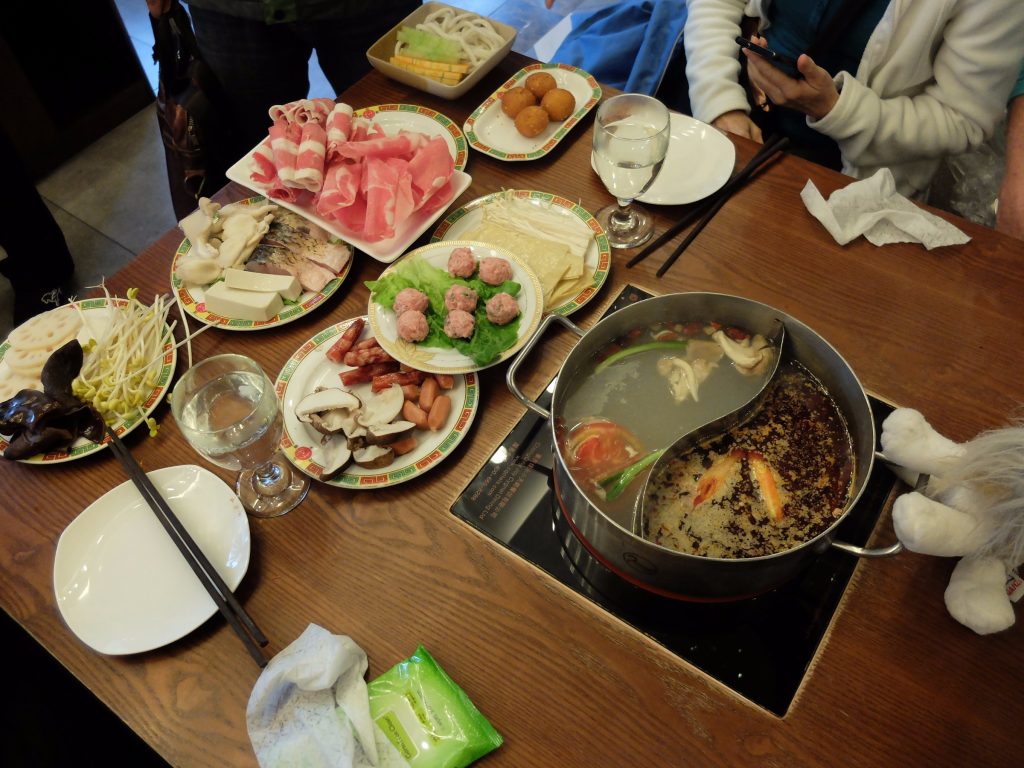
We shared a bowl of freshly made sweet potato noodles, wandered through a local wet market full of fish, eels, frogs and things we couldn’t identify, and then asked our guide to find us proper Sichuan hotpot for lunch.
He took the request seriously.
A divided yin-yang pot sat in the centre of the table: one side mild, the other so fiercely spicy that even a small taste seemed capable of removing several layers of your mouth.
Then it was time for our first Chinese bullet train.
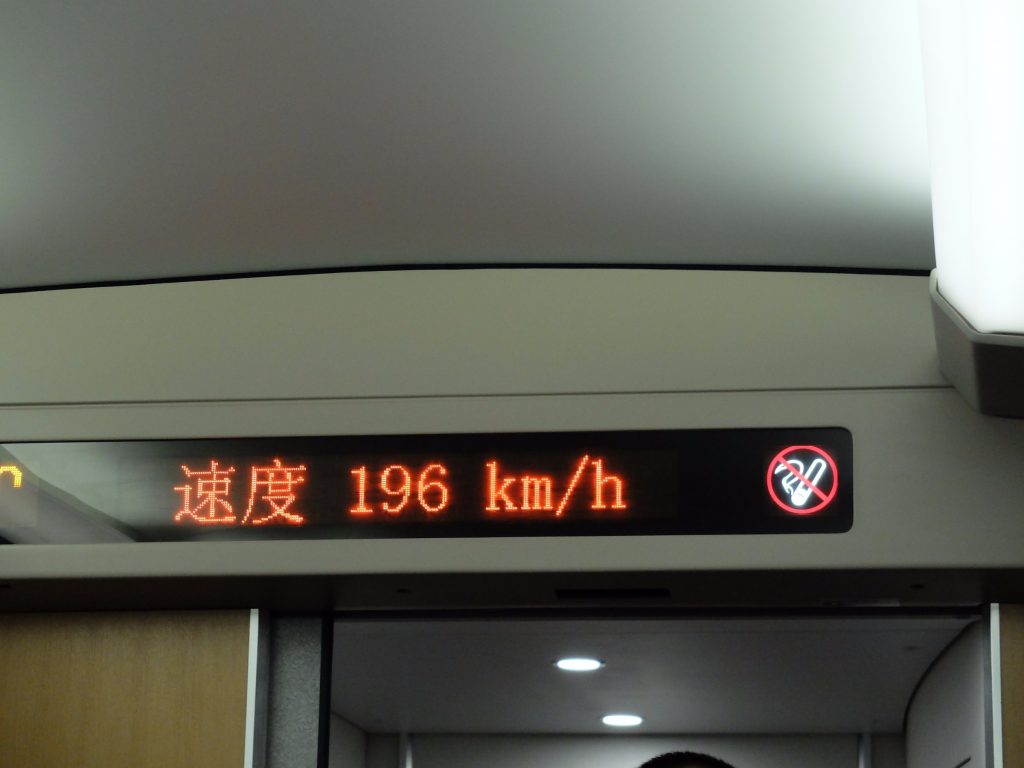
We headed towards Chengdu at nearly 200 km/h while watching the countryside disappear past the window.
April 8 — Ancient Towns and the Giant Buddha
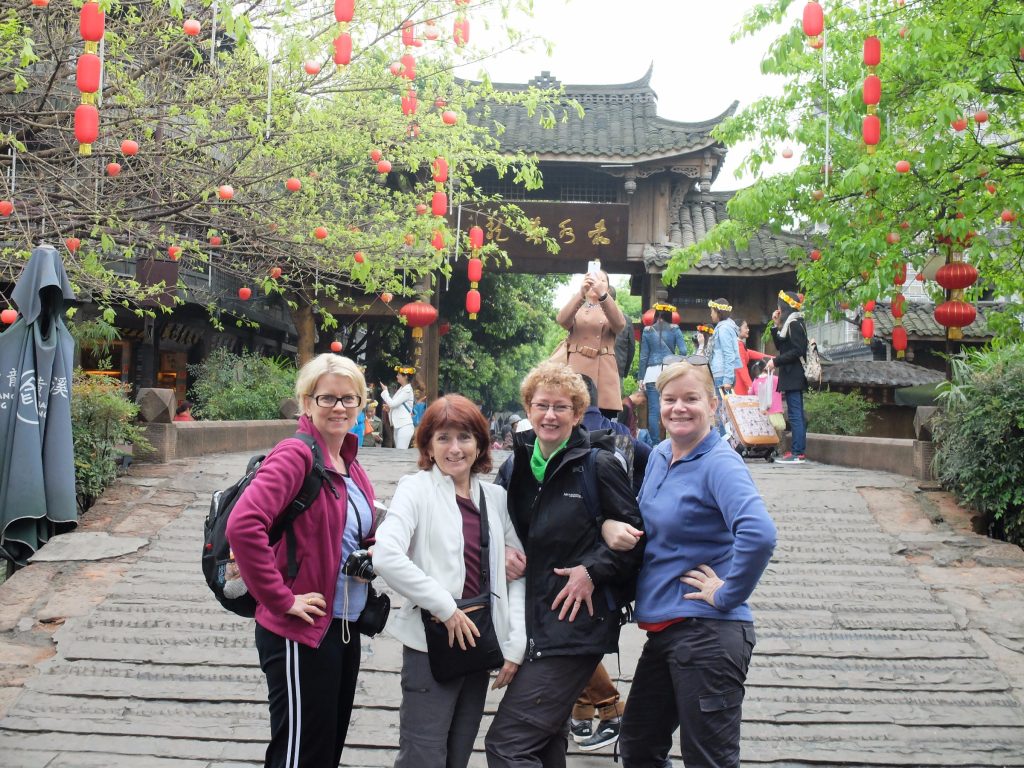
From our traditional-style hotel in Chengdu, we headed to Huanglongxi Ancient Town.
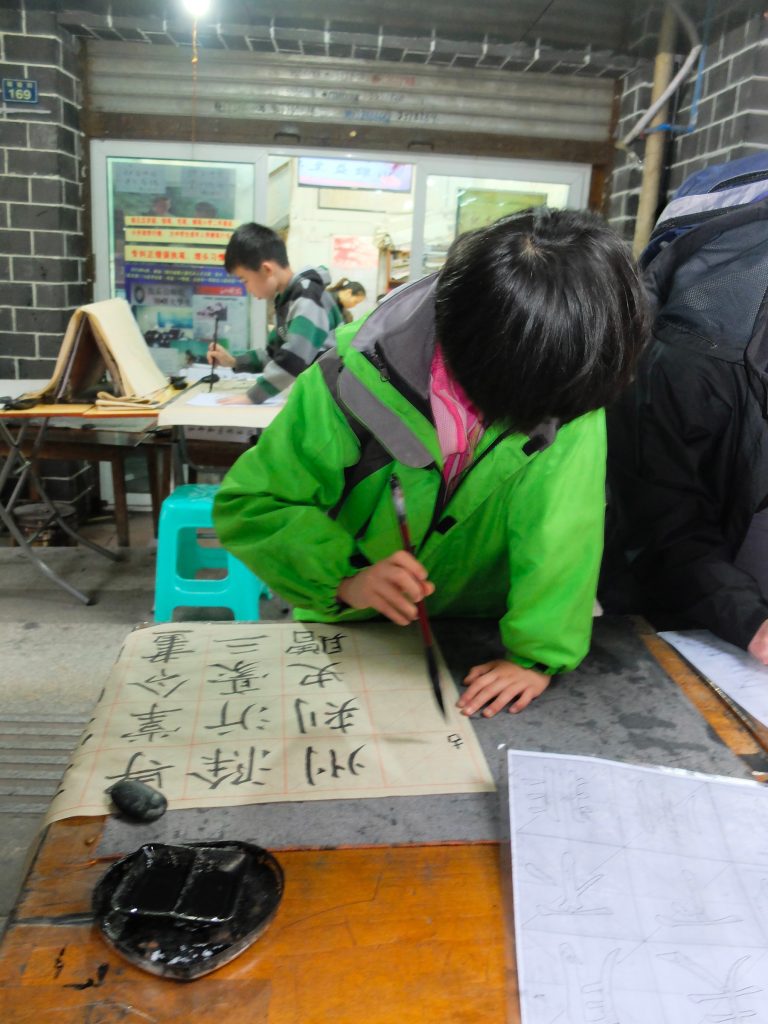
This was much more like the China I had hoped to find. There were few Western tourists, old temples, narrow streets, a stream winding through the town and people preparing noodles, tofu and traditional snacks by hand.
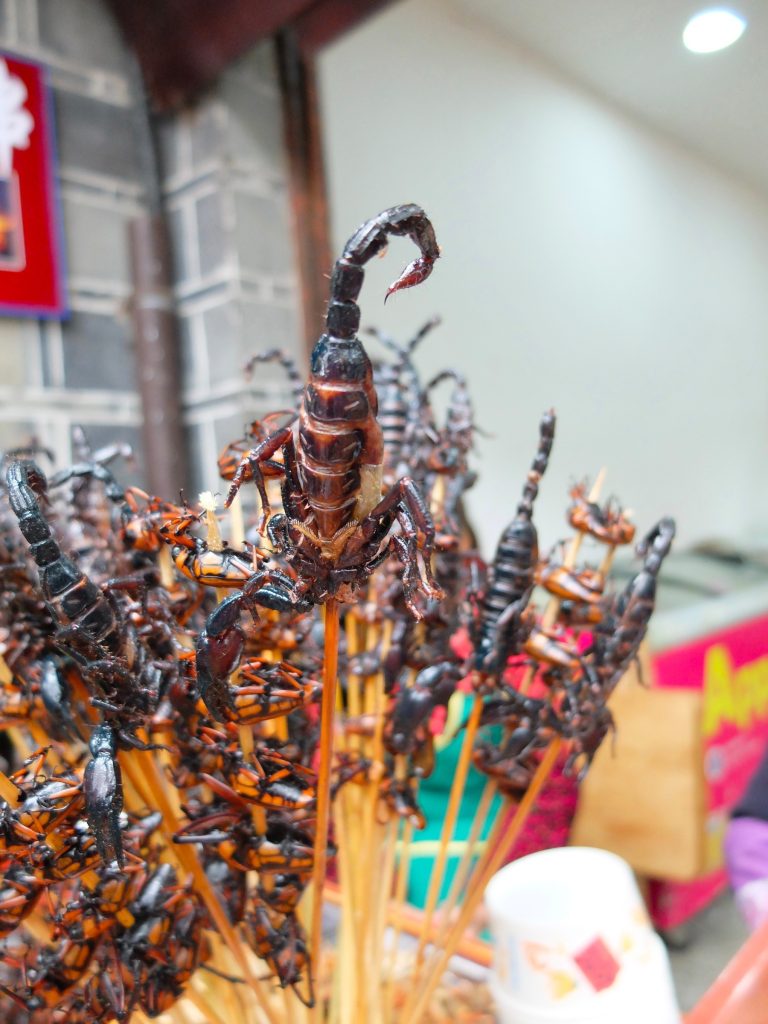
There were also some more adventurous food choices: scorpions, cicadas and grasshoppers on sticks.
We stuck with a warm peanut-filled doughnut and pear-and-honey tea.
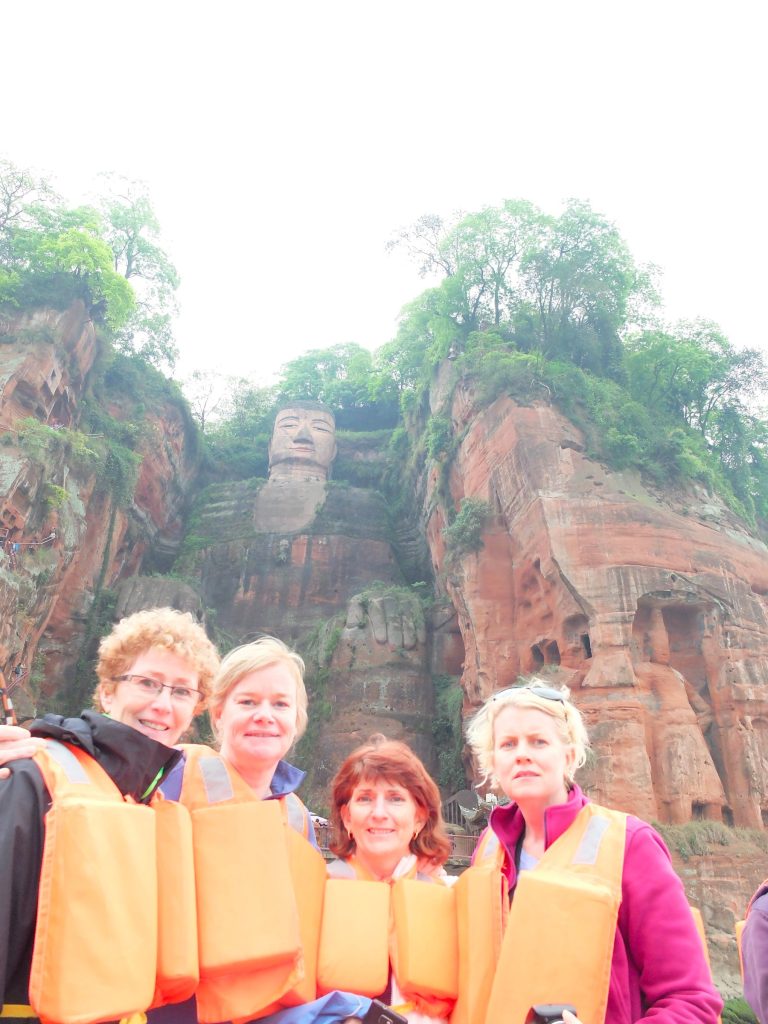
From there we travelled to Leshan to see the enormous Leshan Giant Buddha, carved into the cliff where three rivers meet. We viewed it from the river, which gave us the best sense of its extraordinary scale.
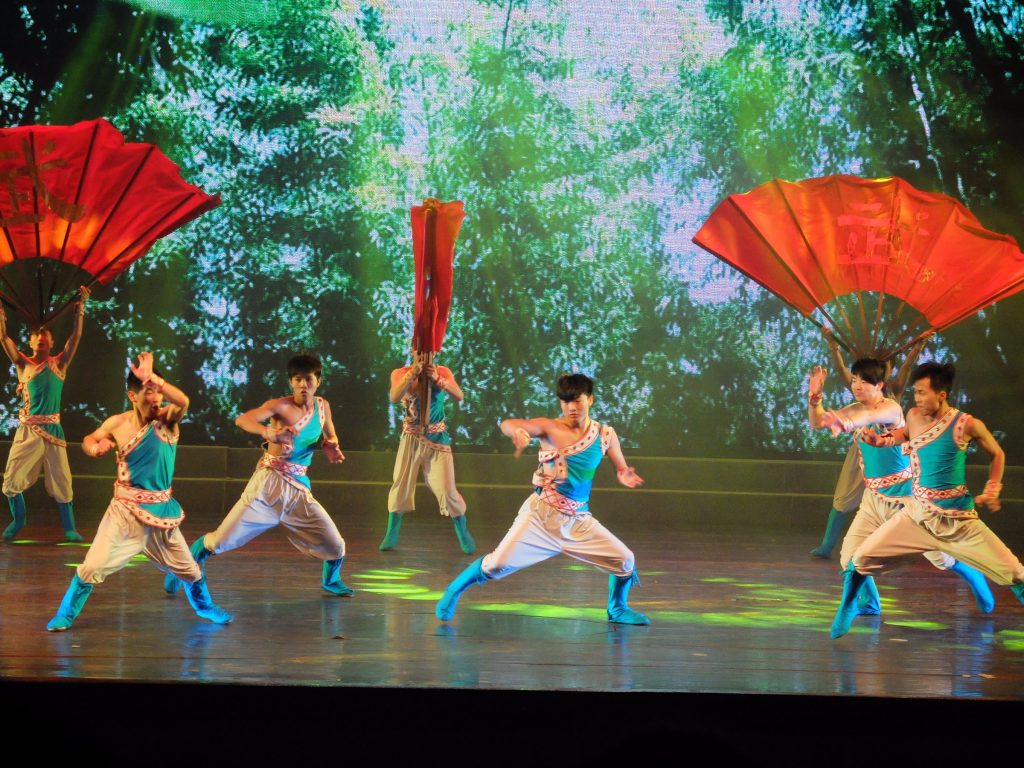
After exploring the local market, we continued to Emei Shan, where the evening’s entertainment was a wonderfully over-the-top kung fu theatre performance.
We understood almost none of it.
We loved it anyway.
April 9 — Emei Shan: A Thousand Buddhas
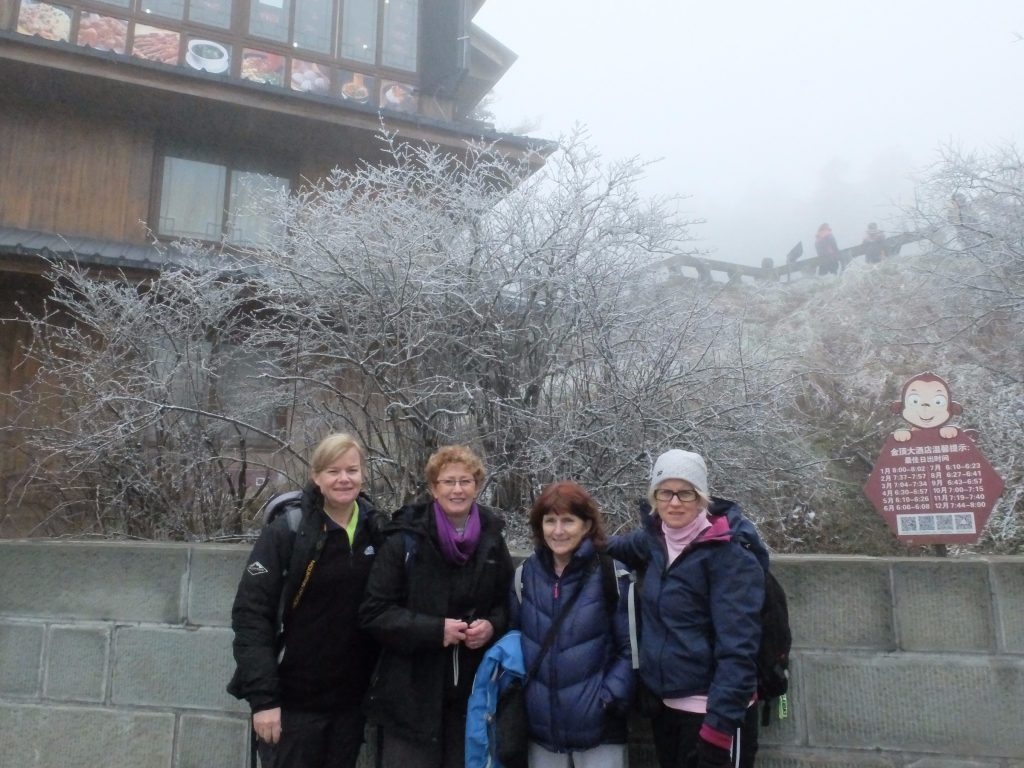
This morning was freezing.
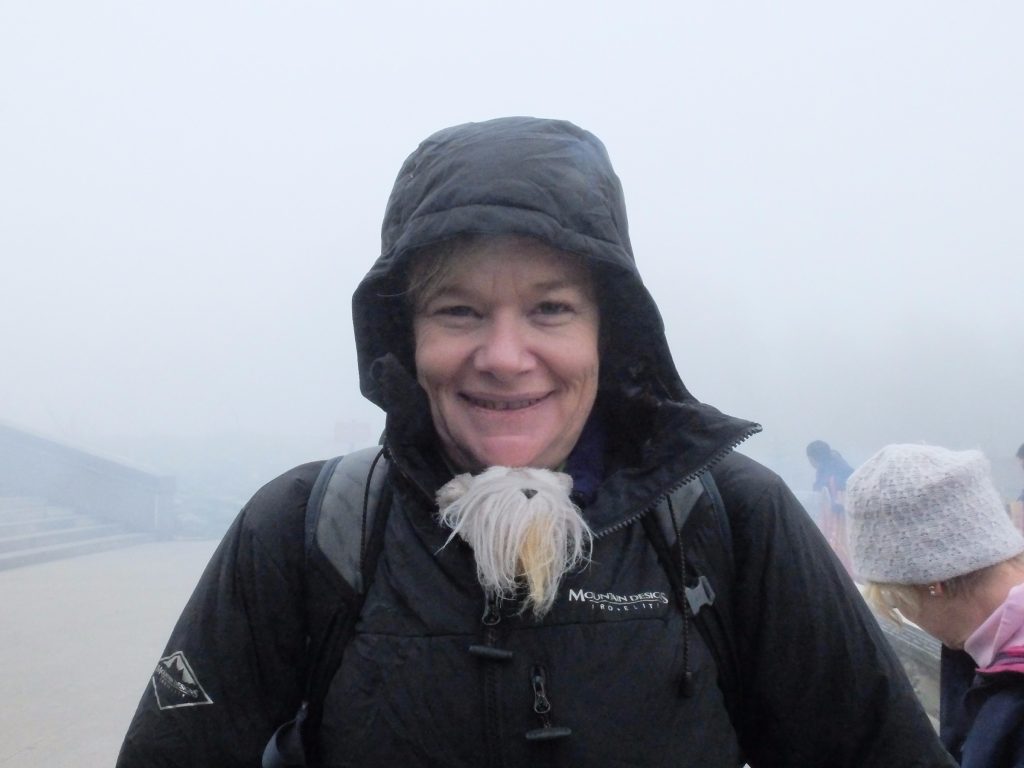
We travelled high into the mountains of Emei Shan, one of China’s sacred Buddhist mountains.
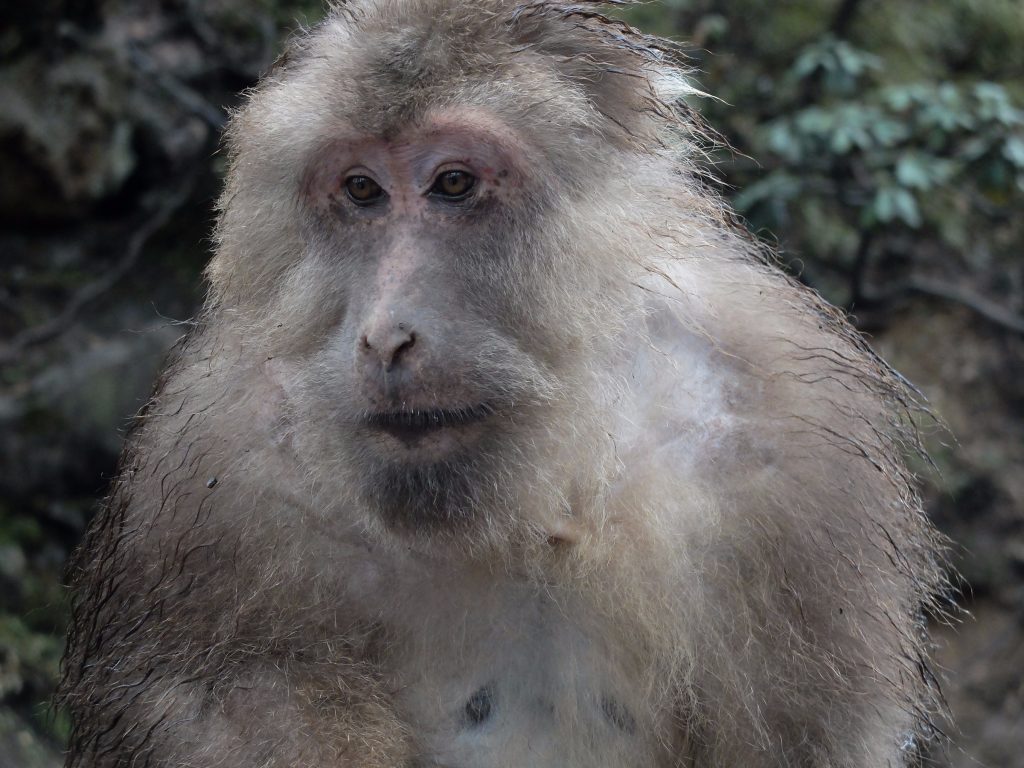
The journey involved buses, walking, a cable car and an encounter with some extremely confident wild monkeys who were very interested in people’s backpacks.
At more than 3,000 metres, mist and snow surrounded the summit.
The Golden Summit emerged through the cloud almost mysteriously, dominated by the huge golden statue of Samantabhadra and temples high above the surrounding landscape.
We couldn’t see the famous sweeping mountain views because of the weather, but somehow the mist made the whole experience even more atmospheric.
It became an unexpectedly emotional day for all of us.
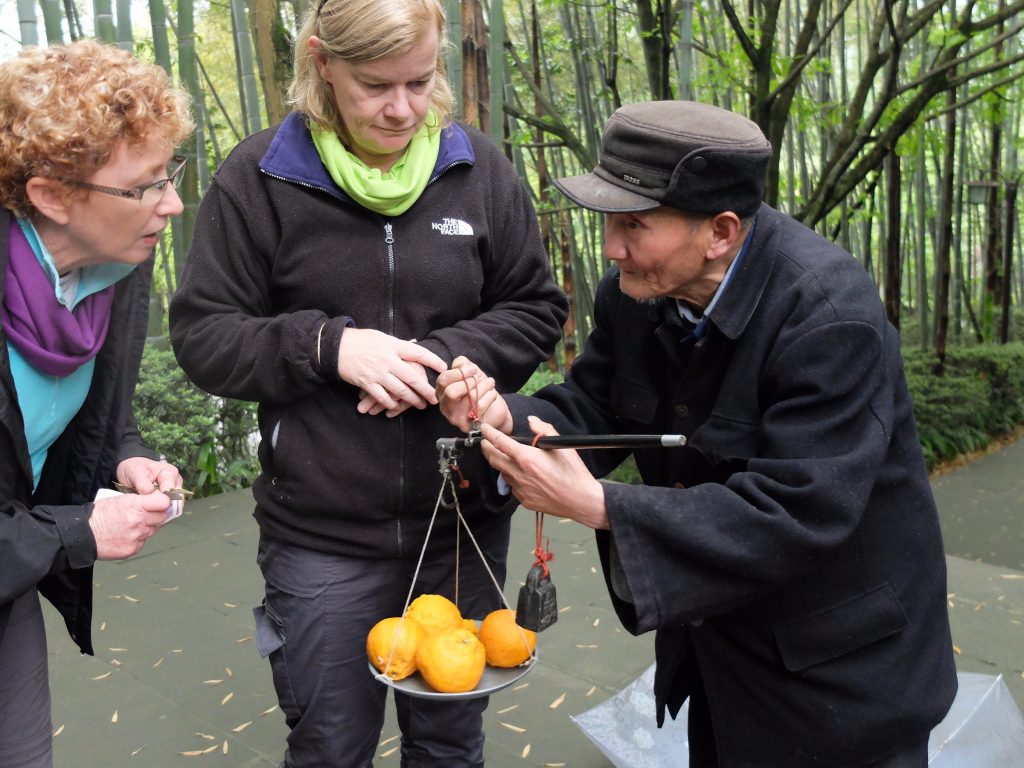
Back at the bottom, we bought oranges from an elderly local man before continuing towards Dujiangyan.
April 10 — Pandamonium
This was one of the days we’d been waiting for.
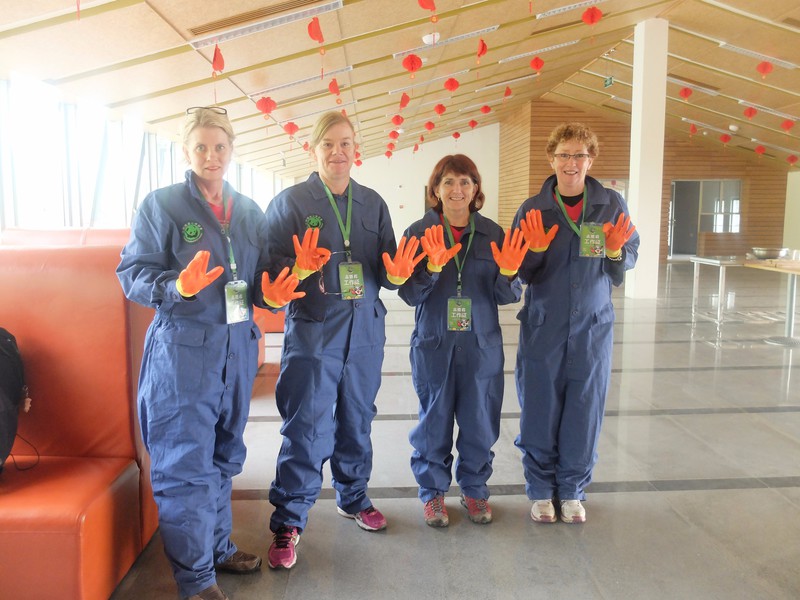
We travelled to the China Conservation and Research Centre for the Giant Panda and changed into extremely glamorous oversized work overalls.
Our first job was cleaning the panda enclosures.
Yes, this included panda poo.
We removed old bamboo, cleaned the enclosures, prepared fresh bamboo and even smashed the thick stems against the ground so the pandas could eat them more easily.
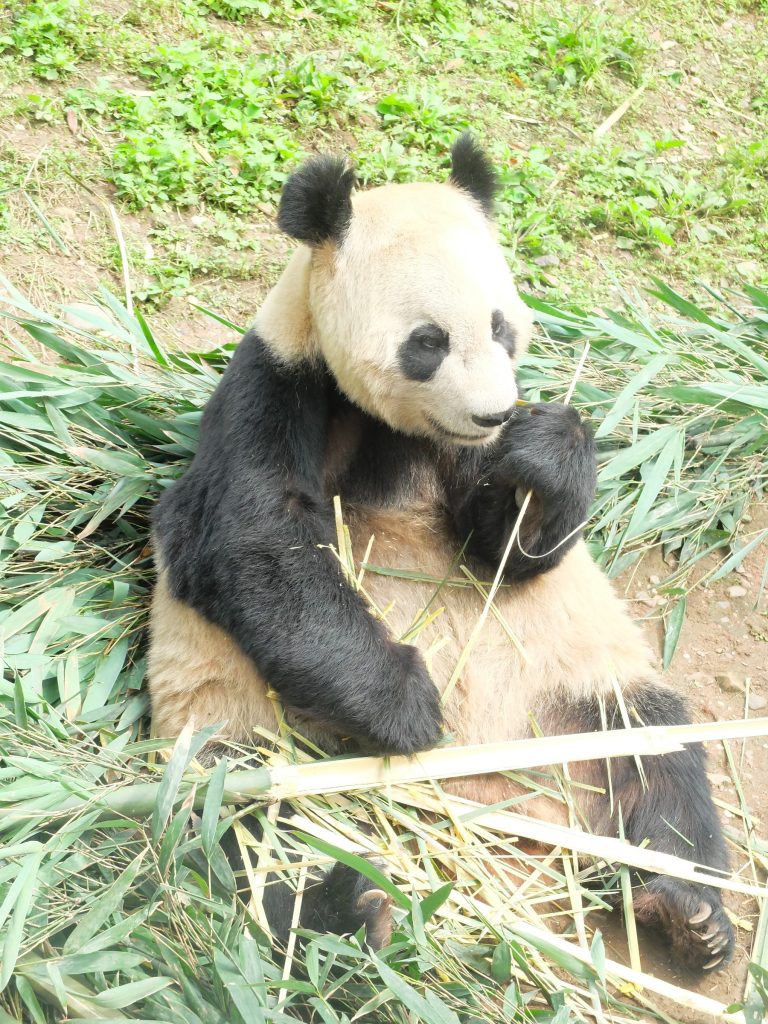
Being this close to giant pandas was extraordinary.
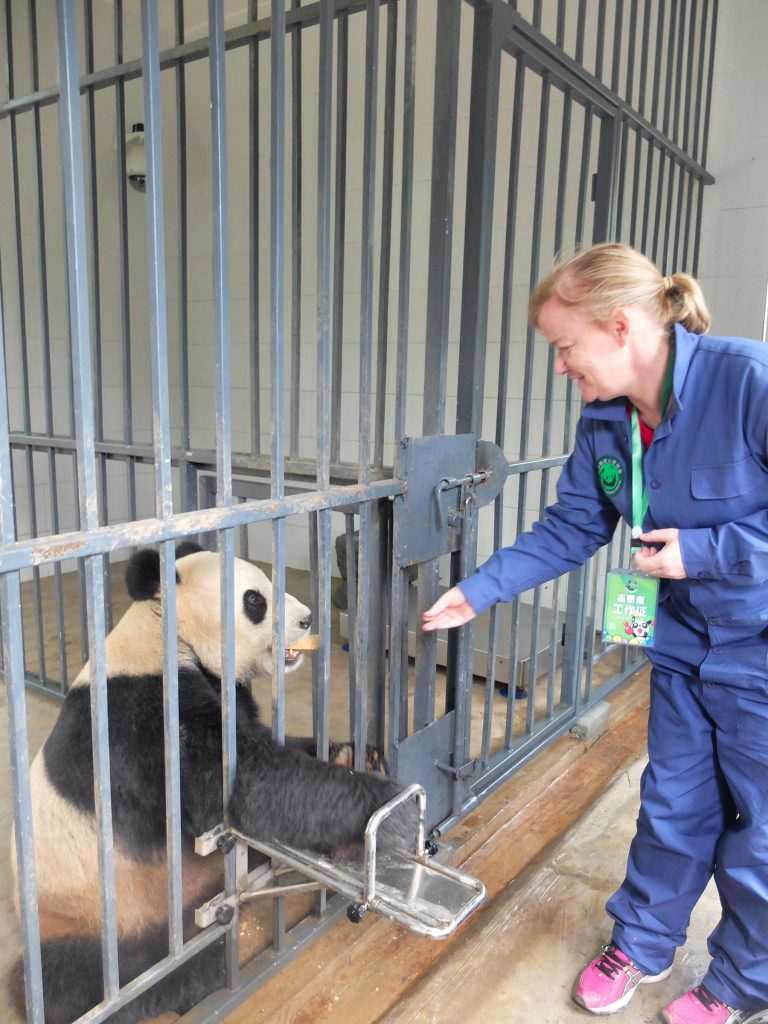
Later we hand-fed panda cake to them as part of their routine care. One panda had been trained to place its arm through an opening so keepers could monitor its health while being rewarded with food.
We spent the rest of the day watching pandas climb trees, sleep, play and generally demonstrate why they have somehow convinced the world to adore them.
After lunch with the centre’s workers, we explored the nearby riverside town before returning for one more feeding session.
Then it was back to Chengdu.
Ten days into China and we had already travelled by plane, cruise ship, bullet train, bus, boat and cable car; climbed sacred mountains, survived Shanghai airport security, eaten Sichuan hotpot, crossed drunken bridges and cleaned up after giant pandas.
And we still had most of China ahead of us.
April 11 — Chengdu at a Slower Pace
After several hectic days, we finally had a slower morning in Chengdu.
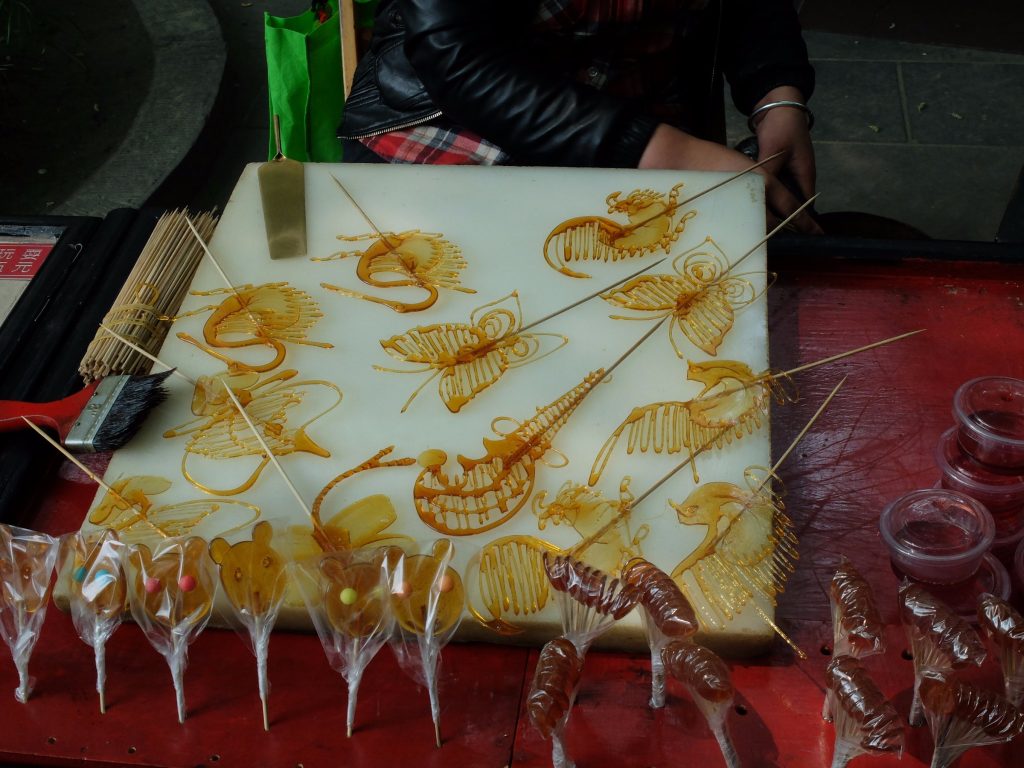
We wandered through a local park where older people played mahjong, couples strolled, children played and locals practised all kinds of exercise. One woman was making elaborate toffee designs by hand after customers spun a wheel to choose the shape.
Later we explored the shopping areas, found a tiny noodle shop for a cheap and excellent lunch, and finished the evening at People’s Park, where hundreds of locals gathered to dance.
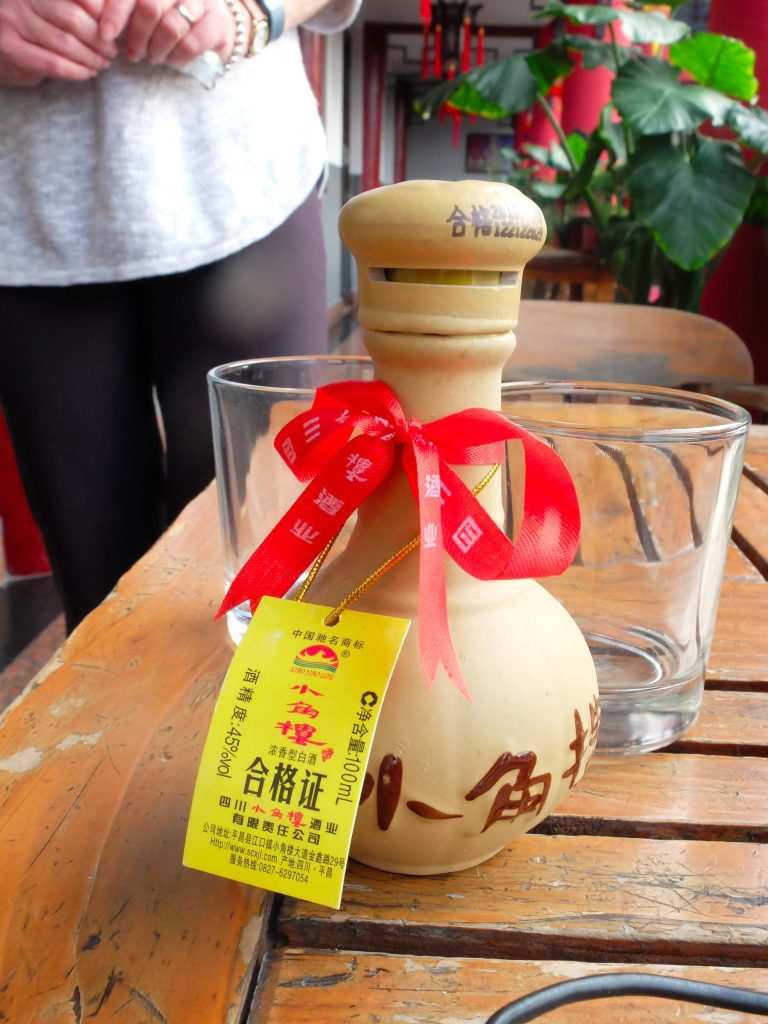
We also sampled some very questionable $1.25 rice wine.
One mouthful was enough.
April 12 — Temples, Dumplings and Tea
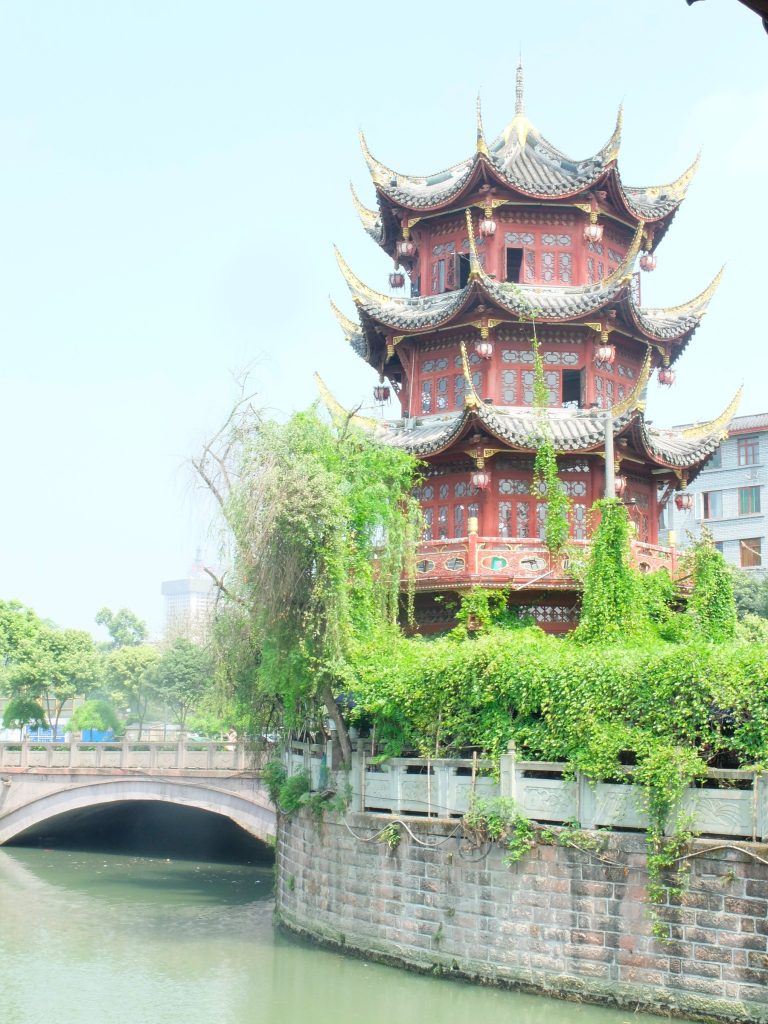
Before leaving Chengdu, we visited the Qingyang Taoist Temple and Wenshu Monastery, both beautiful complexes filled with traditional architecture and peaceful courtyards.
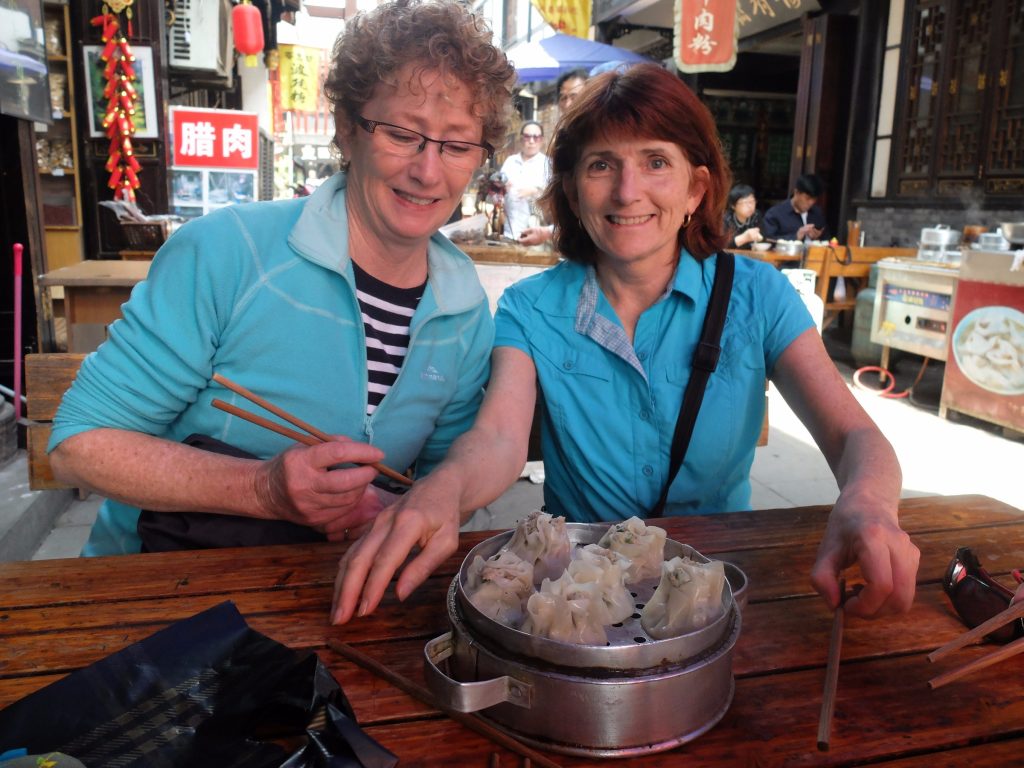
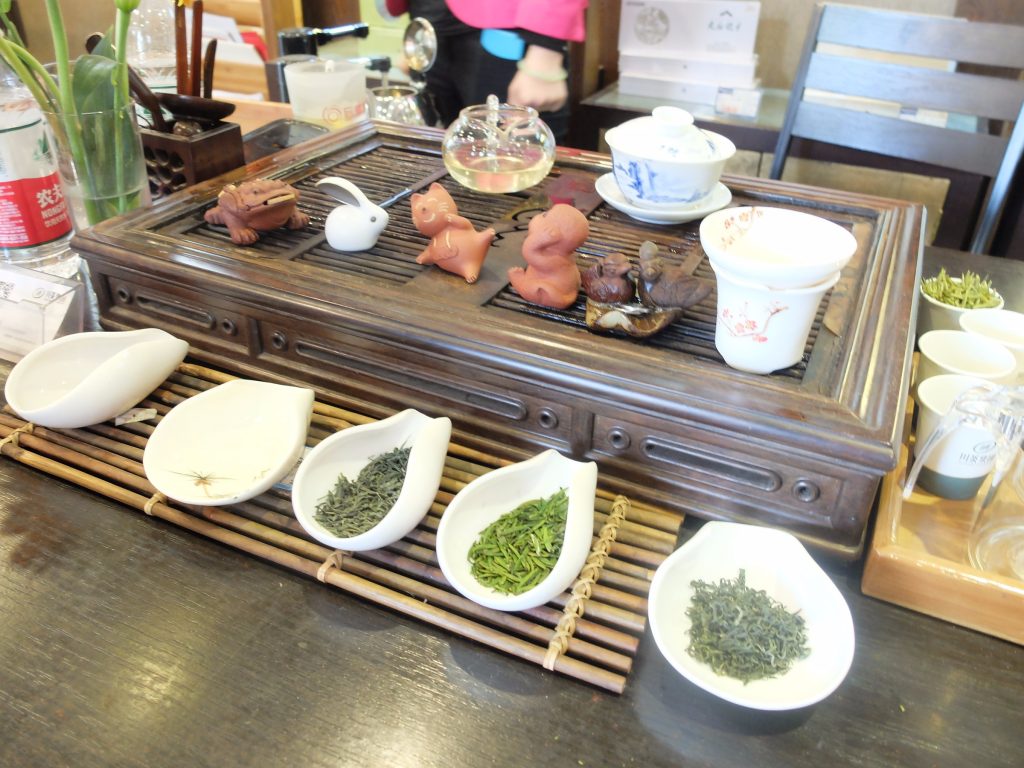
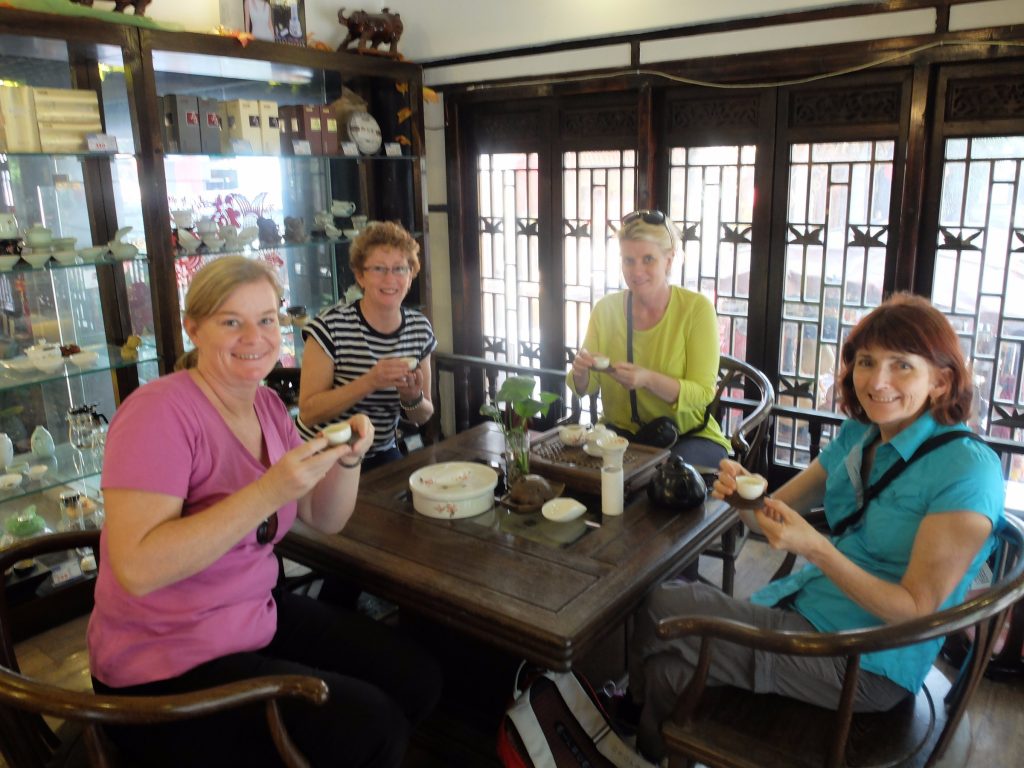
Nearby we found a small dumpling shop where lunch cost less than $10, then stumbled across a traditional tea ceremony.
We ended the day flying to Guilin.
April 13 — Guilin and the Rice Terraces
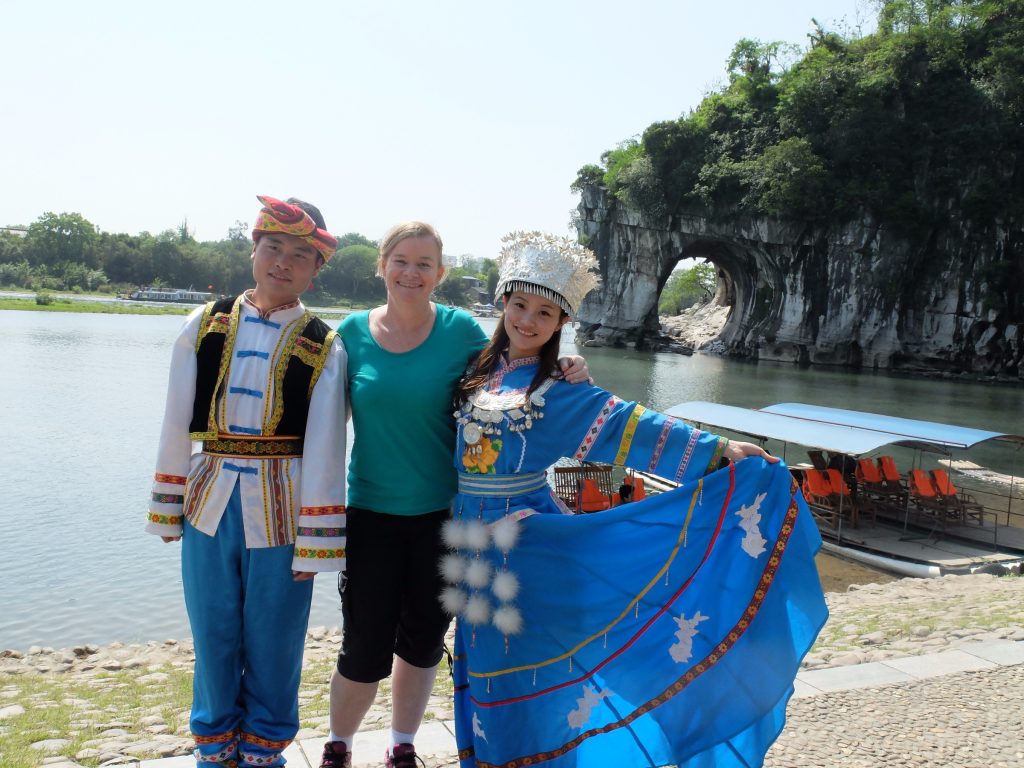
We started at Elephant Trunk Hill, Guilin’s famous riverside landmark, where the rock formation looks like an elephant drinking from the Li River.
Then we travelled into the mountains to an ancient Zhuang village, surrounded by spectacular rice terraces.
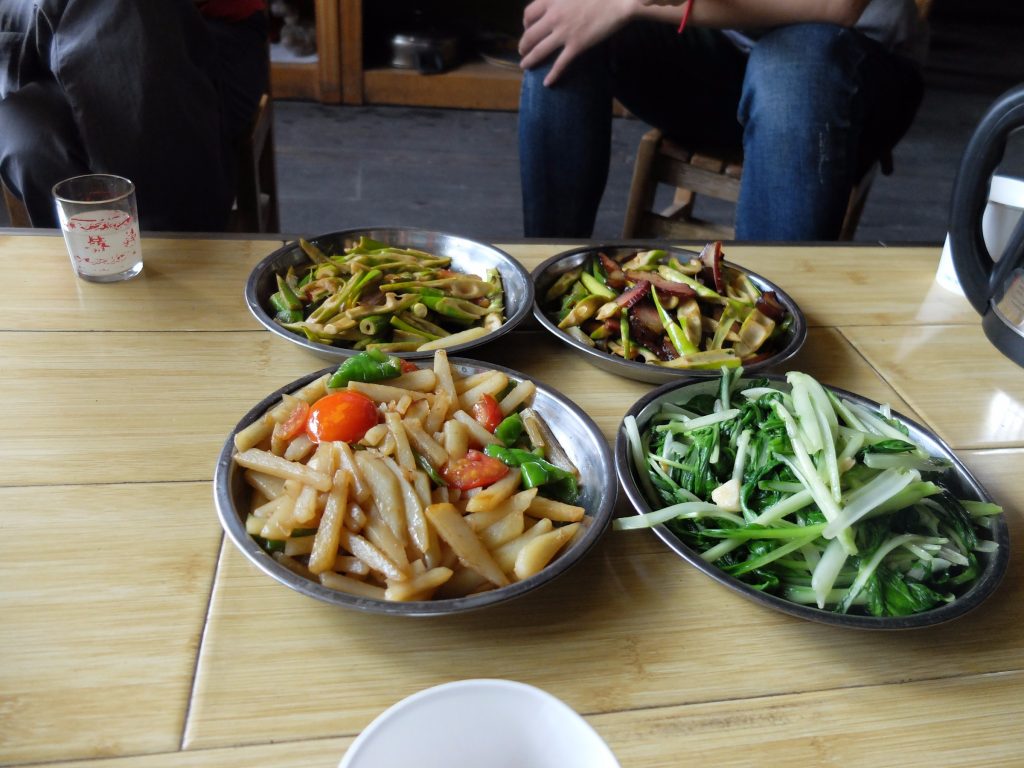
A local family cooked lunch for us in their home: bamboo chicken, bamboo rice, tofu, vegetables and homemade pear rice wine. It was one of those meals that becomes a highlight because of the people as much as the food.
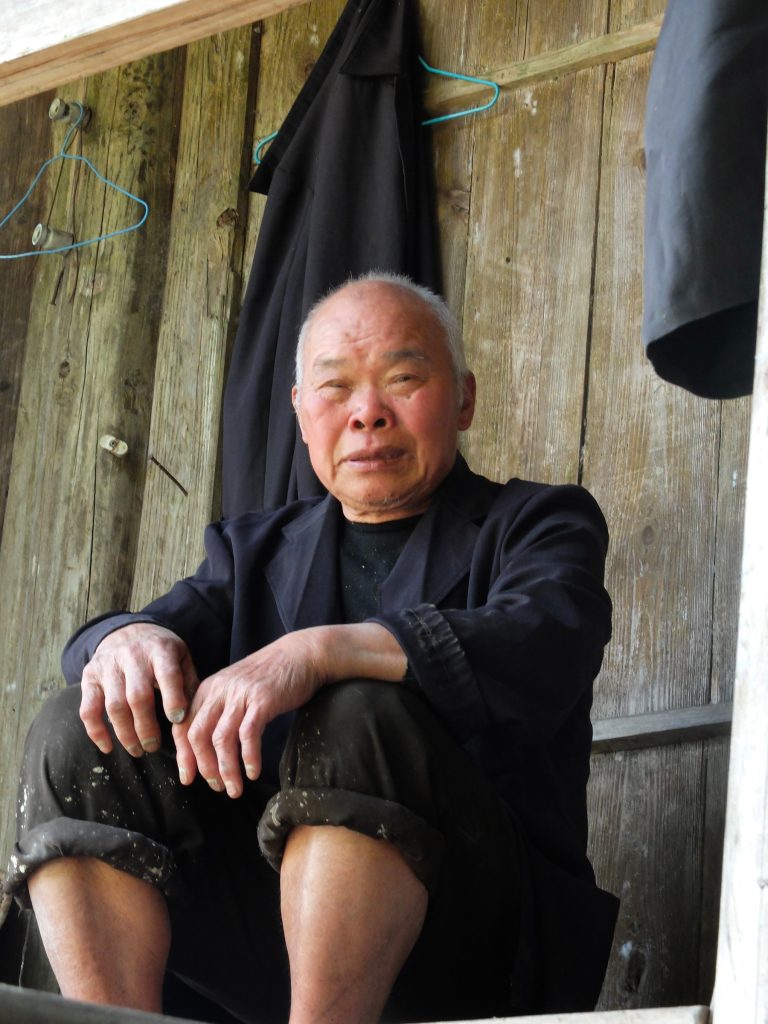
We then hiked through the terraces to a Yao village, known for the women’s extraordinarily long hair.
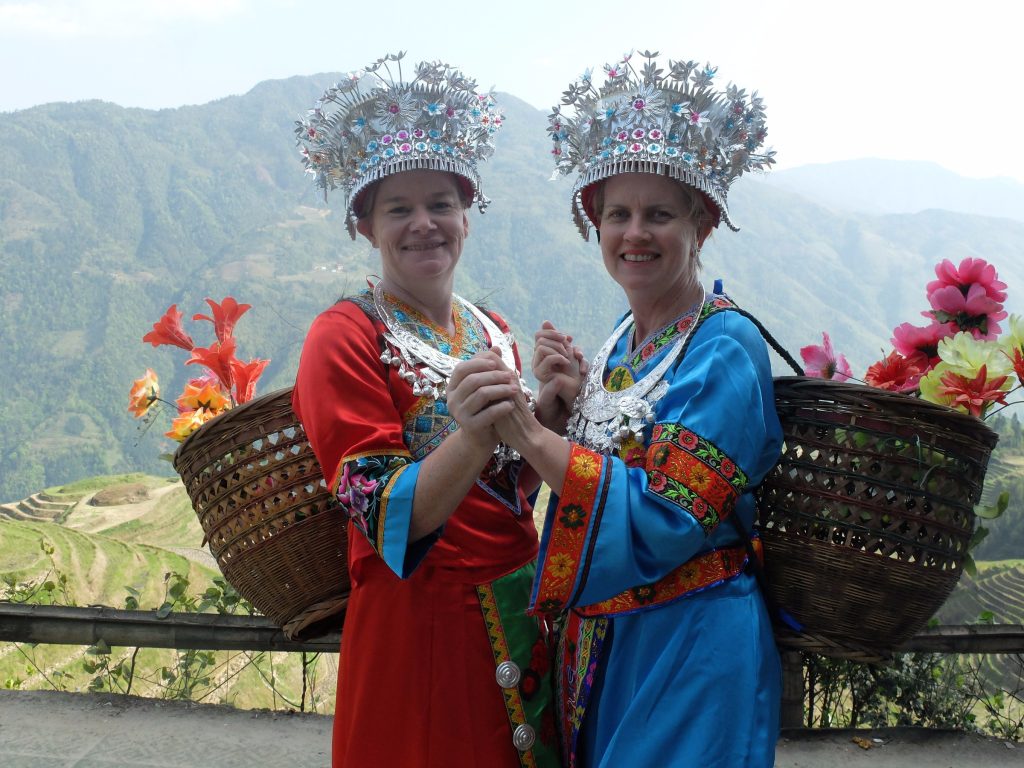
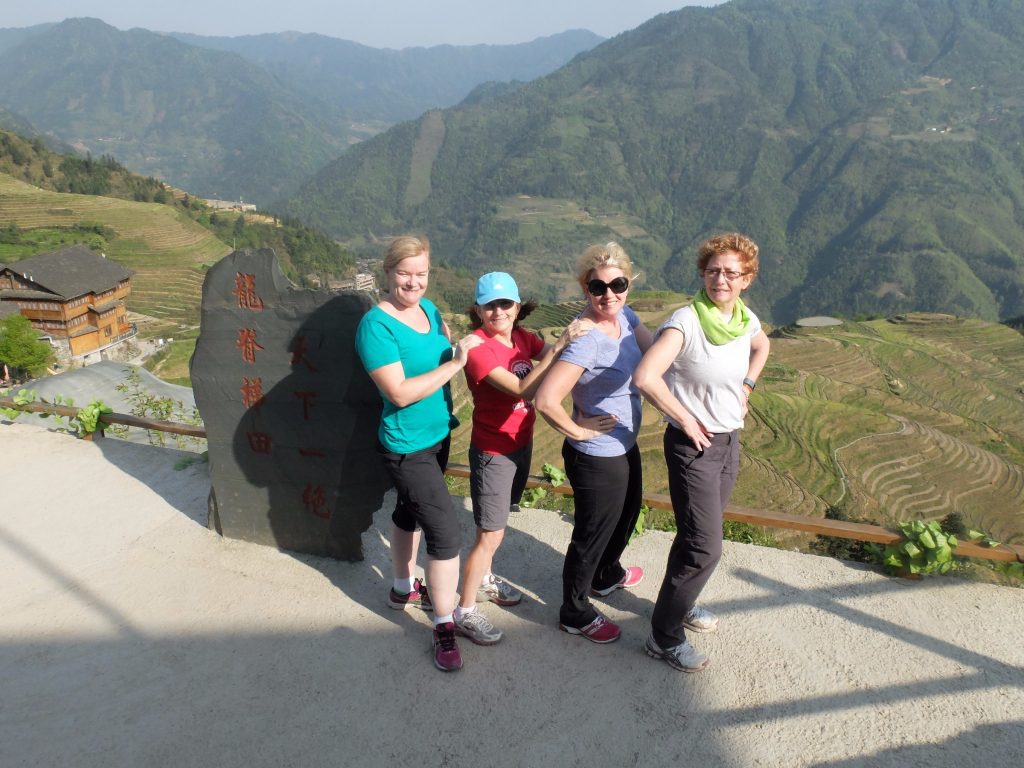
Naturally, we also dressed up in traditional costumes for photos overlooking the Longji Dragon’s Backbone Rice Terraces.
The scenery was magnificent.
[PHOTO SPACE]
April 14 — Li River and Yangshuo
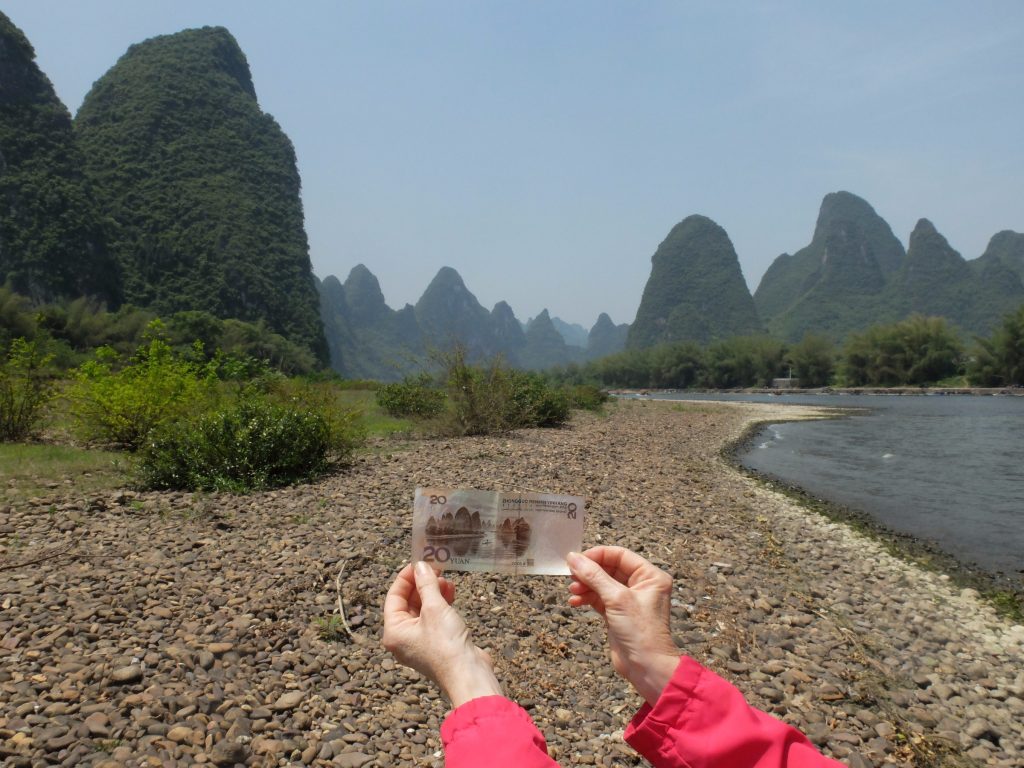
We headed out to the Li River, where the scenery was spectacular. Limestone peaks rose sharply from the landscape, with steep cliffs and tree-covered mountains surrounding the river.
Our “bamboo raft” turned out to be a small motorised raft made from pipes, so it was not quite the peaceful experience we had imagined, but the views made up for it.
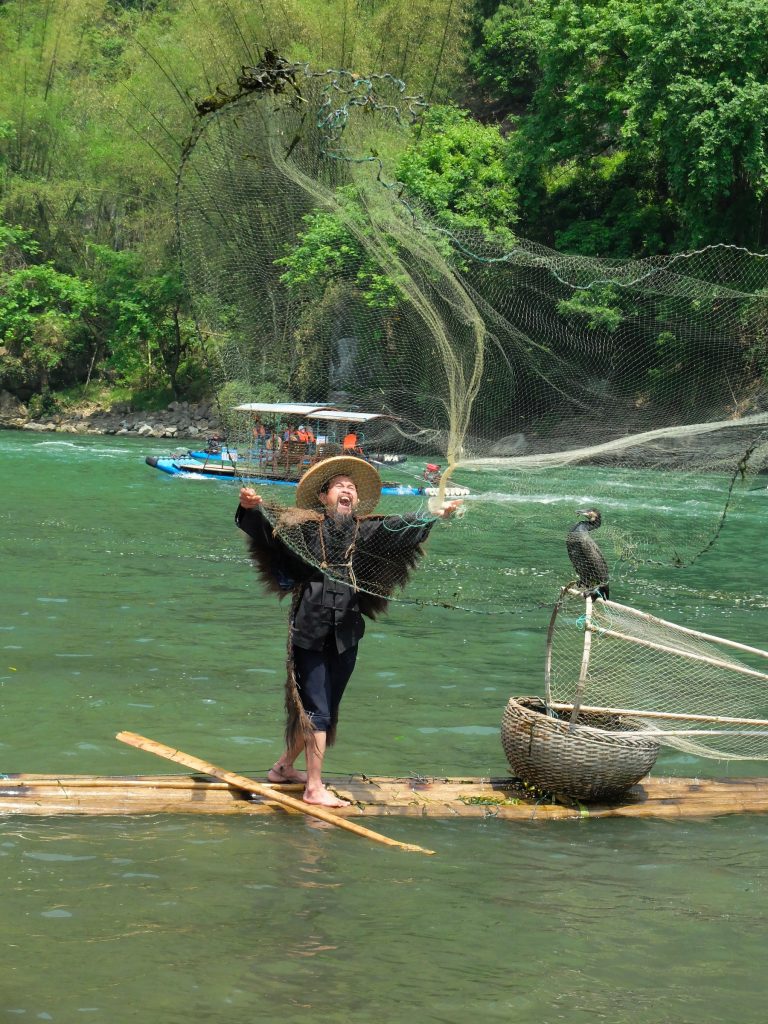
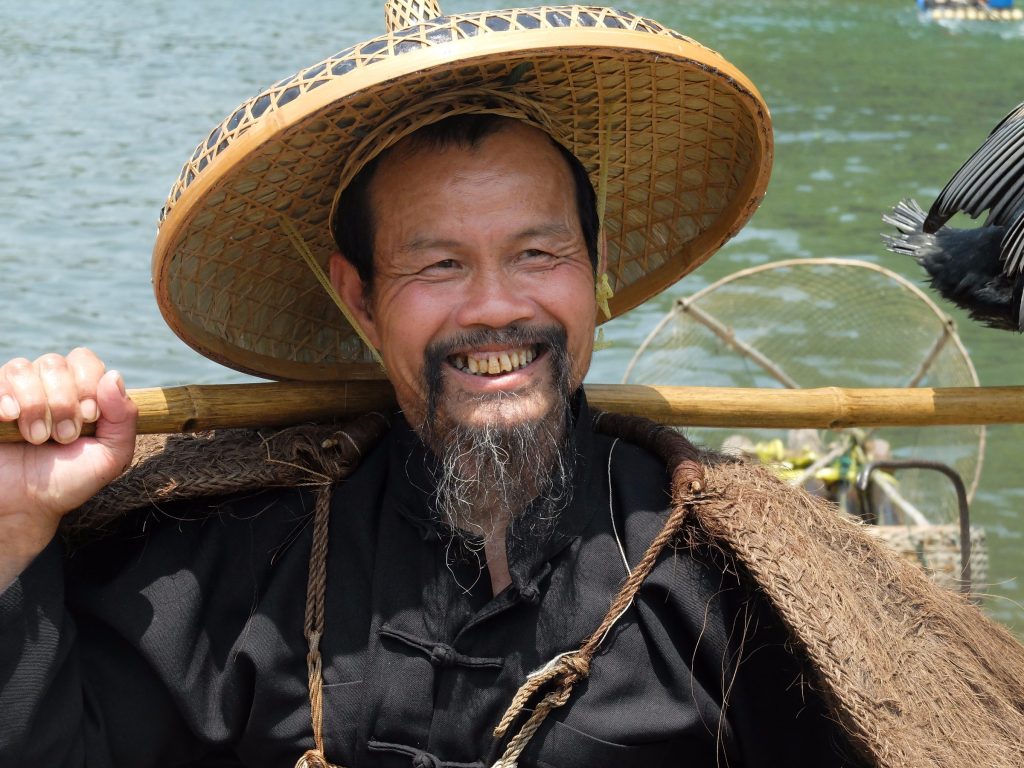
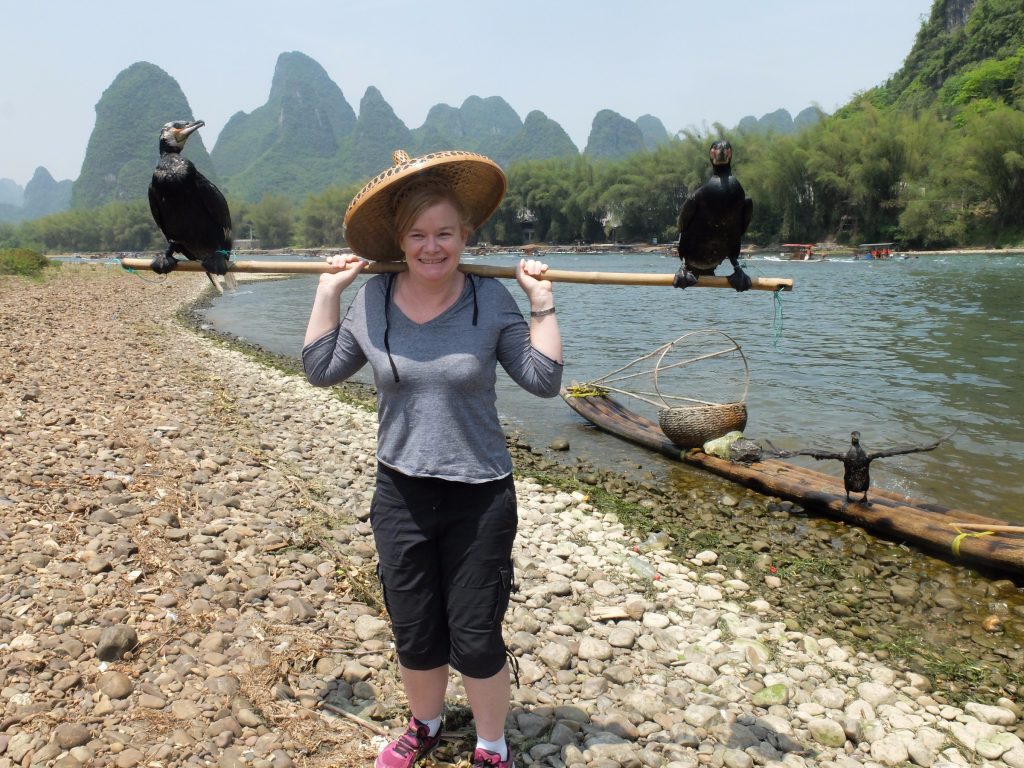
We stopped to see a traditional cormorant fisherman demonstrate the old fishing method, then continued to Xianggong Hill. The climb was steep, but the view over the Li River and surrounding karst mountains was one of the best of the trip.
Later we explored Yangshuo, wandered along West Street, shopped for souvenirs and finally found a very good coffee.
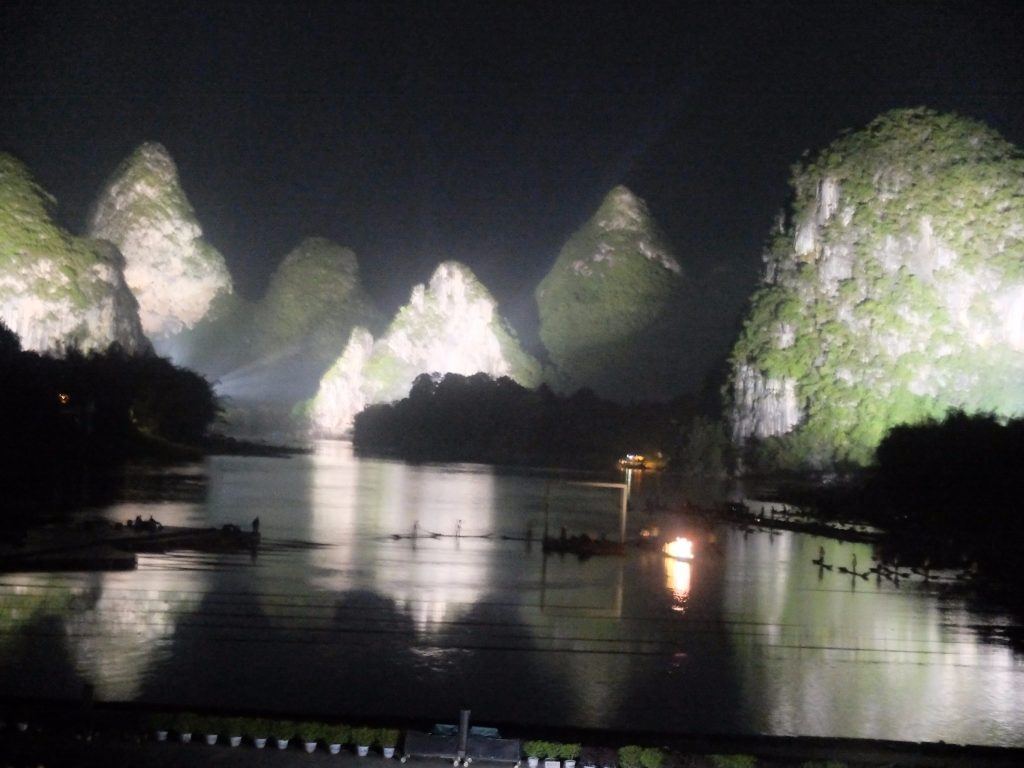
That evening we watched Impression Liu Sanjie, a huge outdoor performance staged on the river with the mountains as its backdrop. Hundreds of performers, lights, rafts and costumes made it an extraordinary spectacle.
April 15 — Tai Chi, Bikes and Bamboo Rafts
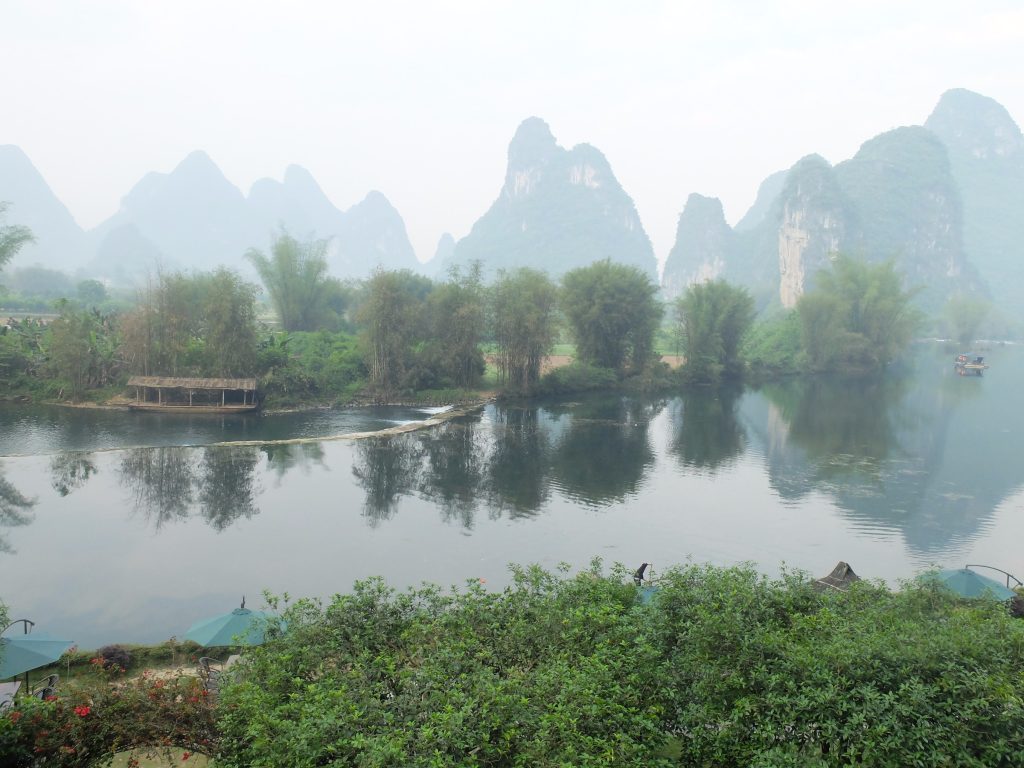
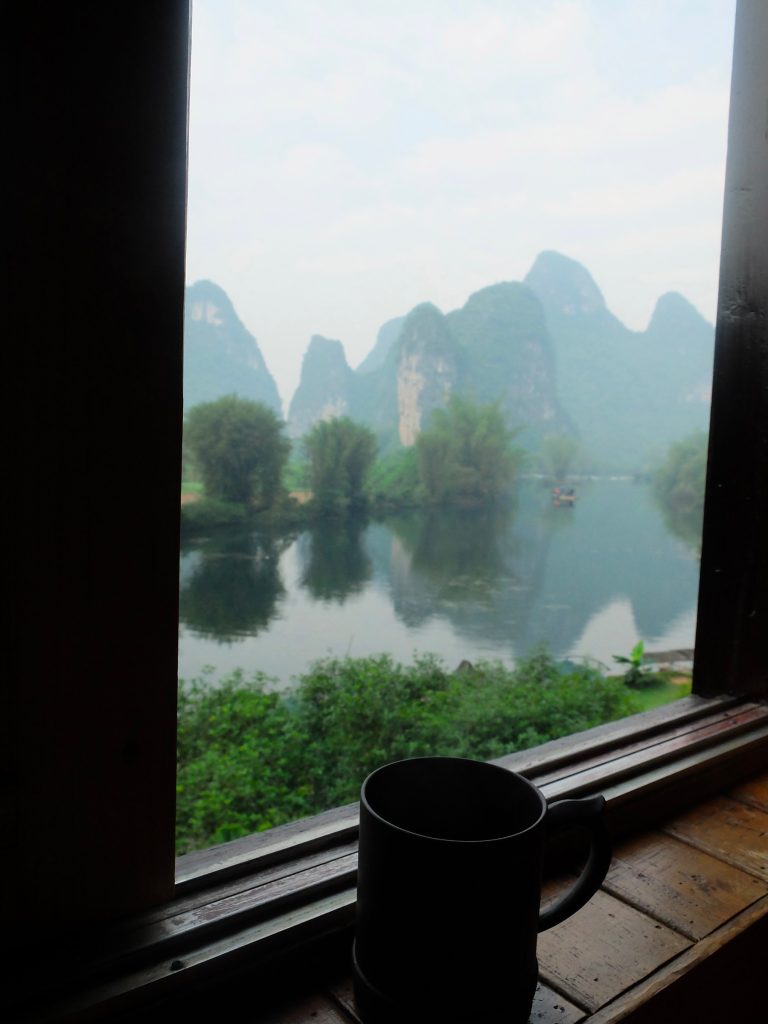
We woke to a beautiful view across the river in Yangshuo.
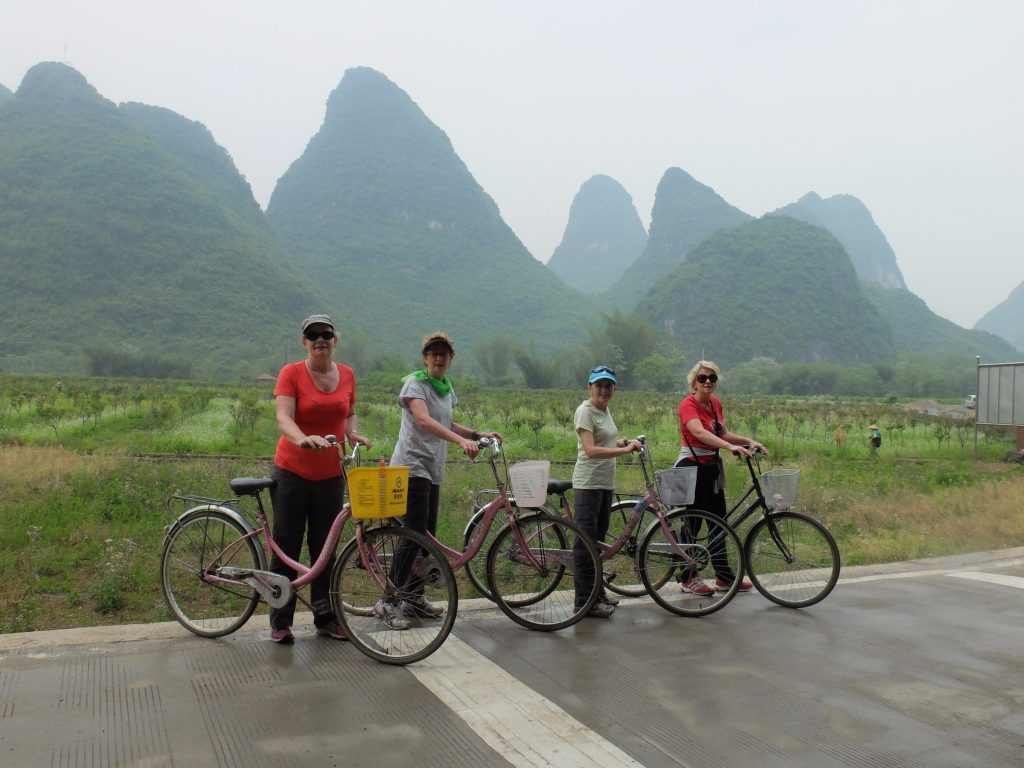
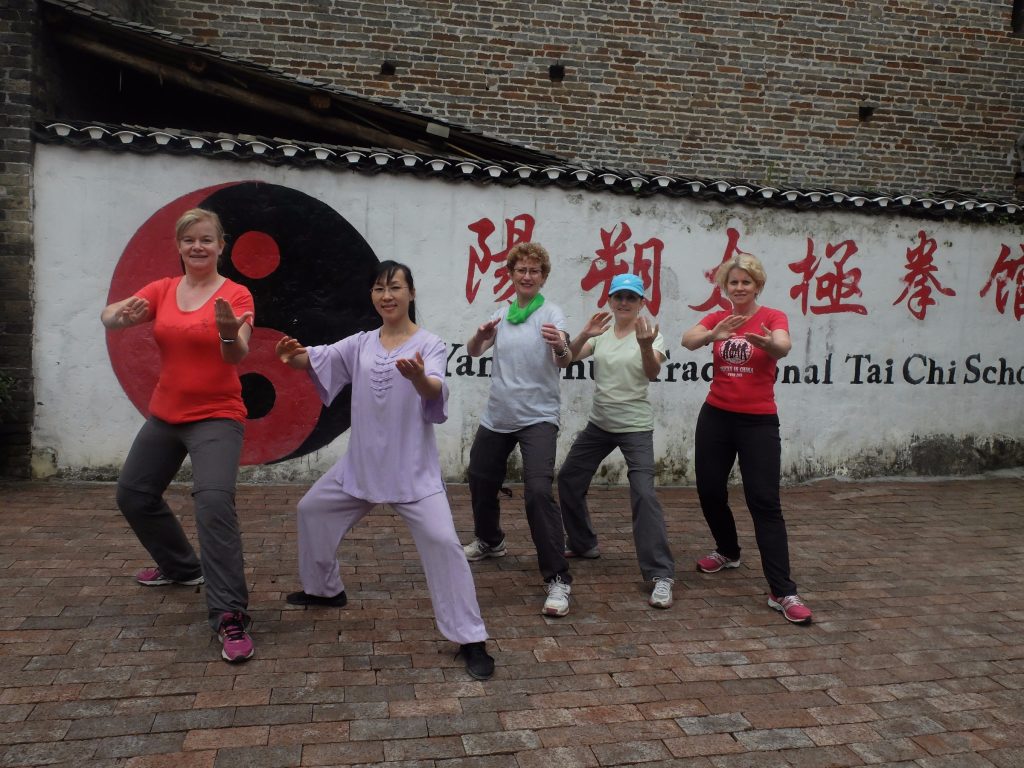
Our morning started on bicycles, riding to a local Tai Chi school for a lesson with a very patient master. We learnt just a few movements, but quickly realised how precise and complicated Tai Chi really is.
Then it was back on the bikes and down to the river for a much more traditional bamboo rafting experience. We floated through the countryside and over small rapids, competing over whose bamboo water pistol could spit the furthest.
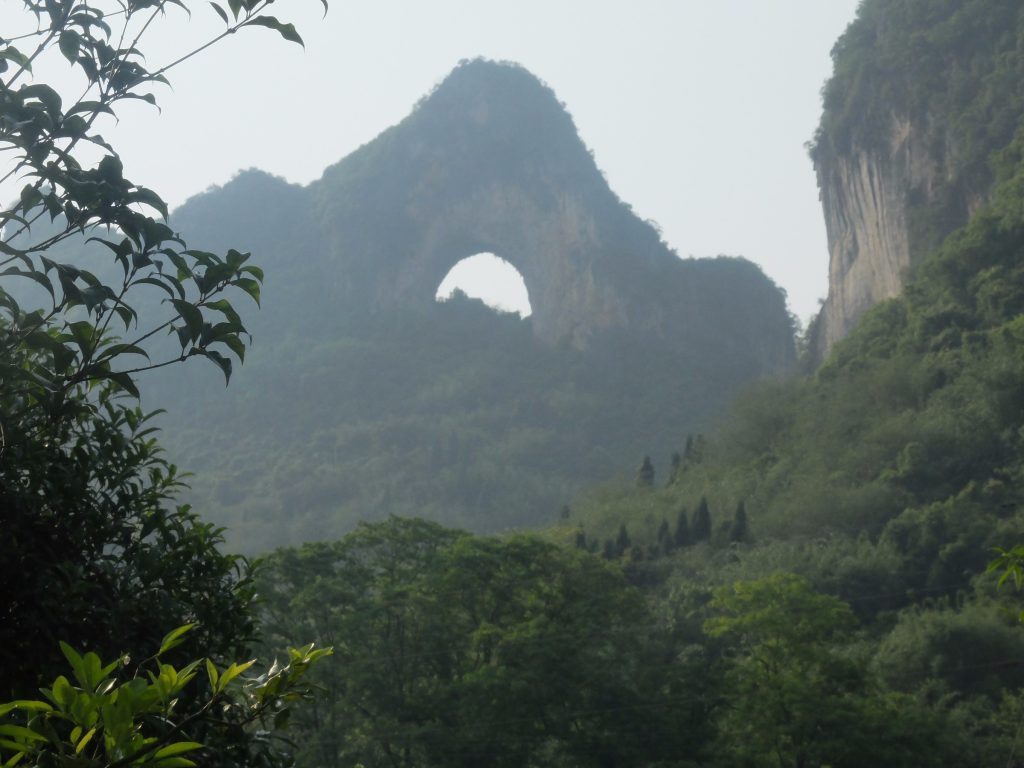
After lunch, we cycled through more of the rural landscape and stopped beneath Moon Hill. The original plan was to climb its nearly 900 steps, but late afternoon coffee in Yangshuo won instead.
A bottle of Great Wall red wine and some two-minute noodles finished the night.
The next morning we were flying to Xi’an.
April 16 — Arrival in Xi’an
We flew from Guilin to Xi’an and immediately had the usual fun with taxis, including one driver who refused to use the meter.
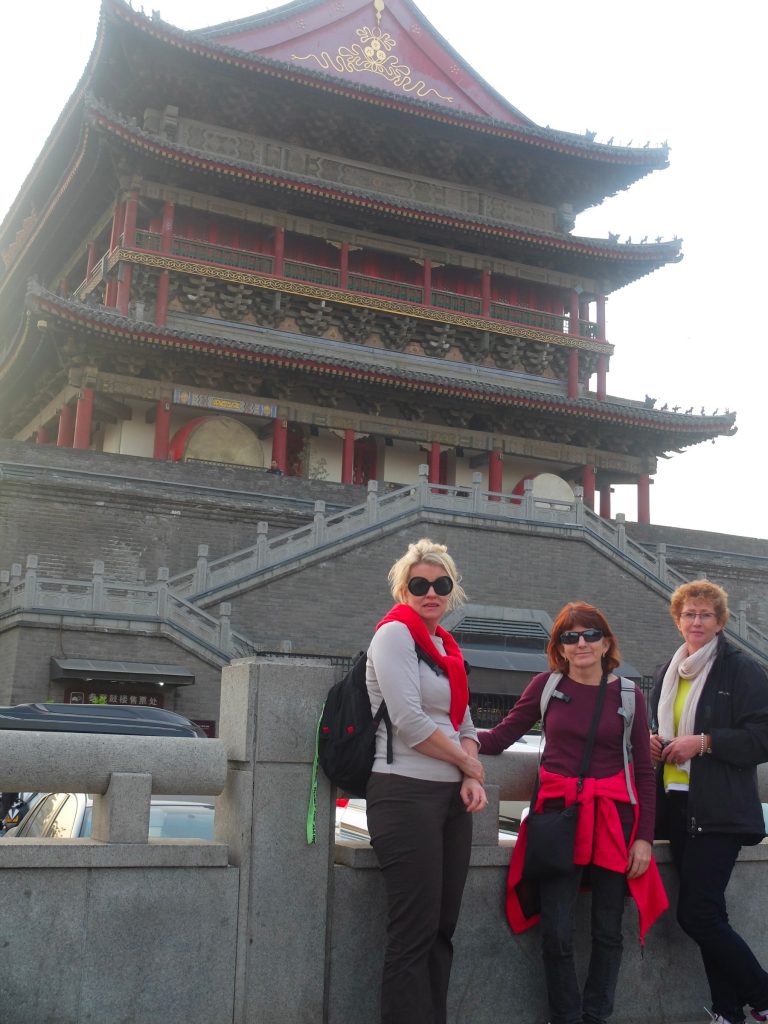
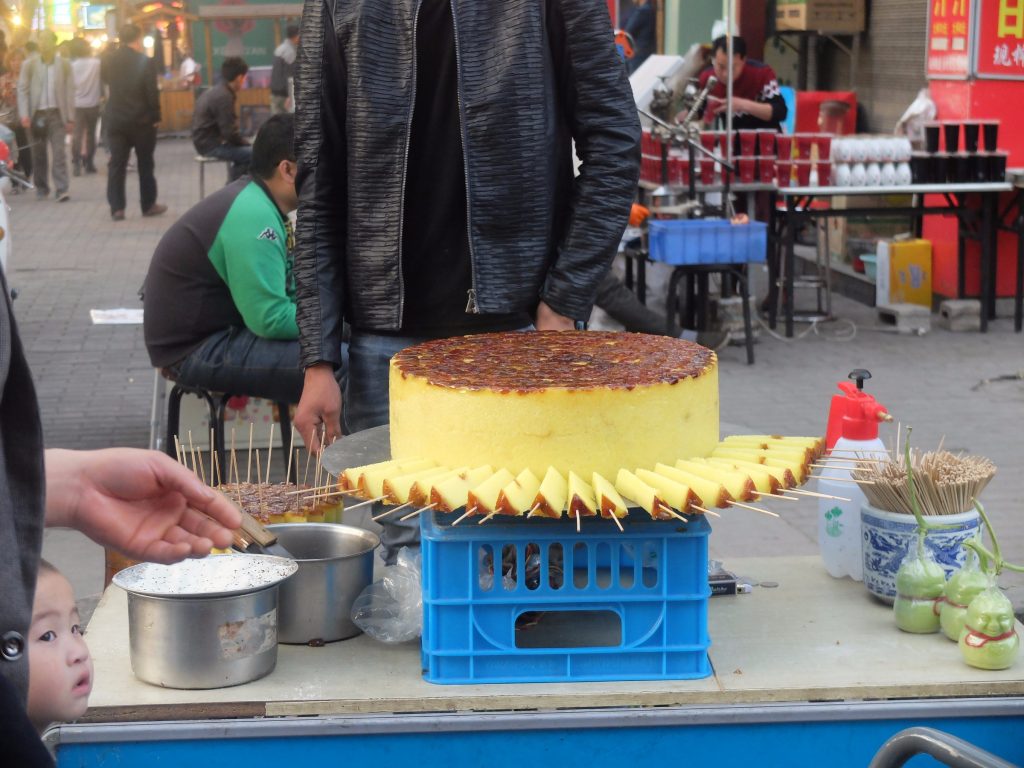
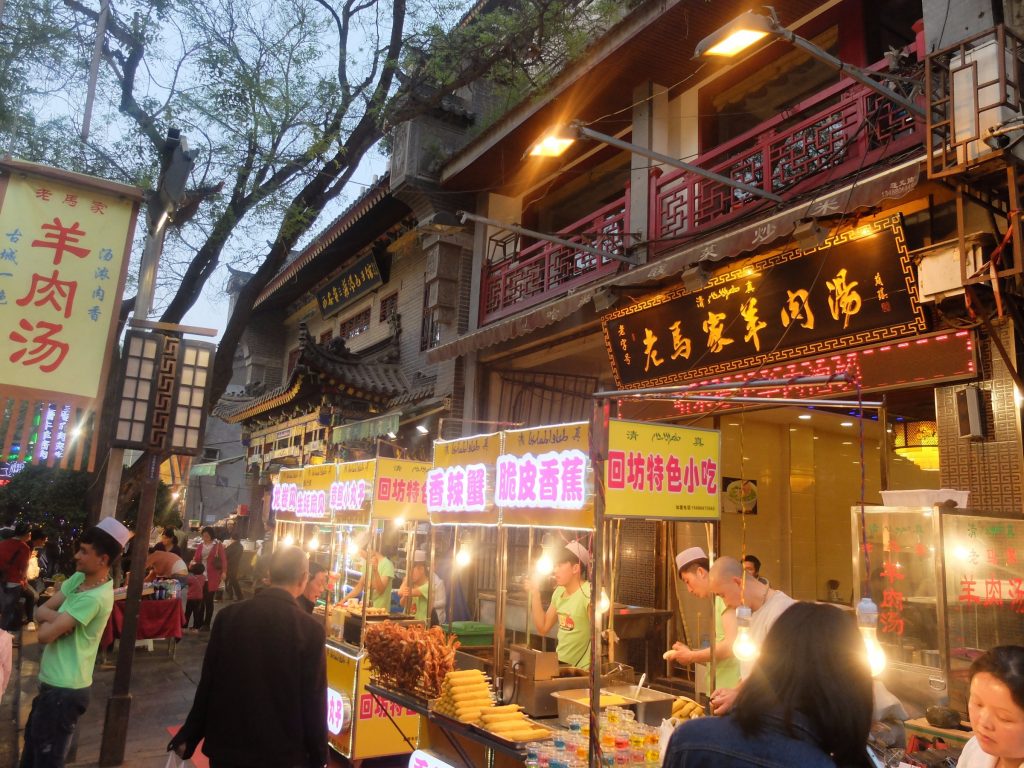
Once settled, we explored the Bell Tower, Drum Tower and the wonderfully chaotic Muslim Quarter, where we ate spicy potatoes and lamb skewers among the crowds and food stalls.
We also bought train tickets for an independent day trip to Luoyang.
April 17 — Terracotta Warriors
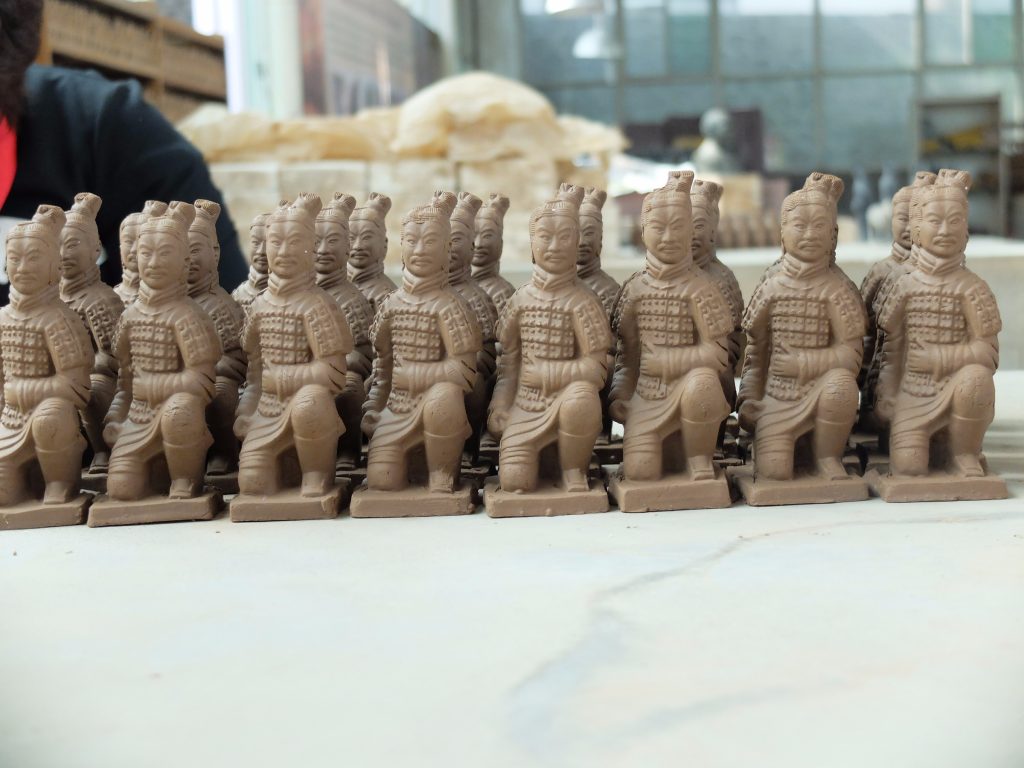
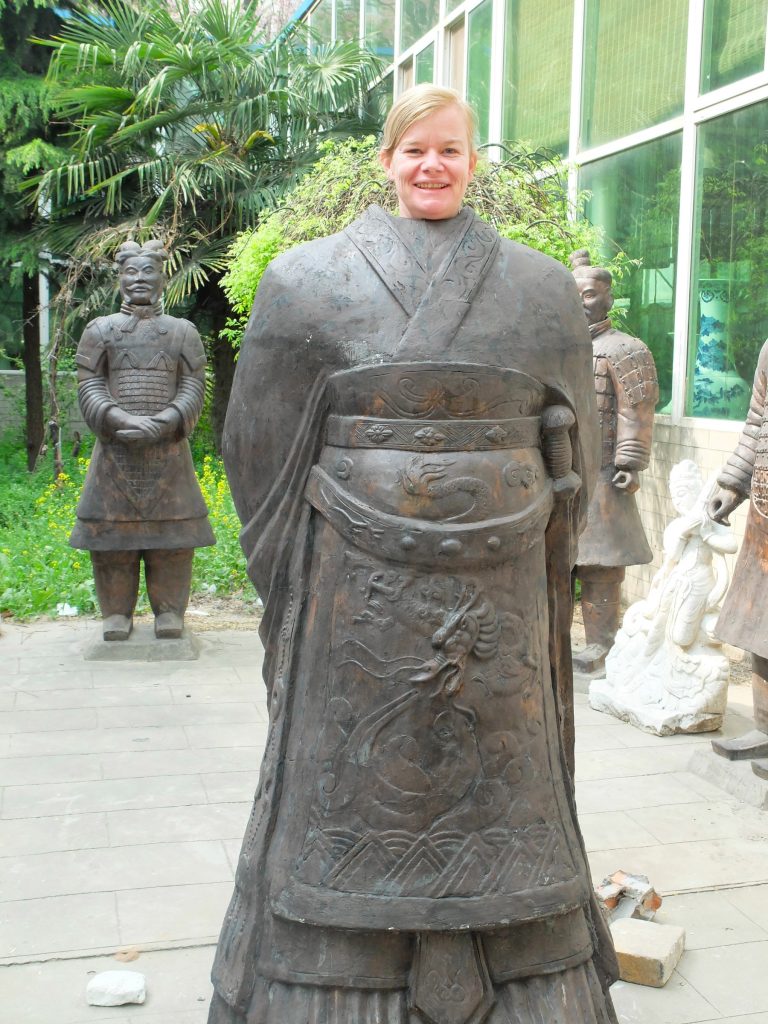
Our first stop was a workshop where replica Terracotta Warriors are still made using traditional methods.
Then came the real thing.
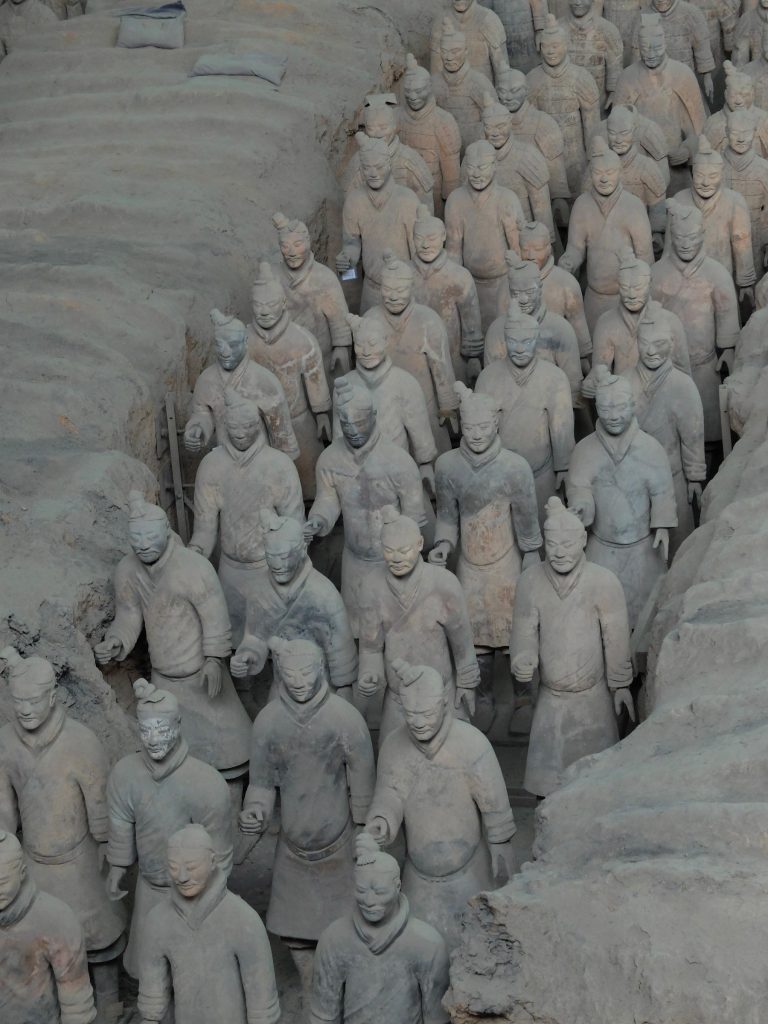
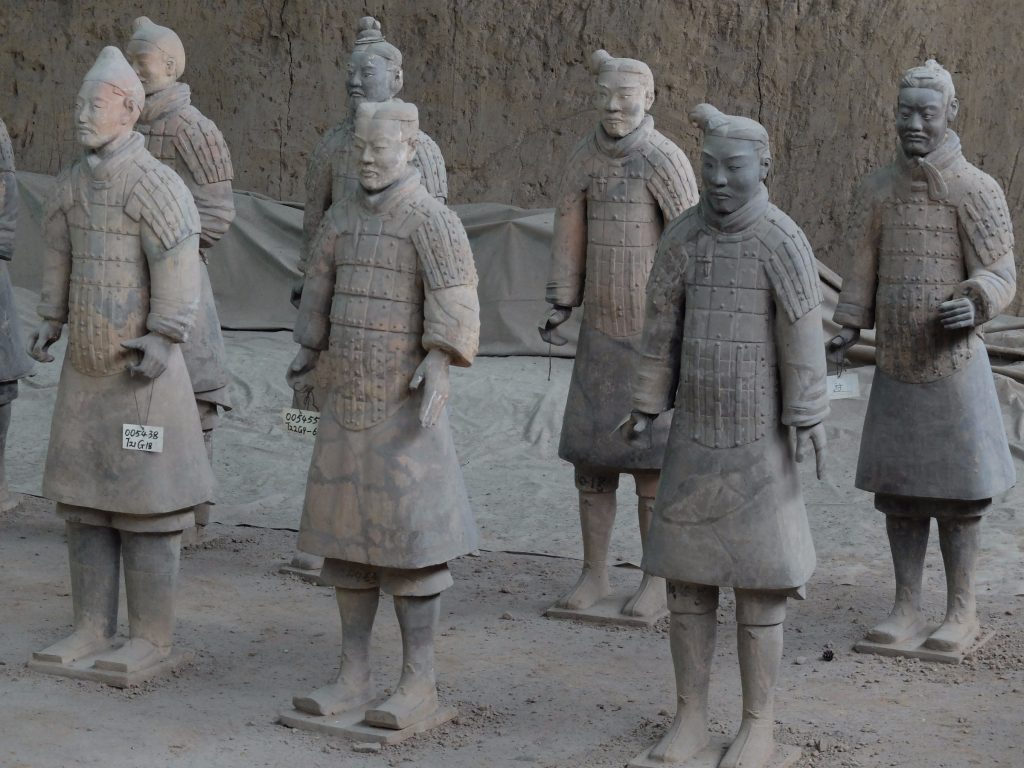
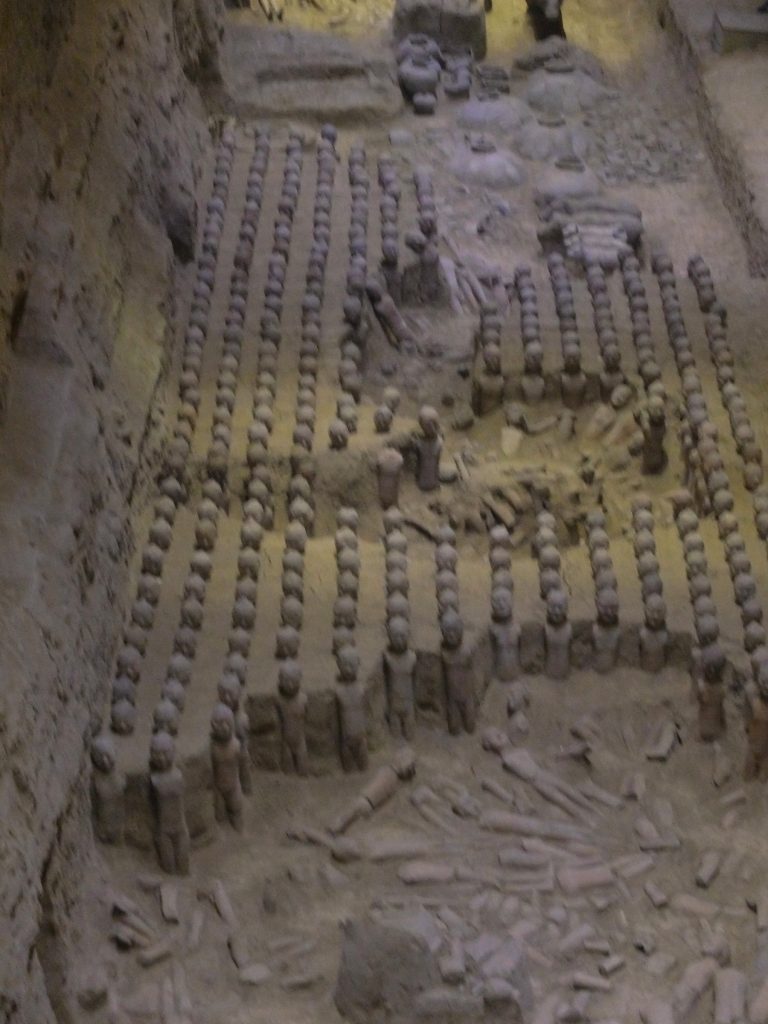
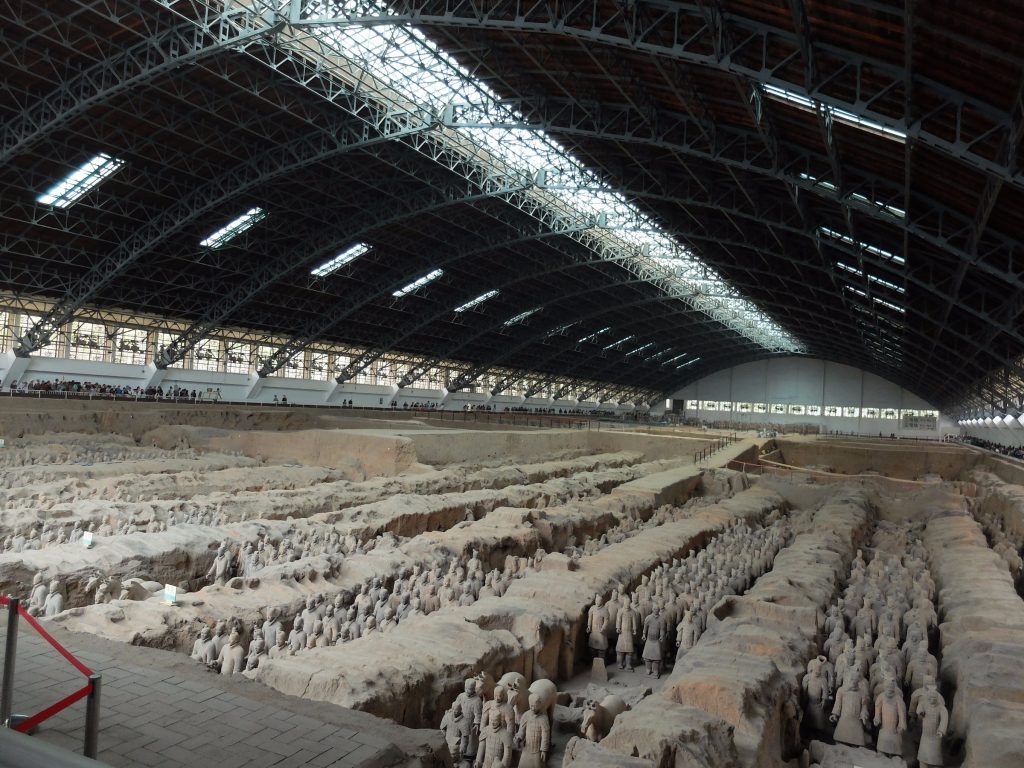
The Terracotta Army was one of the most impressive historical sites of the trip. Thousands of individually detailed warriors were created to guard Emperor Qin Shi Huang in the afterlife. Pit 1 was particularly extraordinary, with rows of figures stretching across the excavation hall.
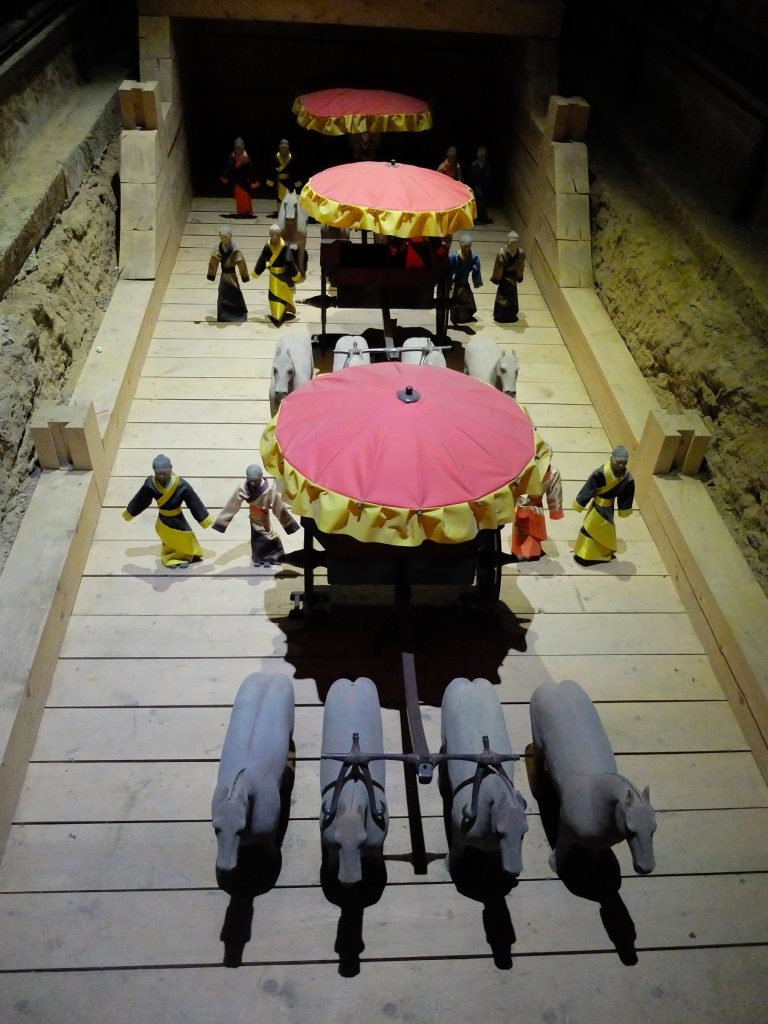
We also visited the Banpo Museum, showing evidence of Neolithic settlement, and the quieter Han Yangling Mausoleum, which gives a fascinating glimpse into everyday life during the Han dynasty.
April 18 — Luoyang Longmen Grottoes
Determined to travel independently, we caught the metro and then a bullet train to Luoyang, reaching speeds of more than 300 km/h.
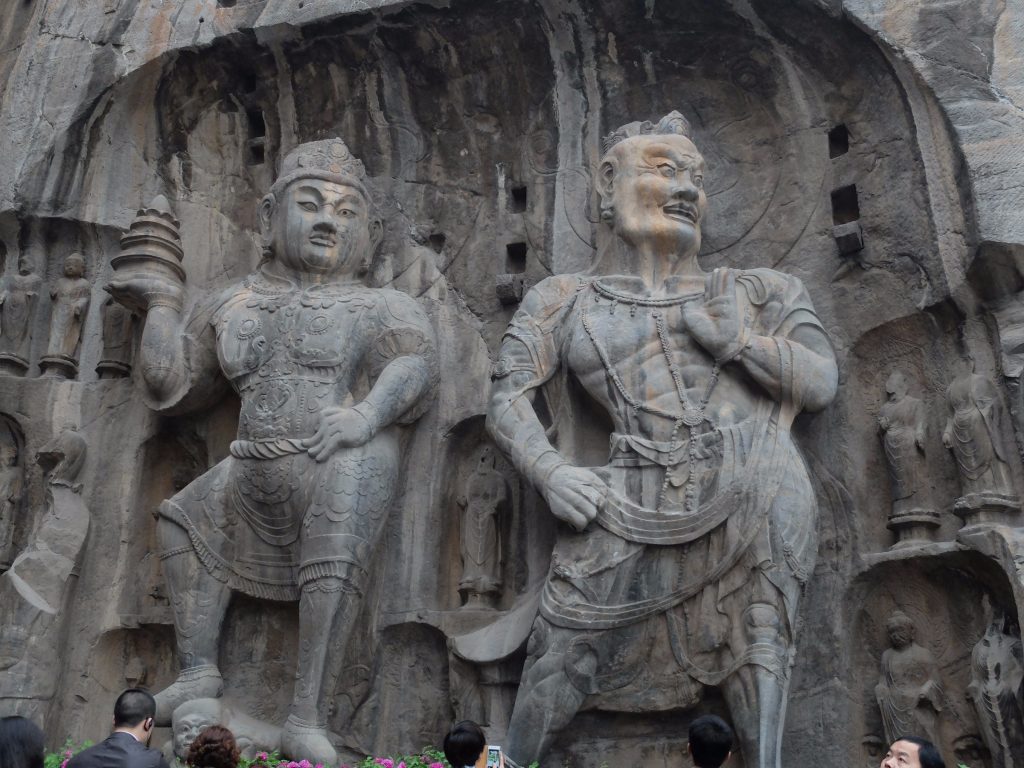
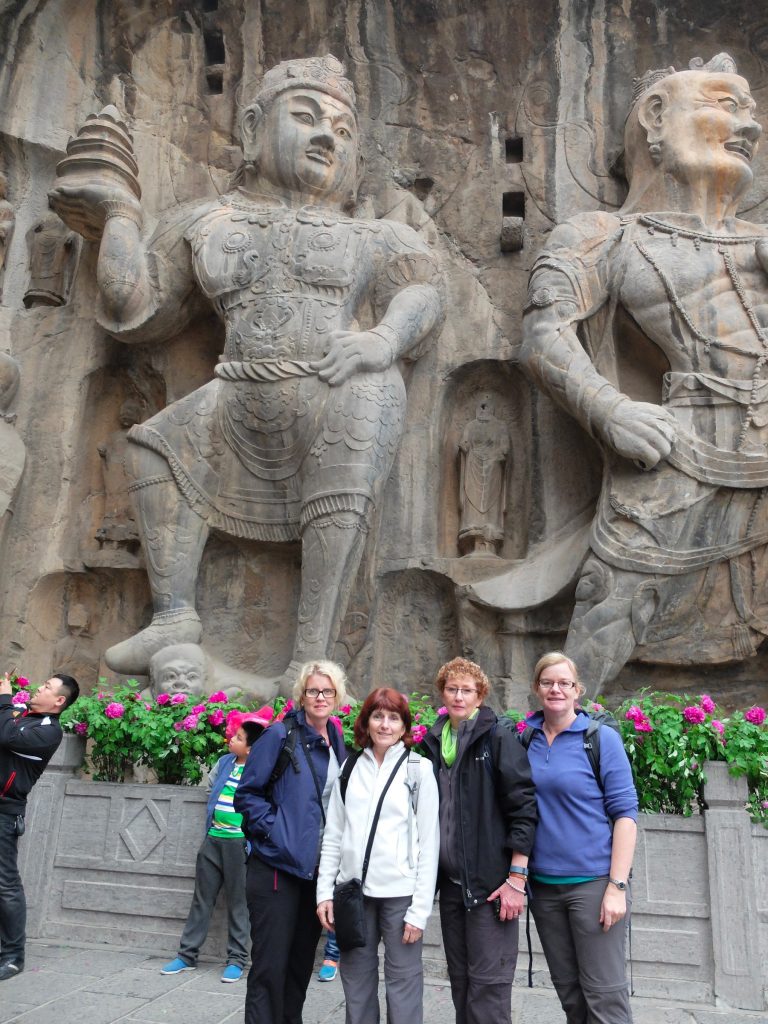
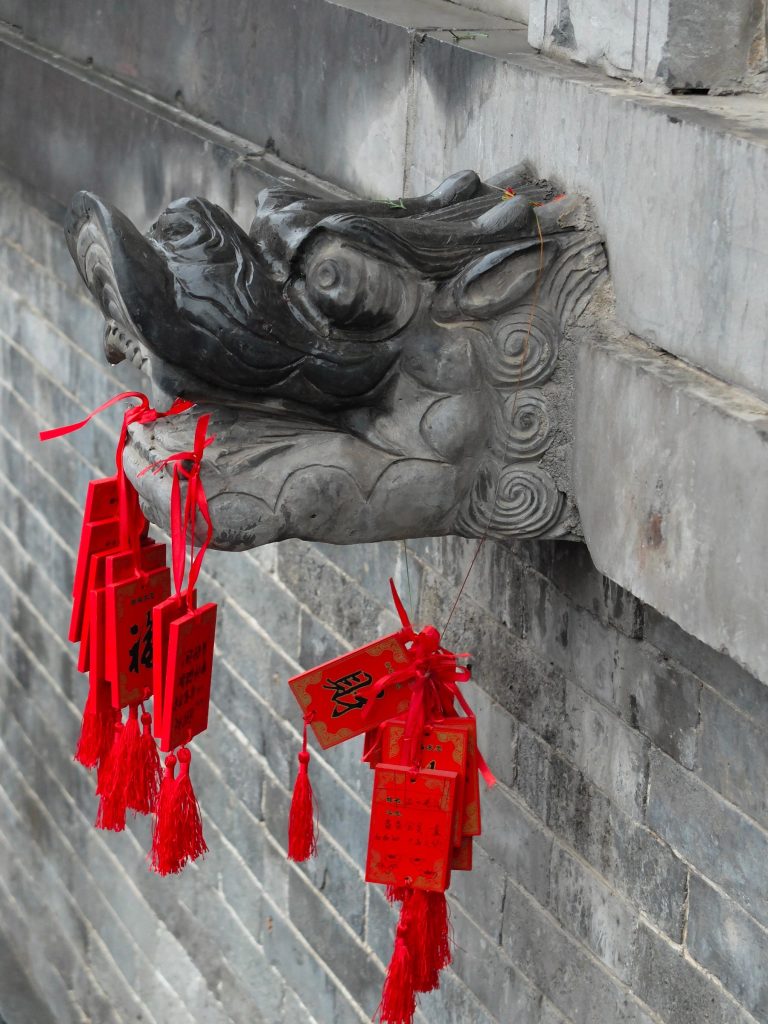
The Longmen Grottoes contain tens of thousands of Buddhist carvings cut directly into the limestone cliffs beside the Yi River.
The most impressive was the enormous Vairocana Buddha at Fengxian Temple.
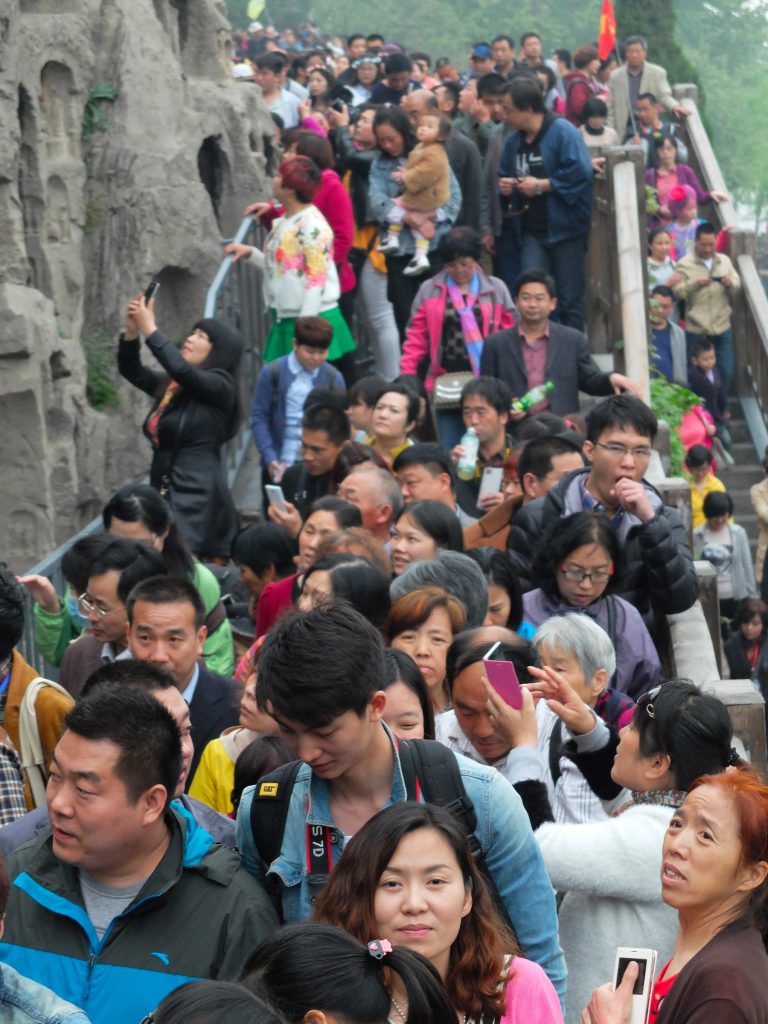
Despite the crowds and rain, the scale and detail of the carvings made the long day trip worthwhile.
We returned to Xi’an 13 hours after leaving, feeling rather pleased with ourselves for managing the whole journey without a guide.
April 19 — Xi’an to Lhasa
Another travel day, this time flying from Xi’an into Tibet.
After delays at the airport, we finally took off. During the final part of the flight, endless snow-covered mountains appeared beneath us.
It was spectacular.
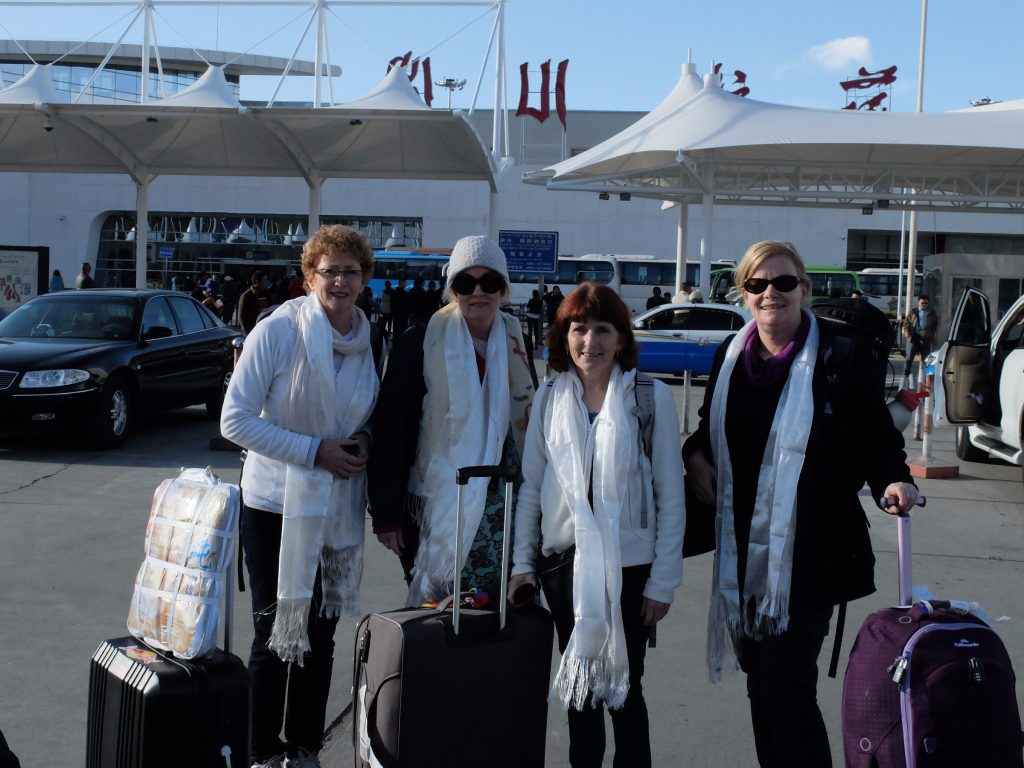
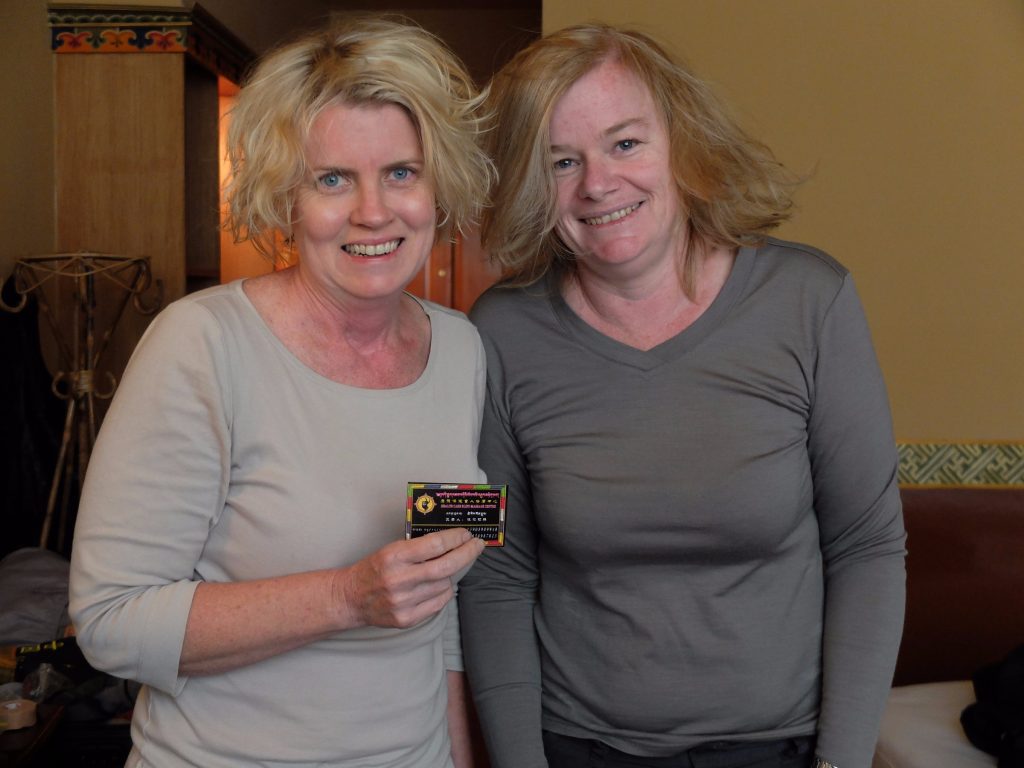
On arrival in Lhasa, our Tibetan guide Sherub greeted us with traditional white ceremonial scarves before driving us into the city.
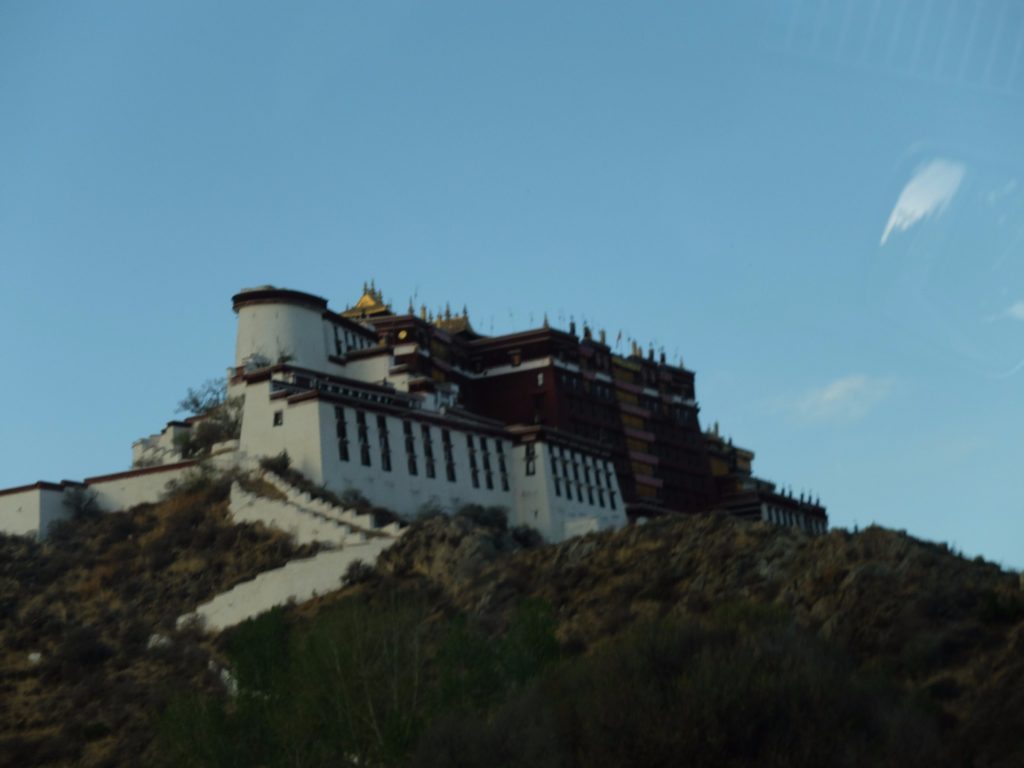
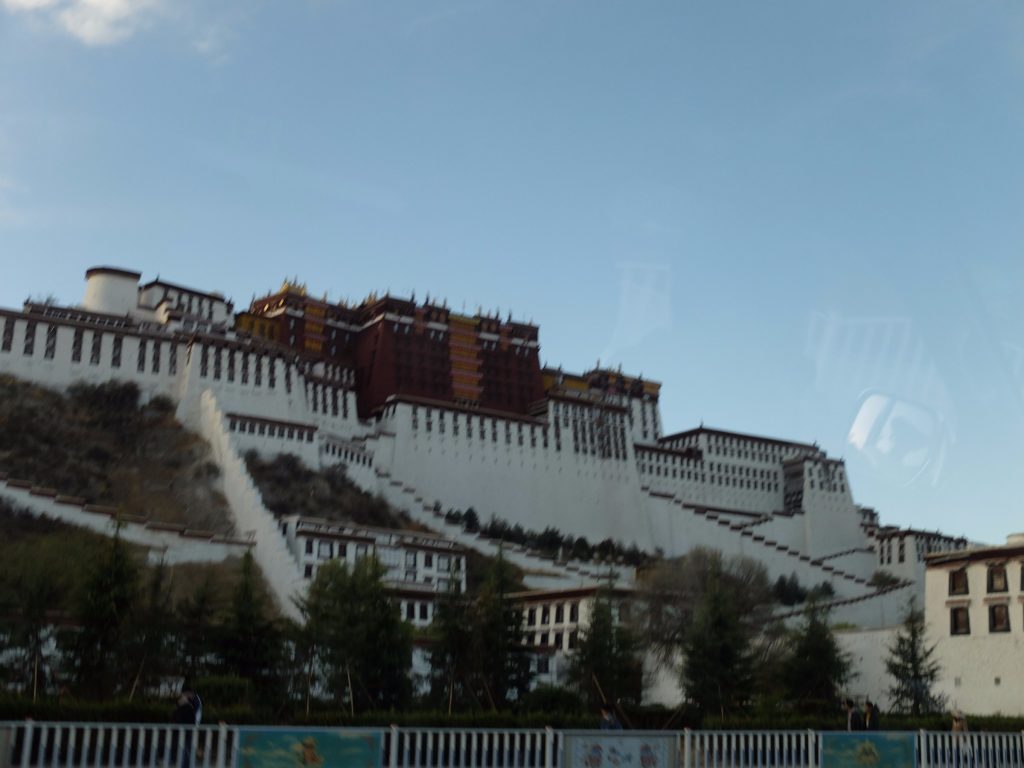
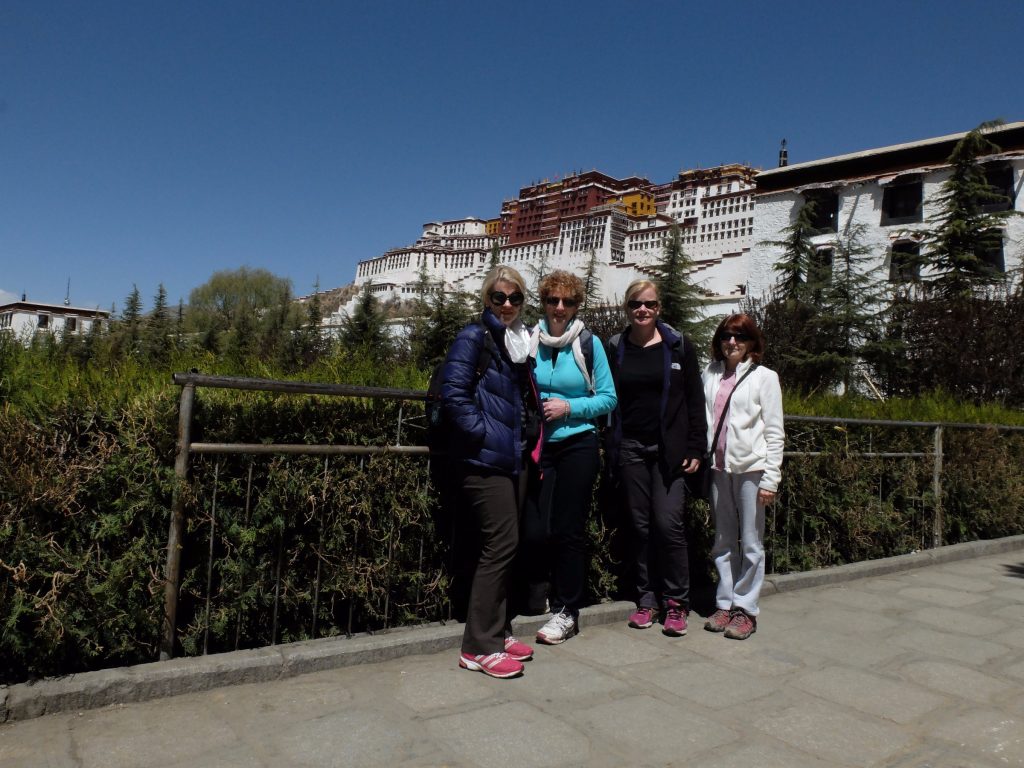
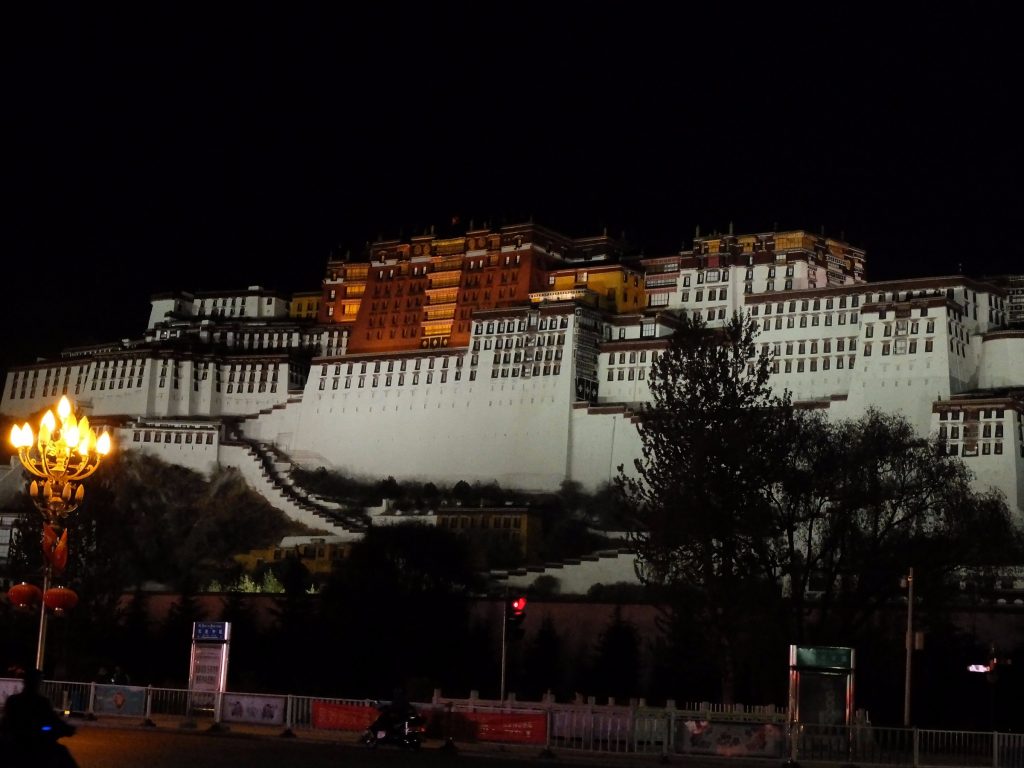
And then we saw it for the first time: the Potala Palace, rising above Lhasa.
After weeks of travelling through China, Tibet immediately felt completely different.
April 20 — Lhasa: Barkhor, Potala Palace and Jokhang Temple
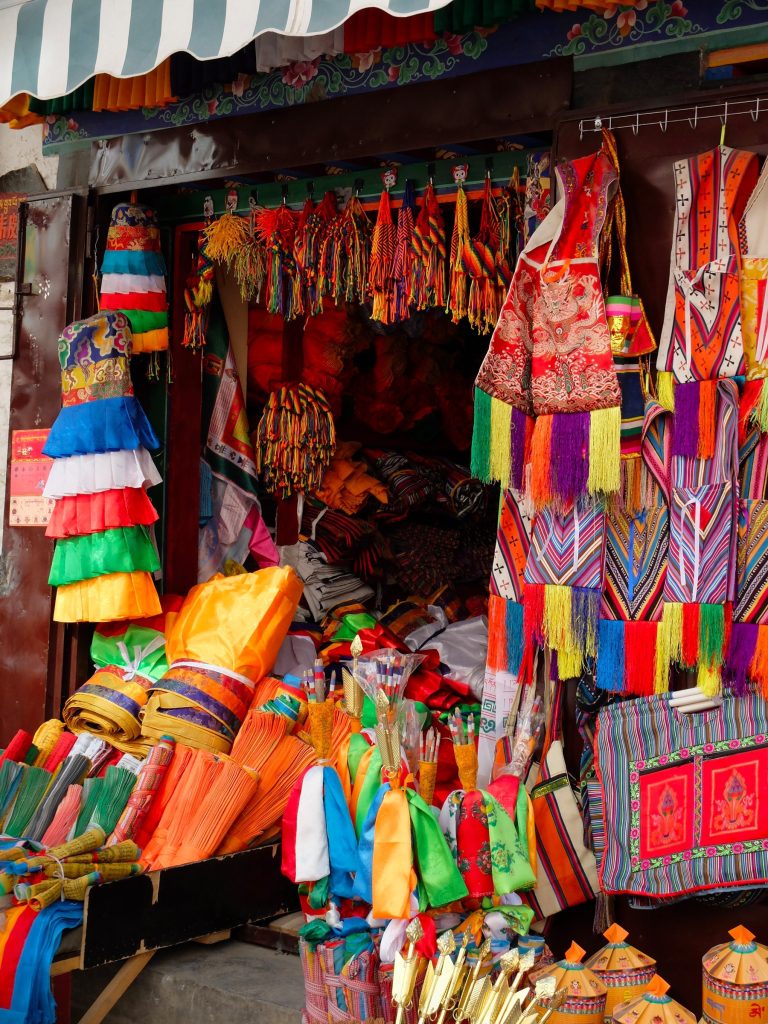
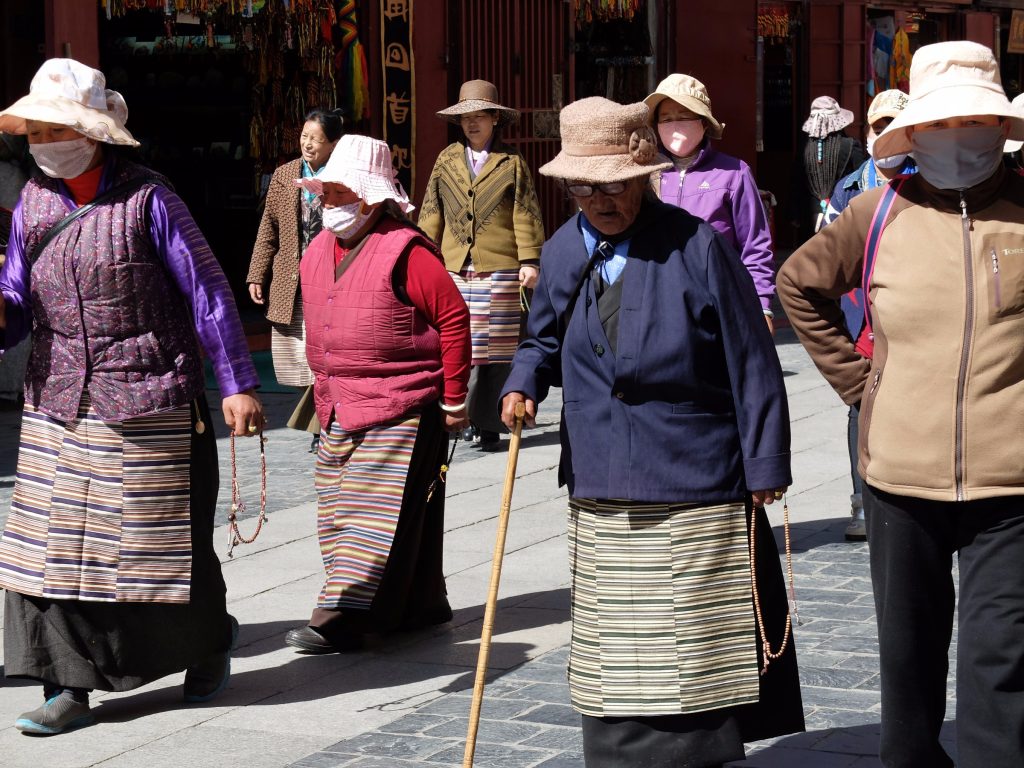
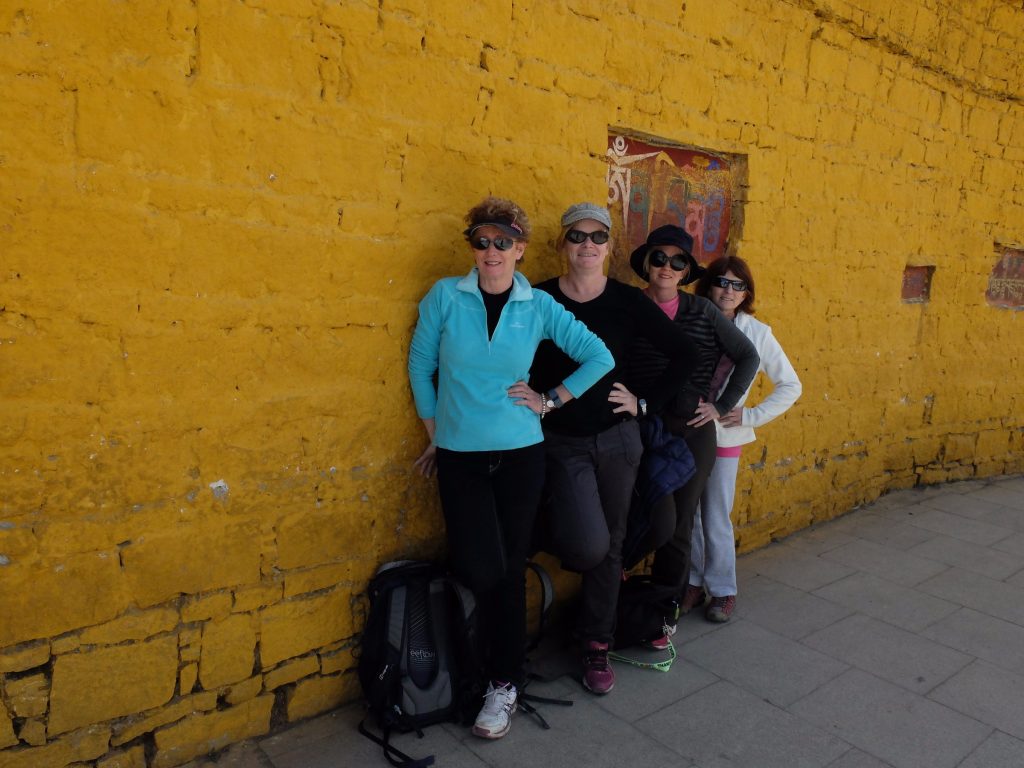
After a much-needed sleep, we headed into Barkhor Street and Square.
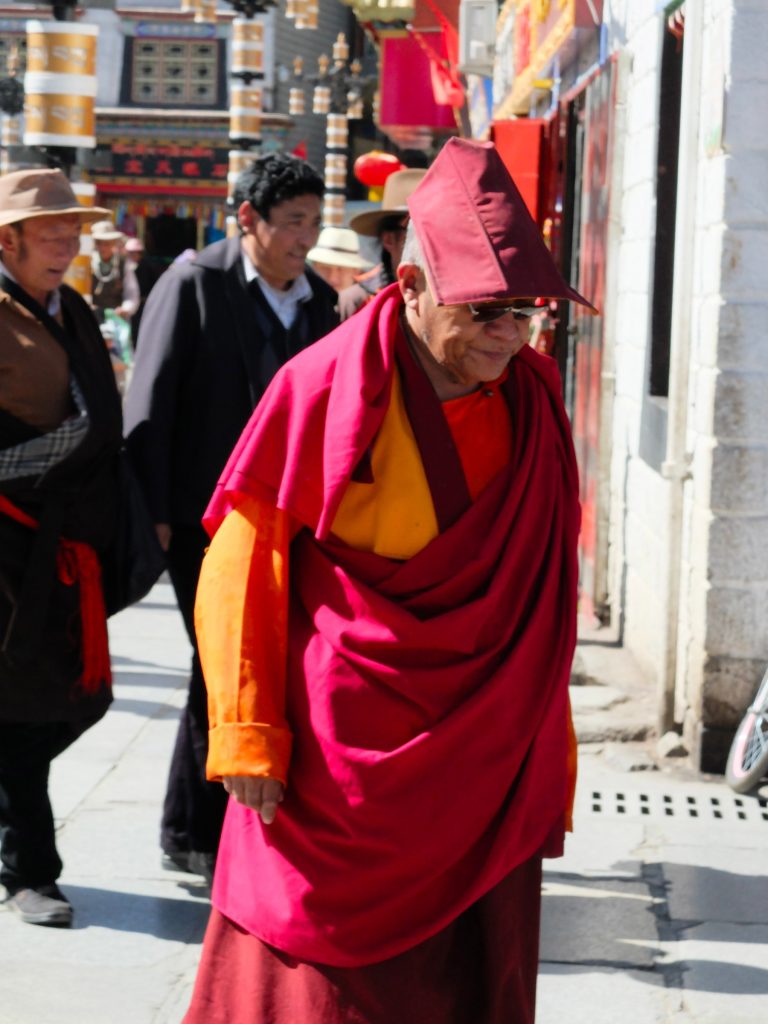
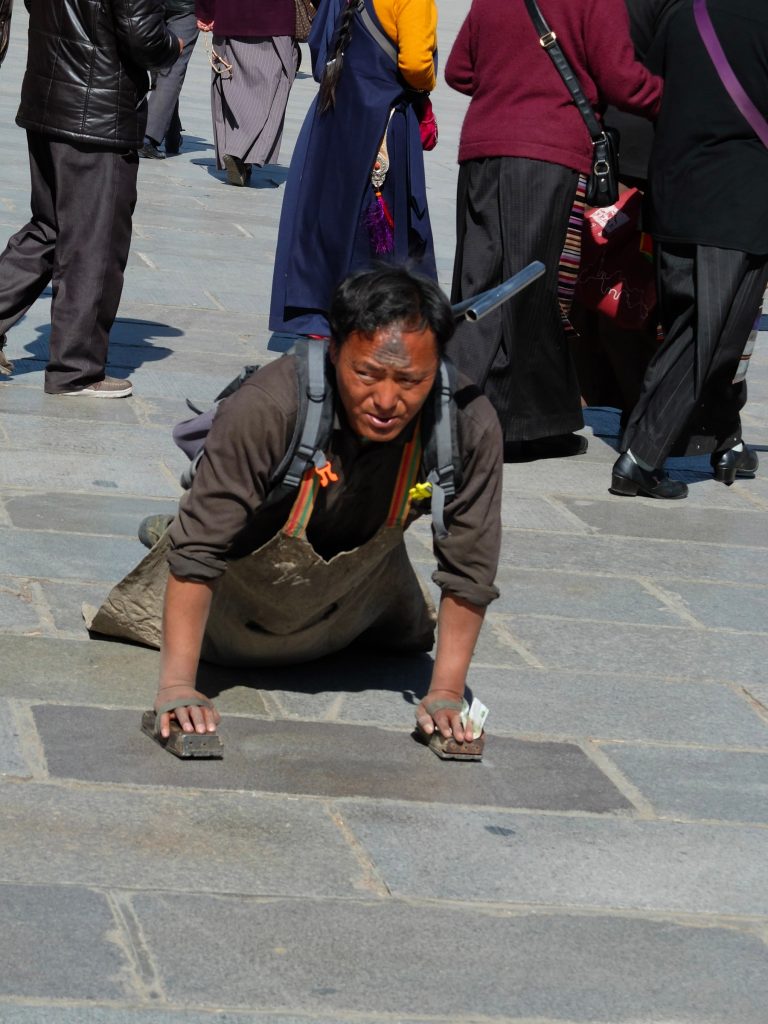
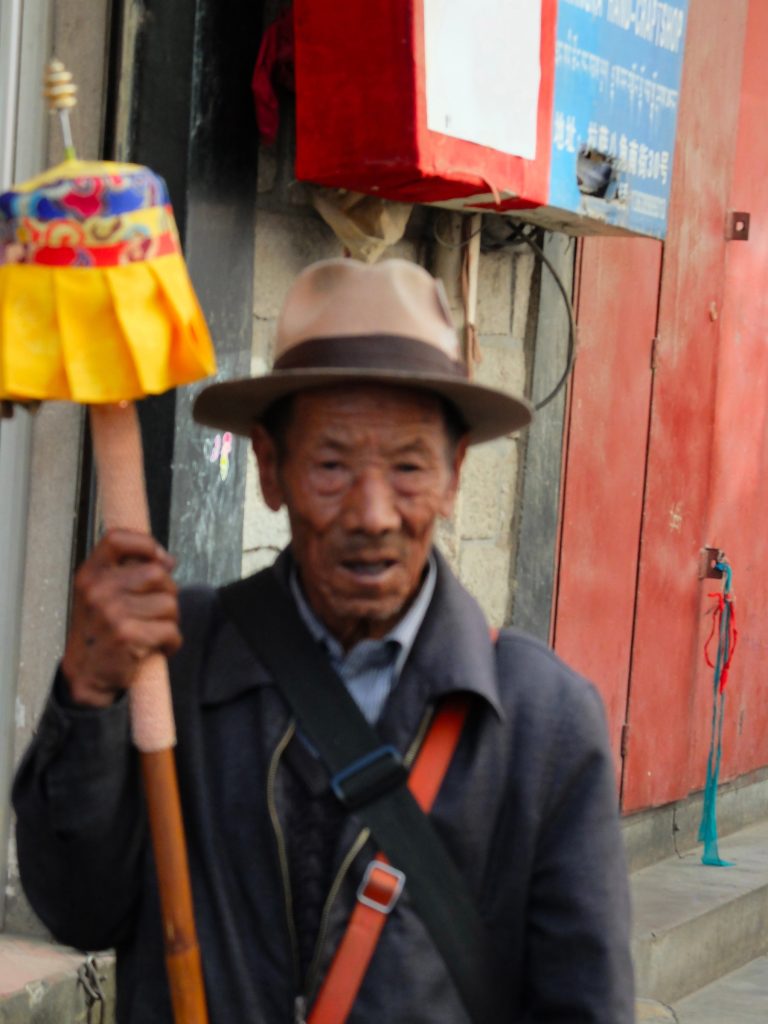
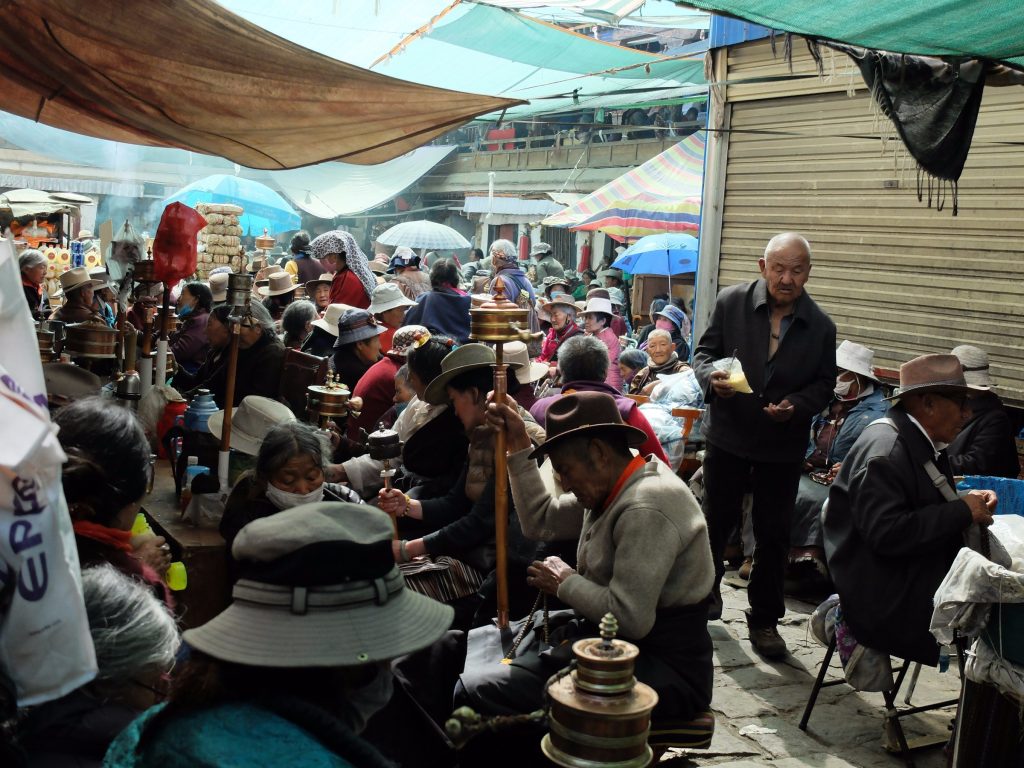
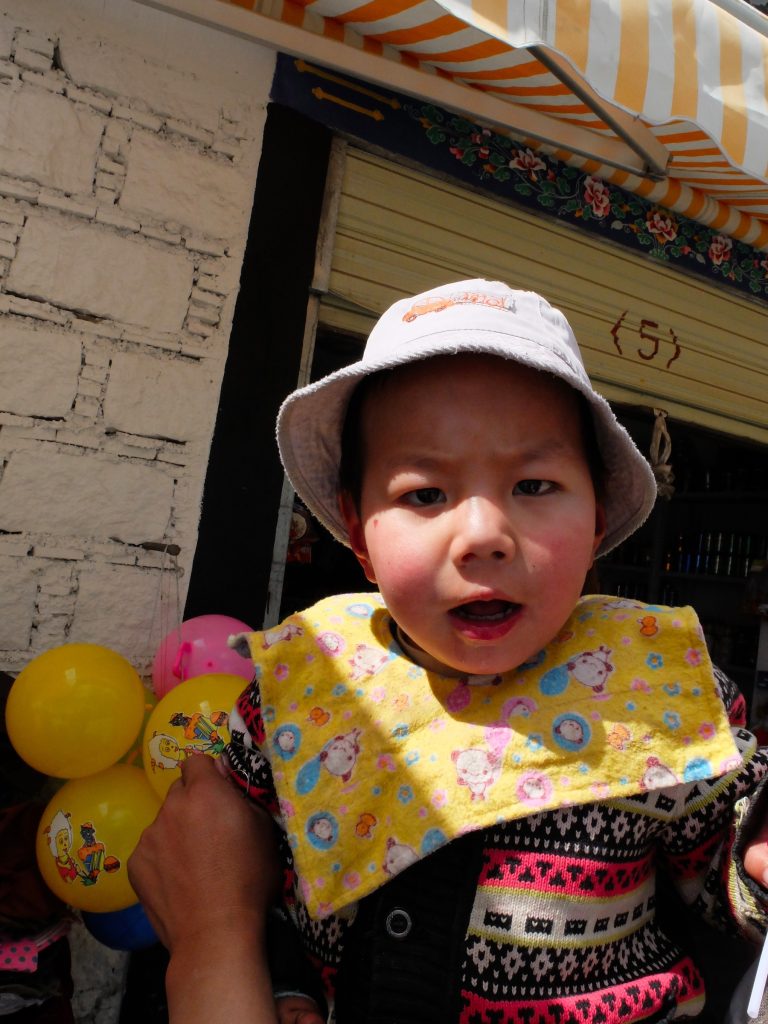
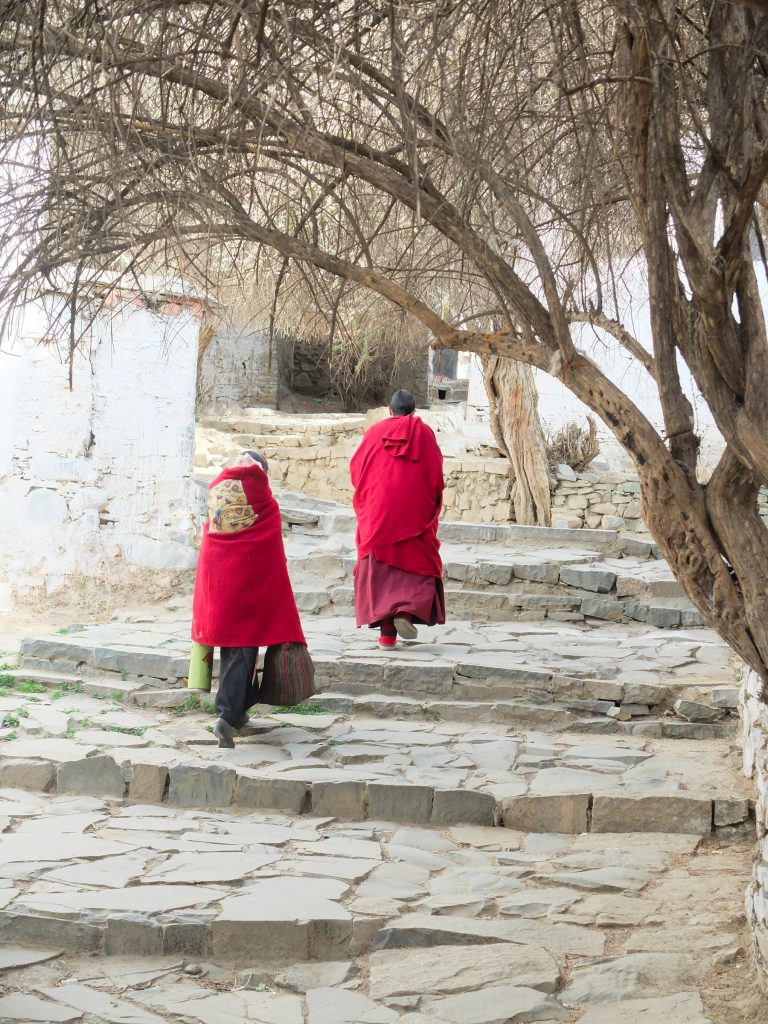
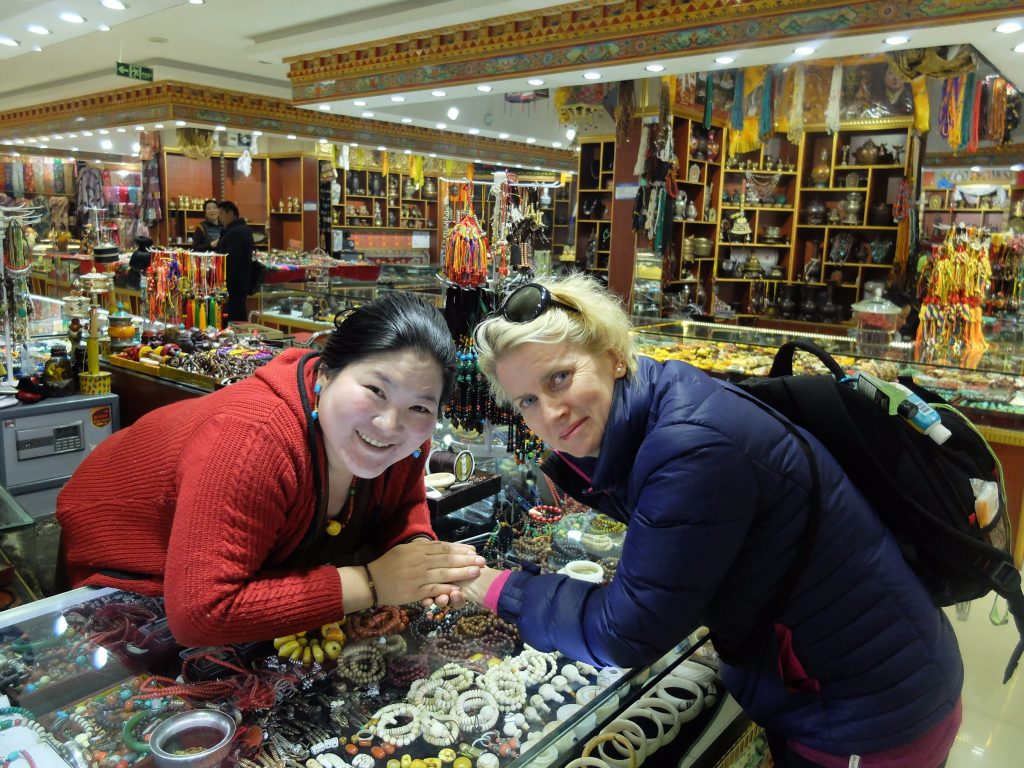
The area was filled with pilgrims walking clockwise around the sacred circuit, spinning prayer wheels, chanting and counting prayer beads. Some were performing full-body prostrations with every few steps, protected by pads on their hands, knees and elbows.
It was one of the most powerful scenes of the trip.
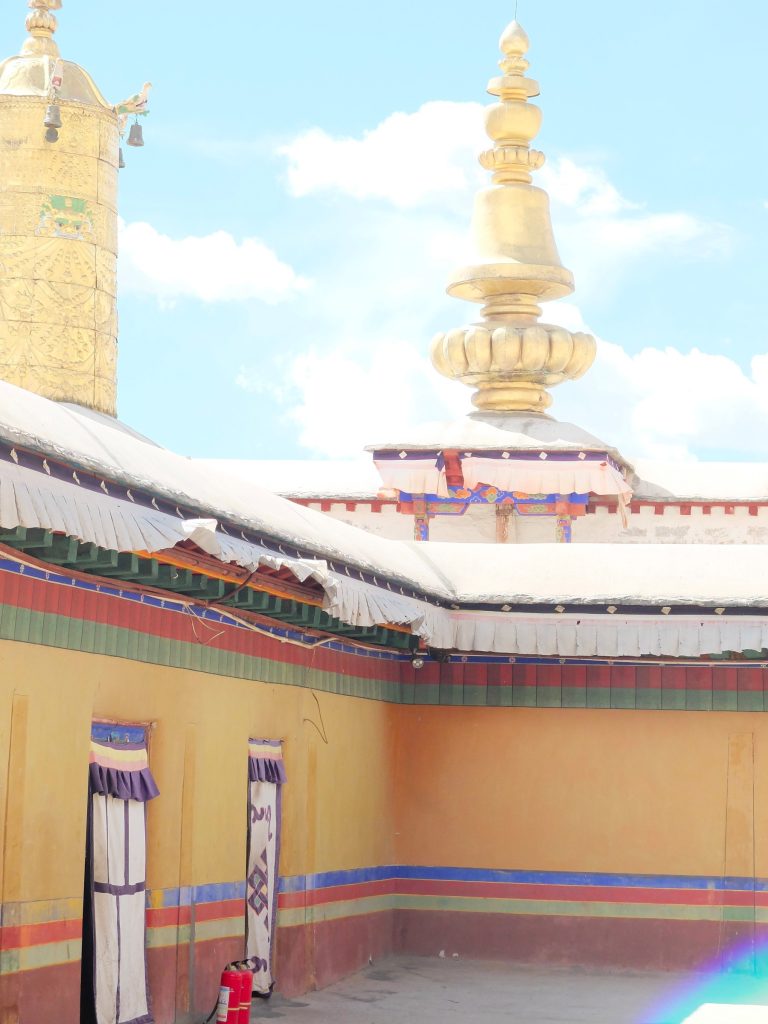
Later we visited the Potala Palace, the vast white-and-red palace rising above Lhasa. Once the winter residence of the Dalai Lamas, it contains chapels, former living quarters and richly decorated stupas holding the remains of previous Dalai Lamas.
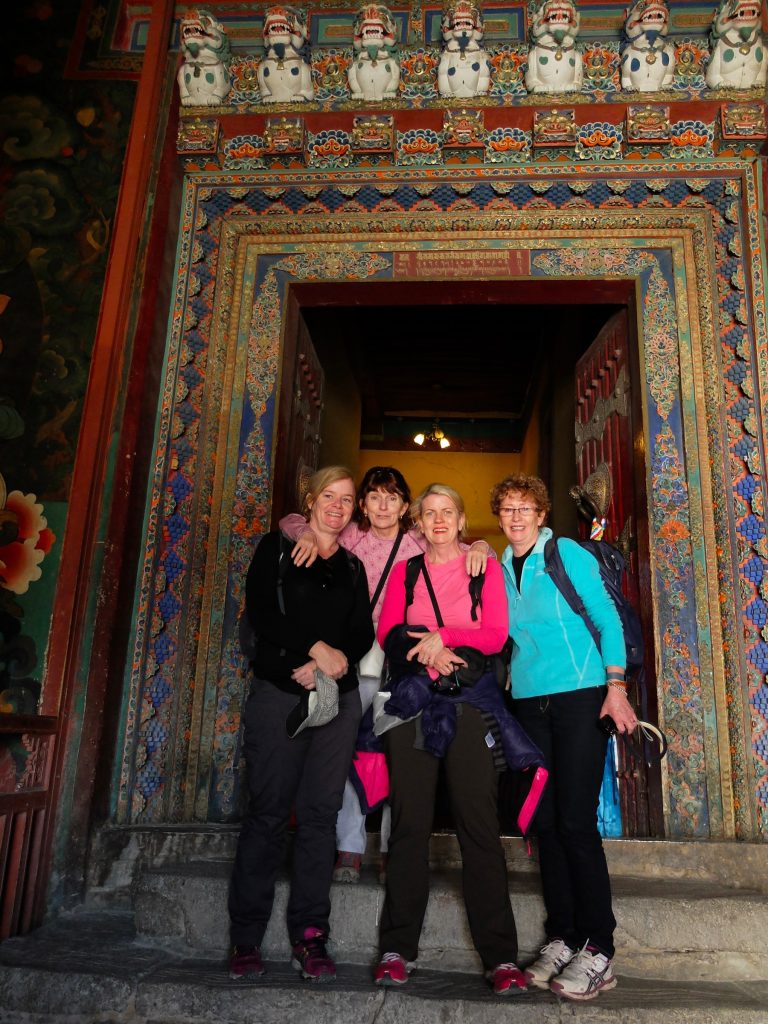
We finished at Jokhang Temple, considered the spiritual heart of Tibet and one of its most sacred Buddhist sites.
[
April 21 — Drepung and Sera Monasteries
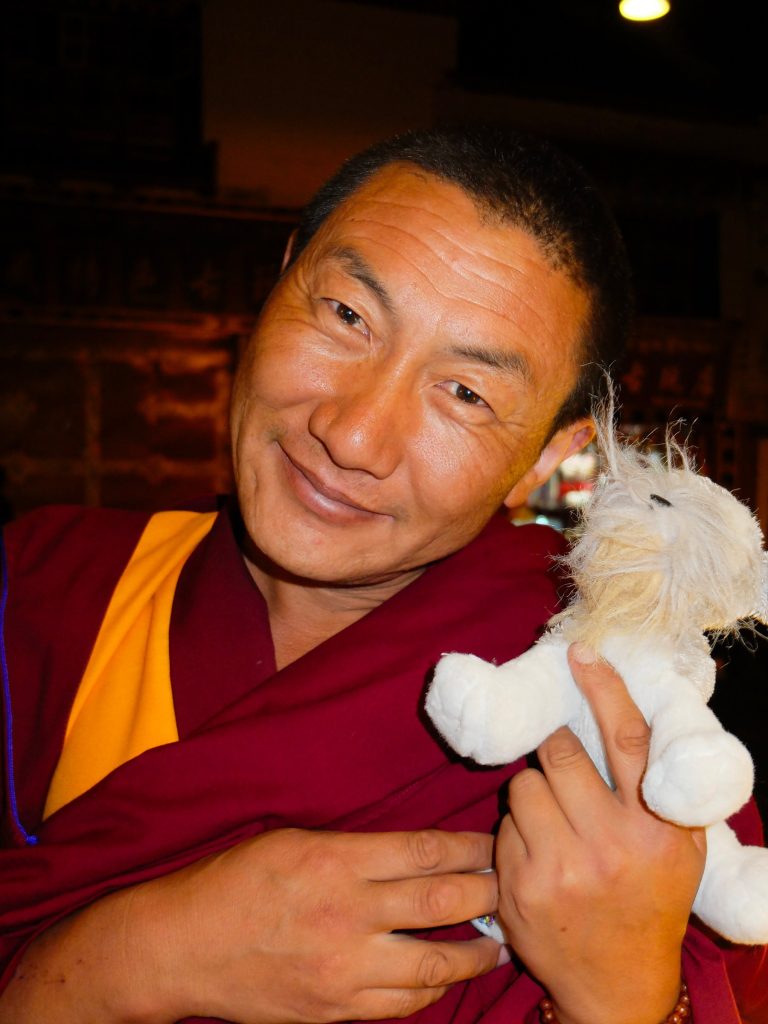
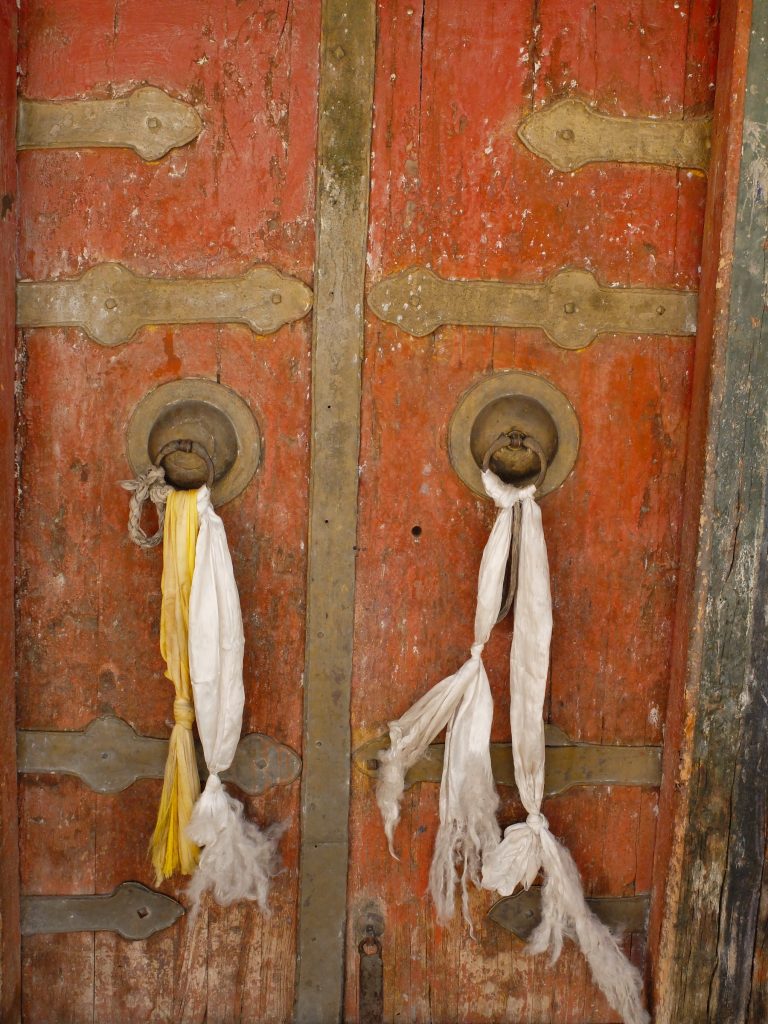
Our first stop was Drepung Monastery, once one of the largest monasteries in Tibet and home to thousands of monks.
Set against the mountains above Lhasa, it felt almost like a small village, with temples, courtyards, colleges and prayer wheels.
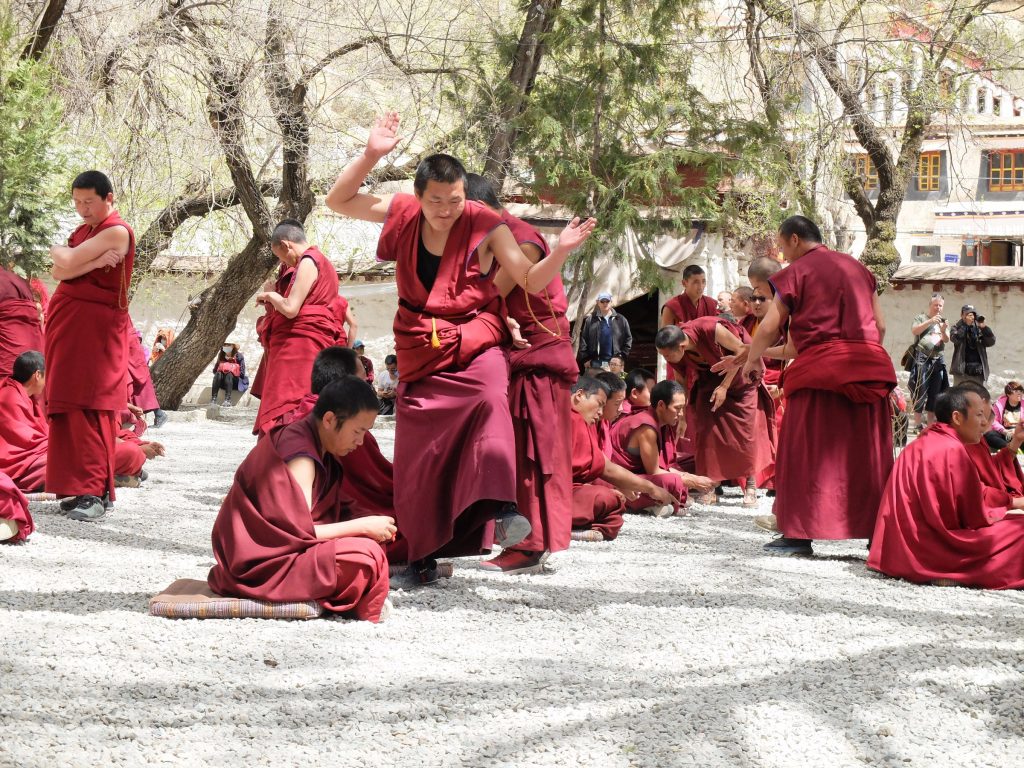
In the afternoon we visited Sera Monastery, best known for its lively Buddhist debating tradition.
Pairs of monks debated philosophy in the courtyard, with dramatic hand claps, gestures and shouted questions. It was fascinating to watch.
That evening we returned to Barkhor for dinner overlooking the square and another walk around the kora.
April 22 — Across Tibet to Shigatse
We left Lhasa and headed towards Shigatse, taking the scenic route through some extraordinary high-altitude landscapes.
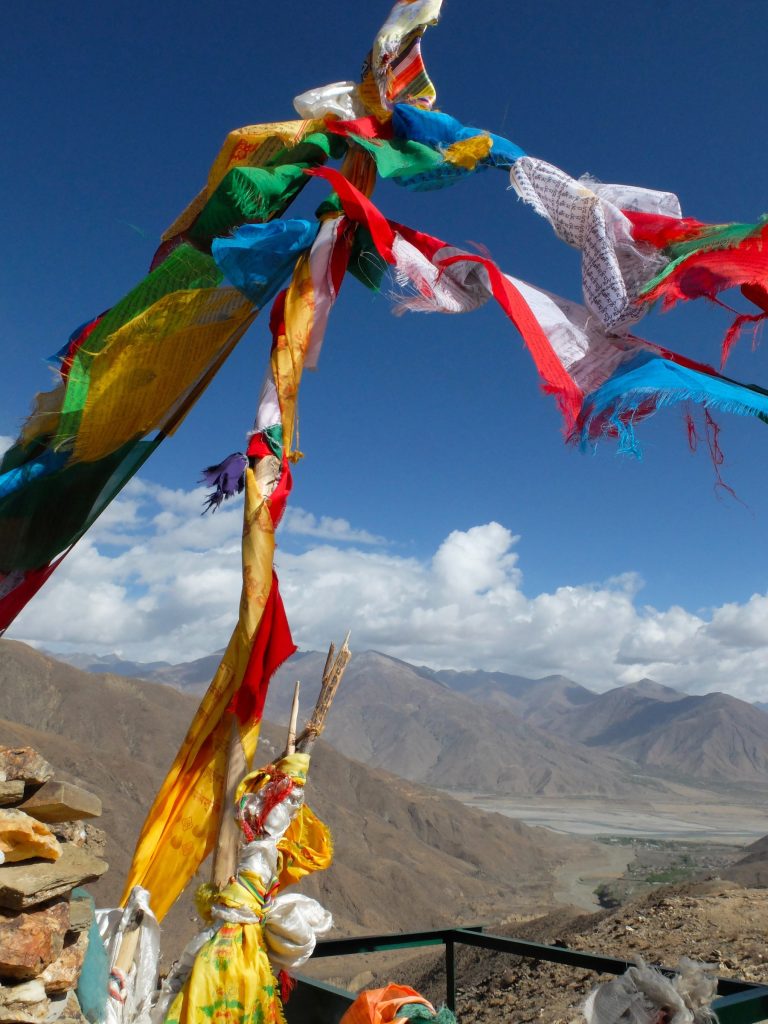
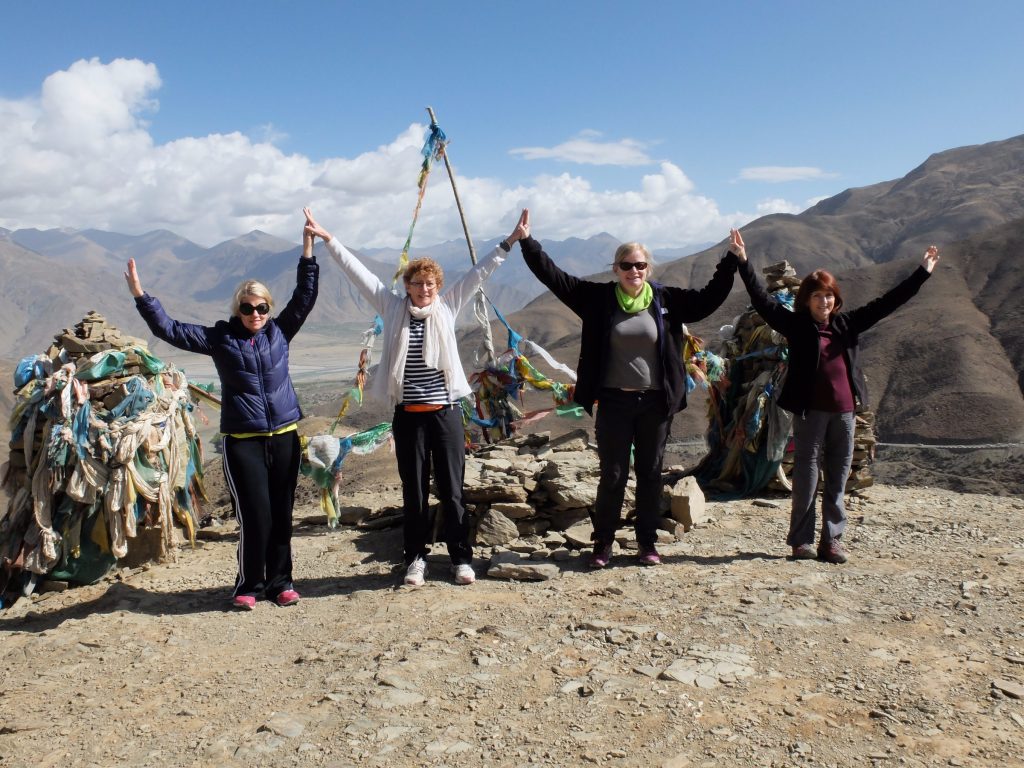
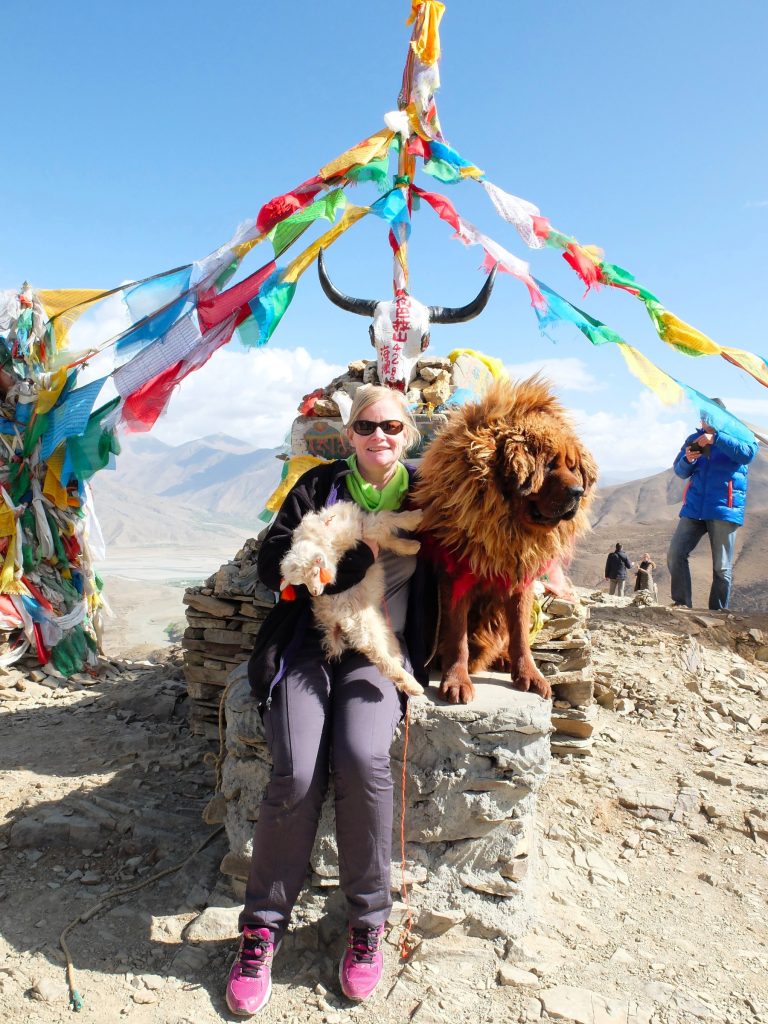
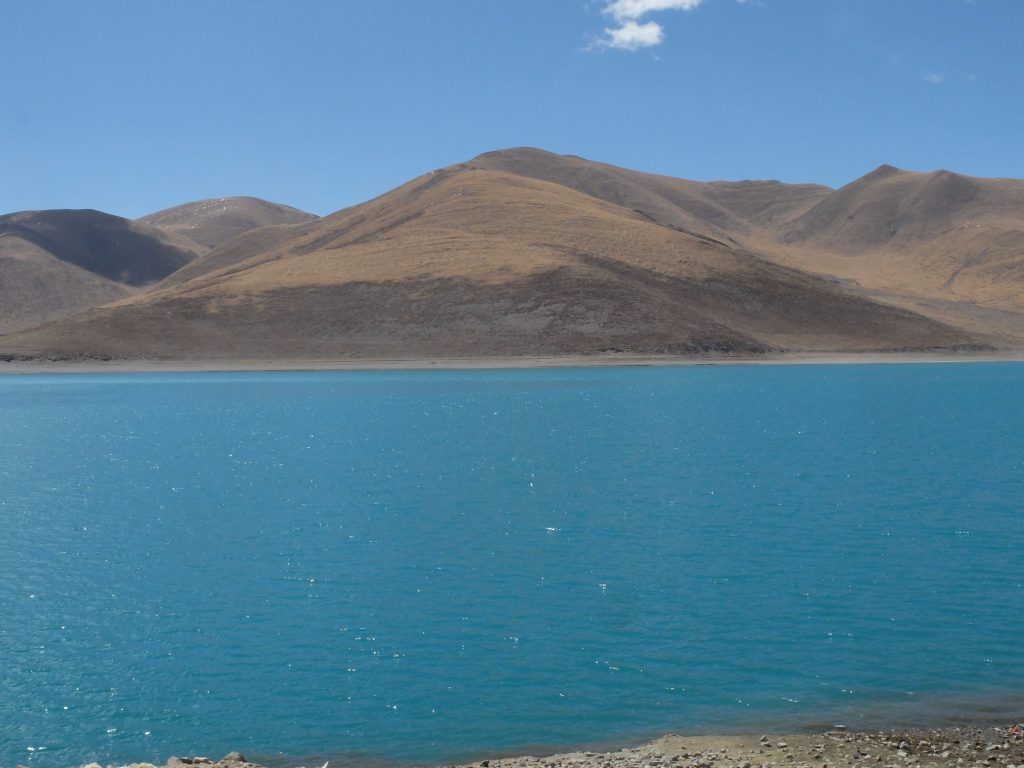
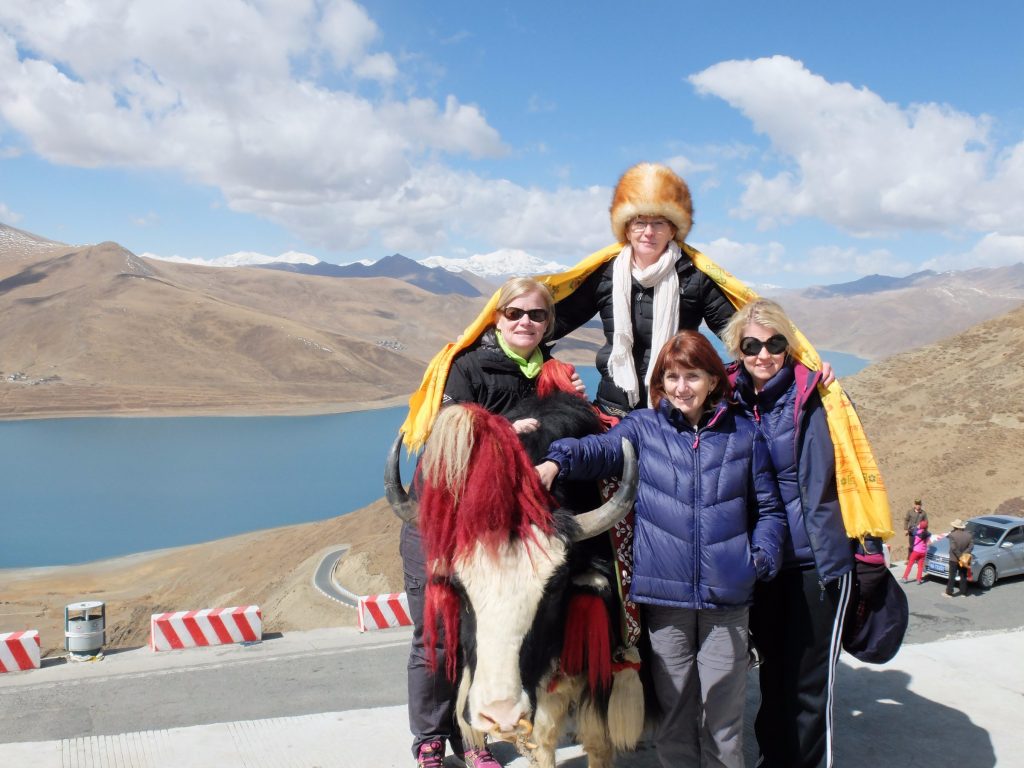
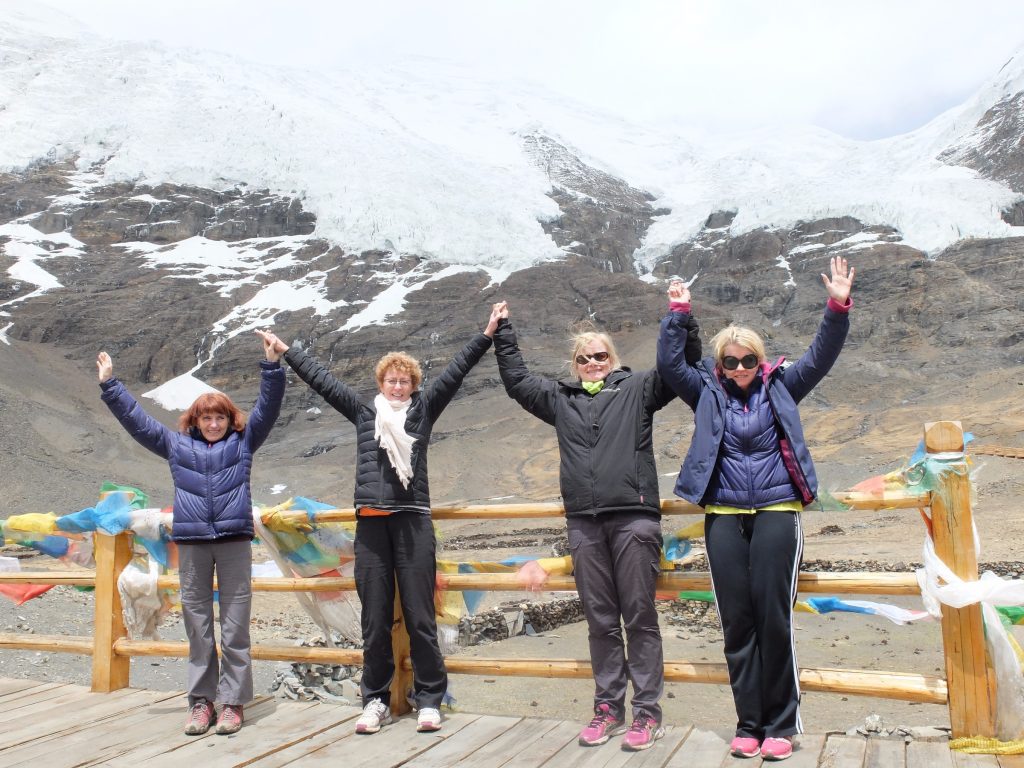
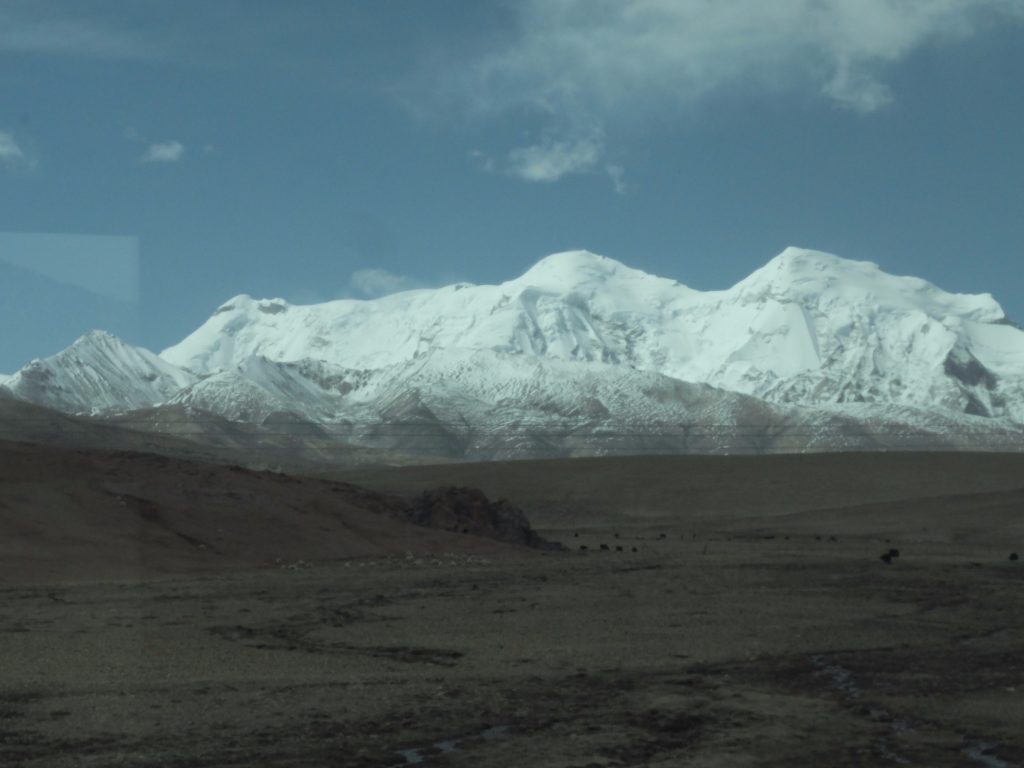
At Kamba La Pass, nearly 4,800 metres above sea level, we looked across to the brilliant turquoise waters of Yamdrok Lake and distant snow-covered peaks.
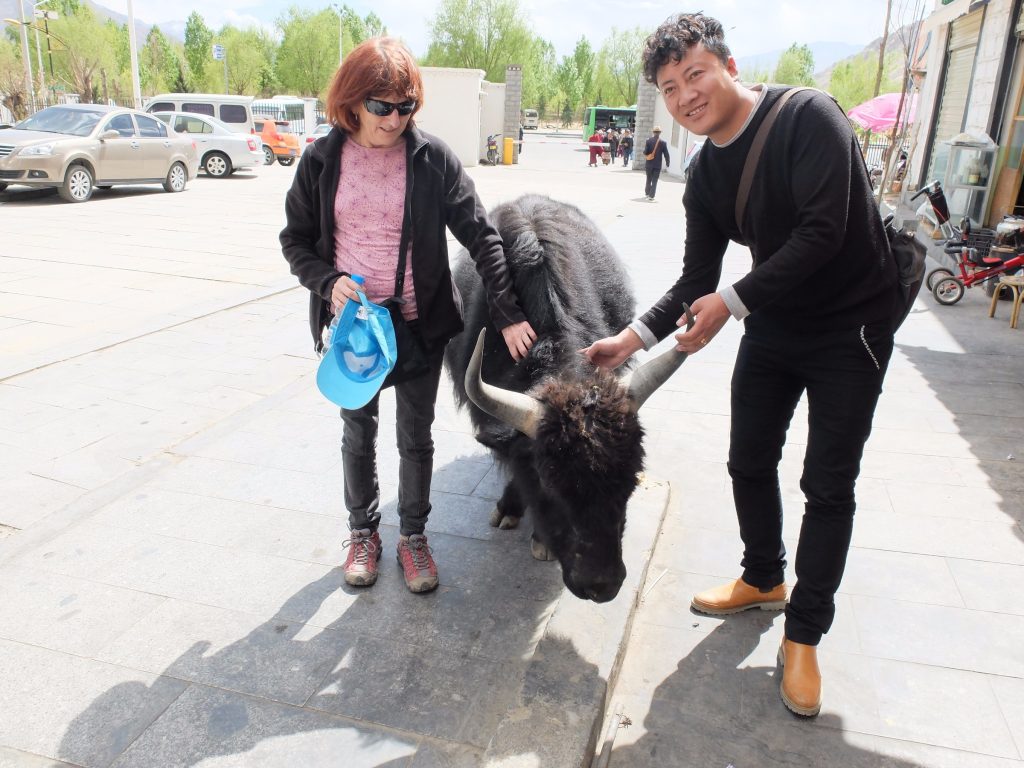
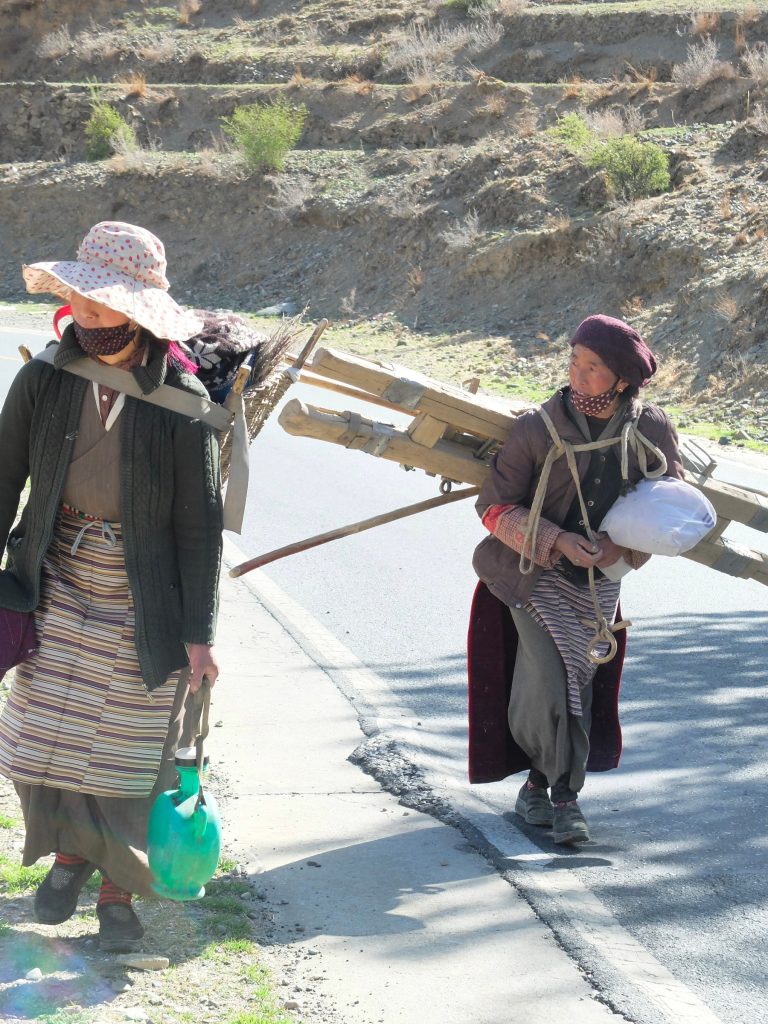
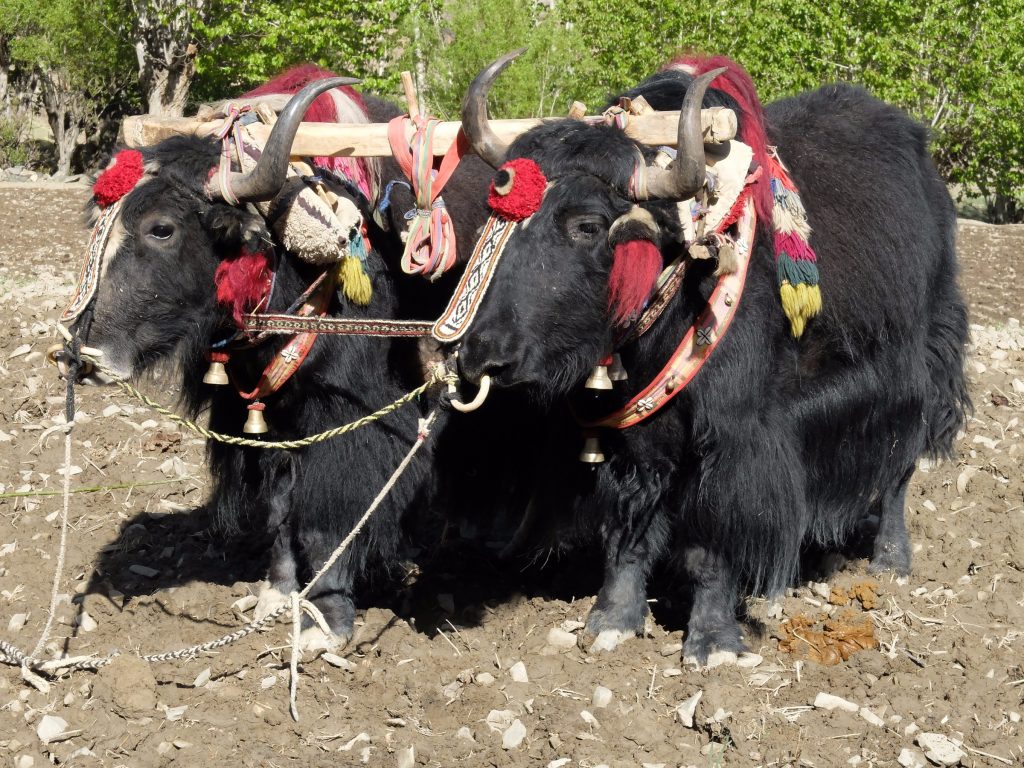
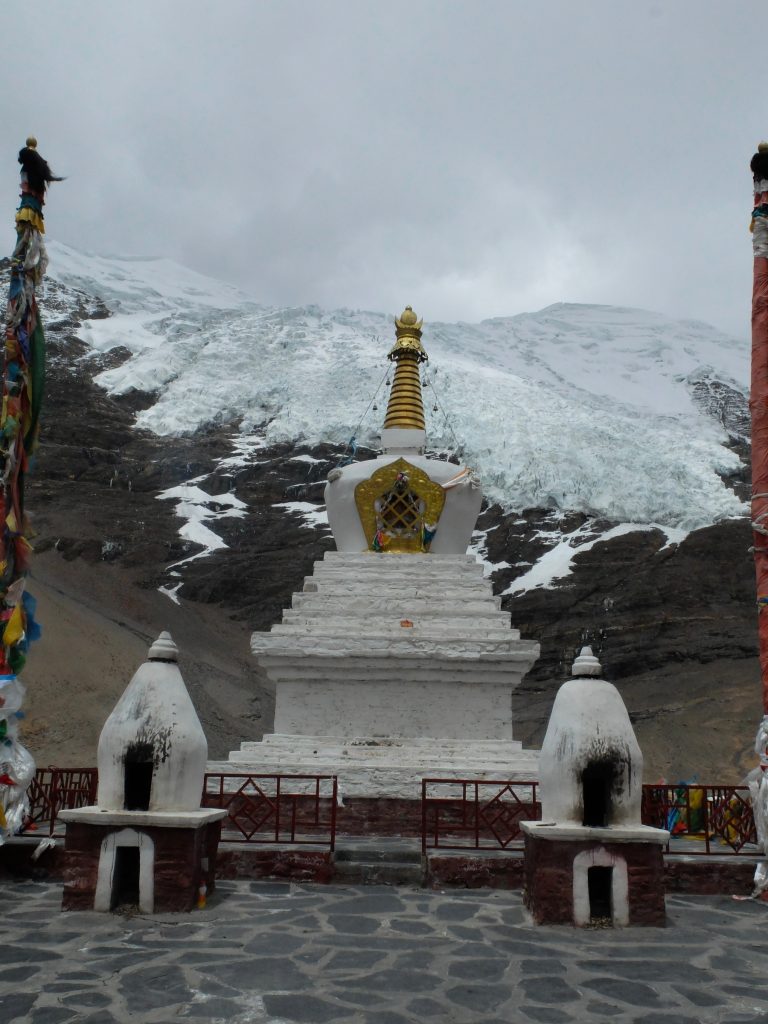
We continued past villages, working yaks and prayer flags before stopping at the Karo La Glacier.
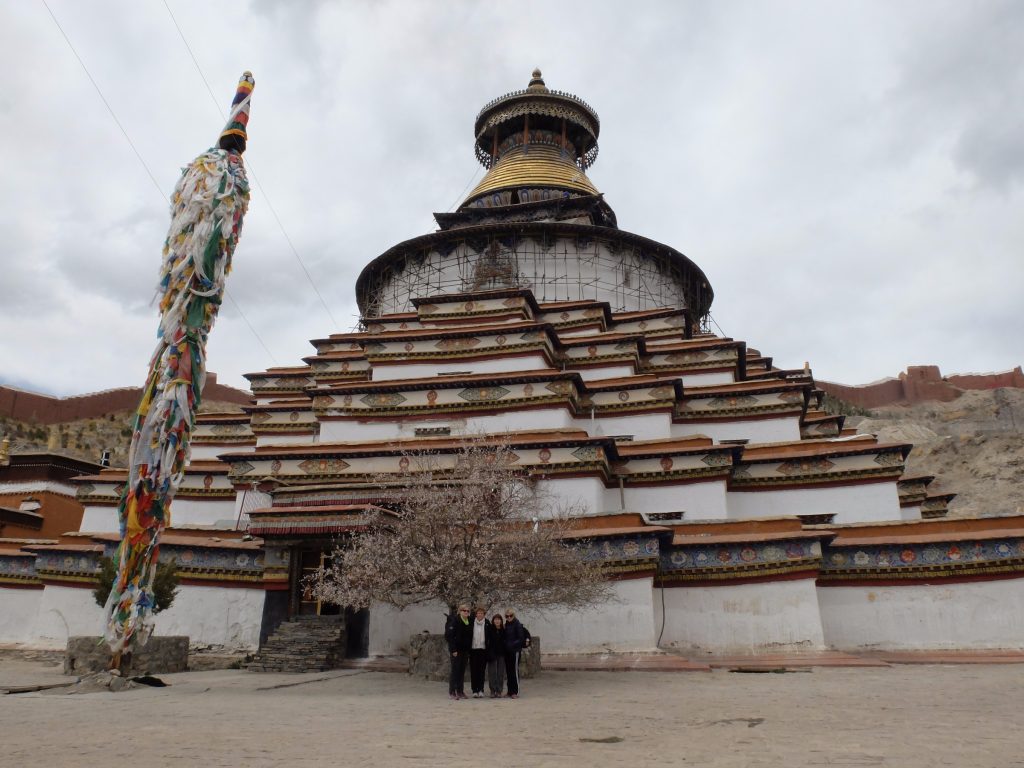
Later we visited Pelkhor Chode Monastery and the Gyantse Kumbum, a huge multi-level stupa containing numerous chapels and Buddhist images.
After around 11 hours on the road, we finally reached Shigatse.
April 23 — Tashilhunpo Monastery and Back to Lhasa
The morning began at Tashilhunpo Monastery, the traditional seat of the Panchen Lama.
The enormous monastery complex contains impressive chapels, gilded tombs and a huge statue of Maitreya, the Future Buddha.
Then we started the long drive back to Lhasa.
A landslide slowed us down considerably, adding another reminder that travelling across Tibet rarely happens quickly.
We arrived back in Lhasa in the evening, tired, slightly battered by the altitude, but completely taken by Tibet.
April 24 — Leaving Tibet
We spent our final morning back in Barkhor Street, watching the endless stream of pilgrims, doing some last-minute shopping and trying warm Tibetan fried bread from a street stall.
Then it was time for the next adventure.
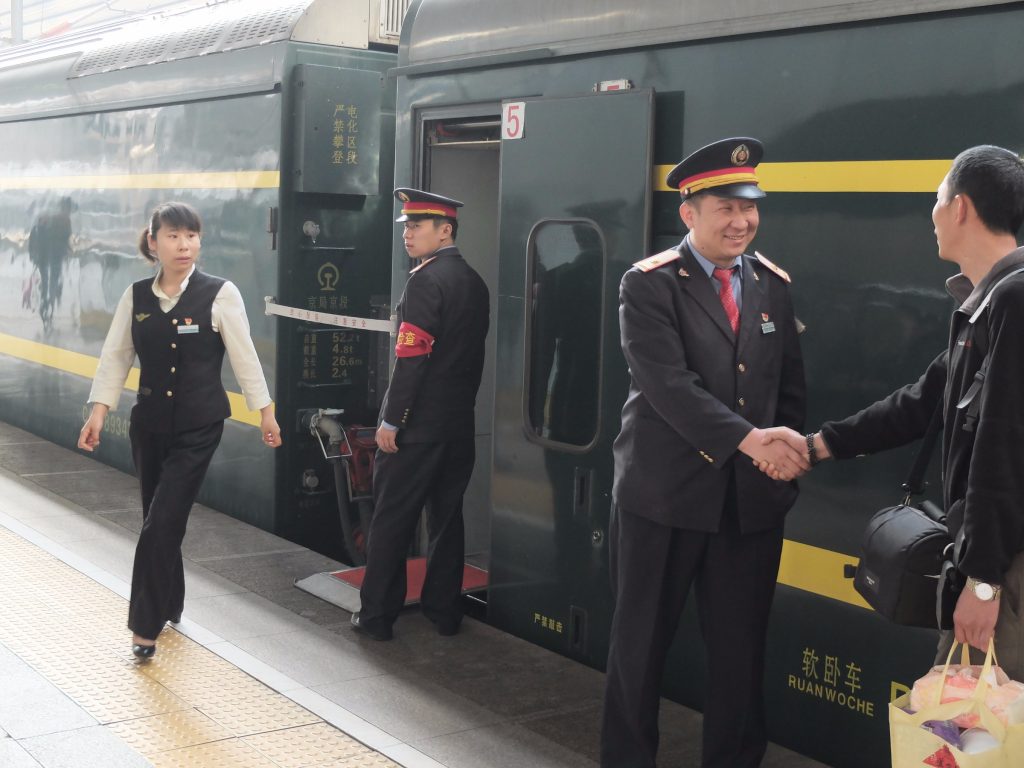
We boarded the train from Lhasa towards Beijing for a journey of around 40 hours.
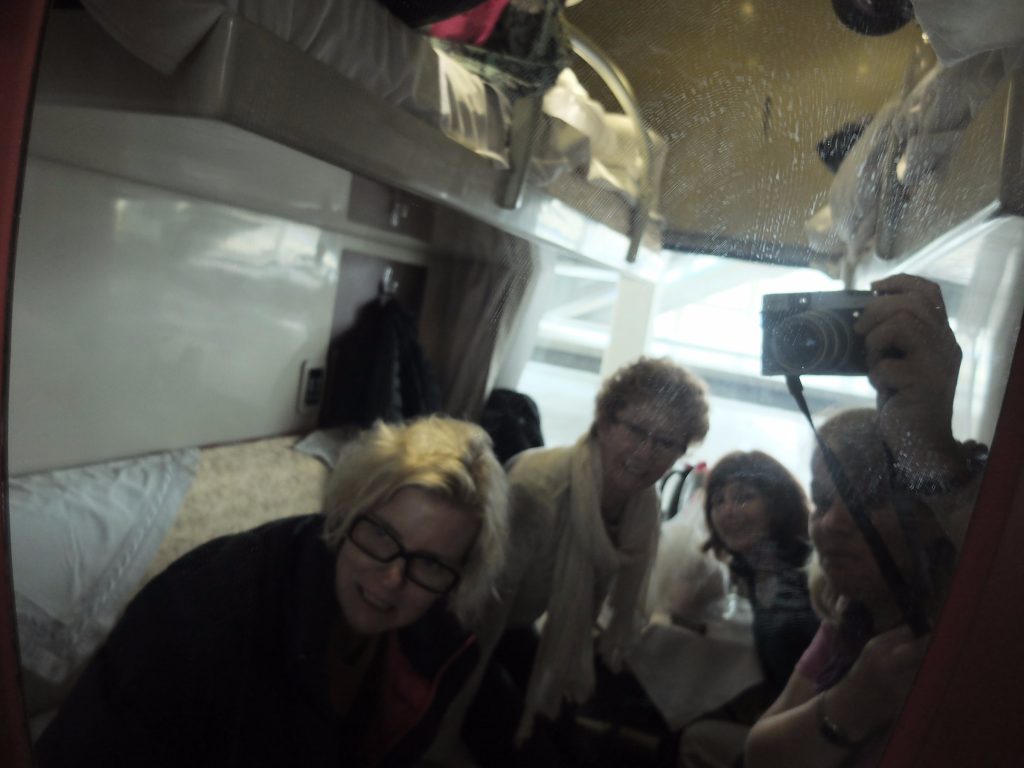
Four women, four sets of luggage and not nearly enough storage space.
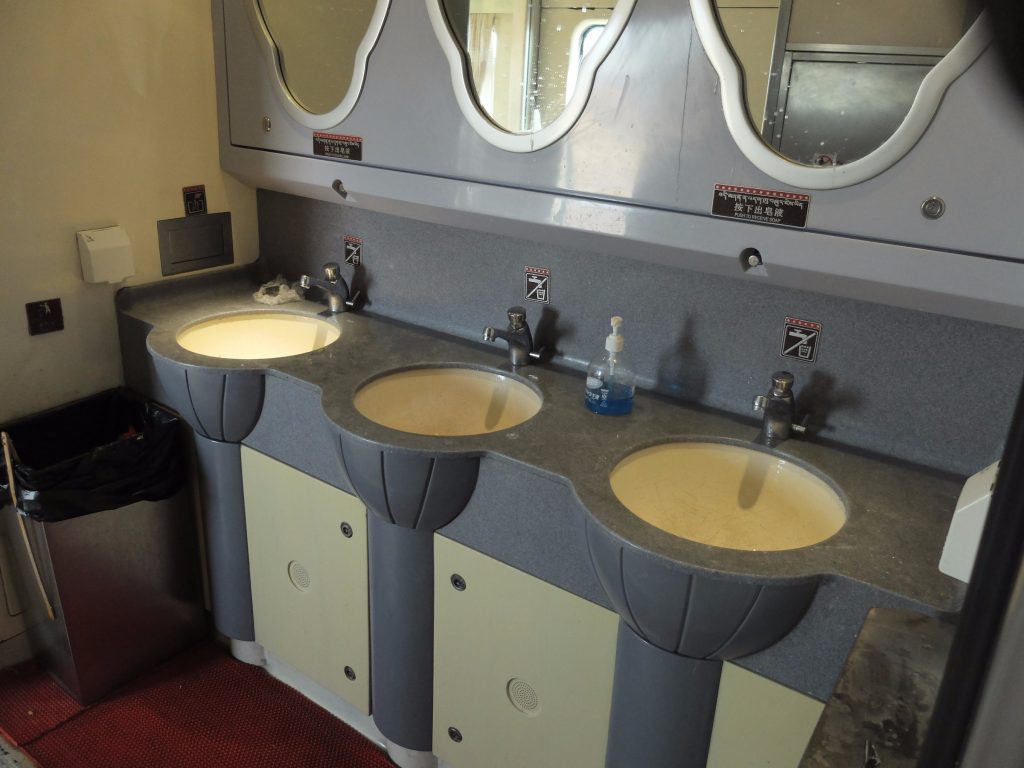
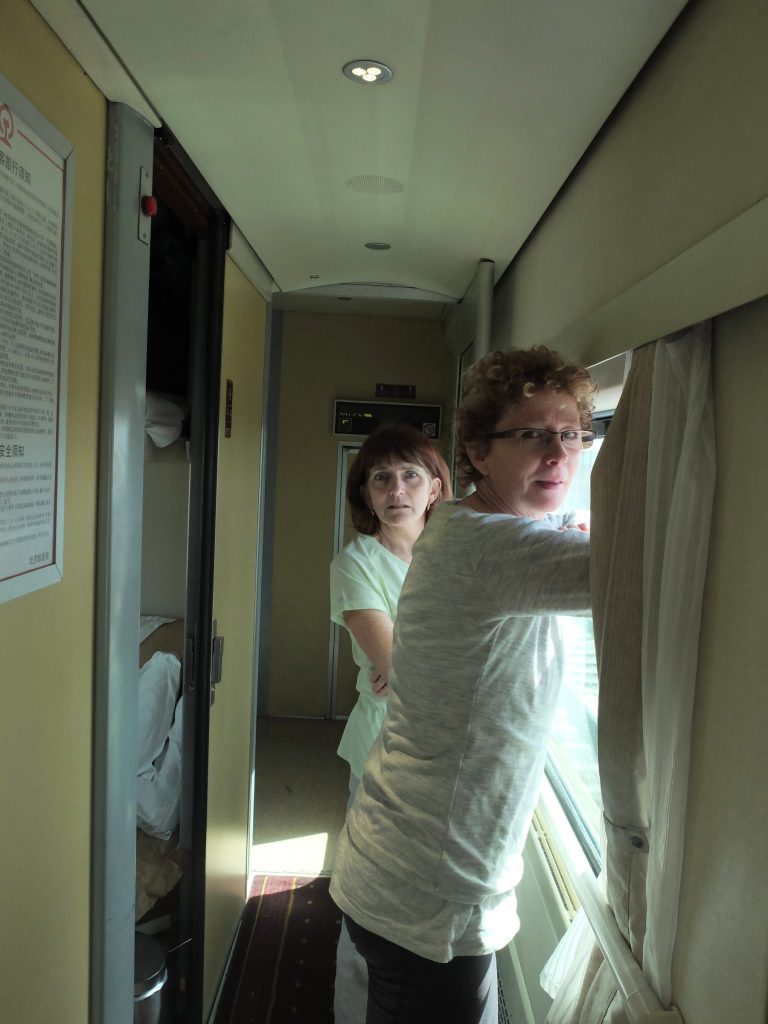
Once everything was squeezed into position, we settled in beside the toilet — perhaps not the premium location — and watched Tibet slowly disappear outside the window.
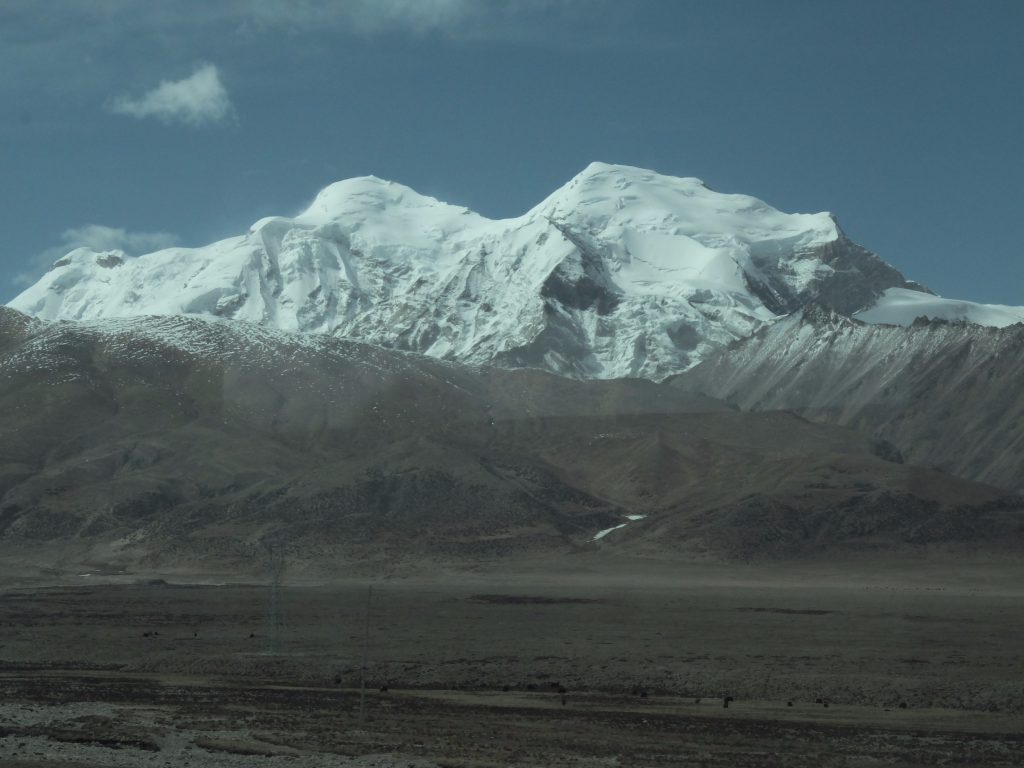
Yaks, remote villages, wolves and snow-covered mountains passed by as the train descended from the Tibetan Plateau.
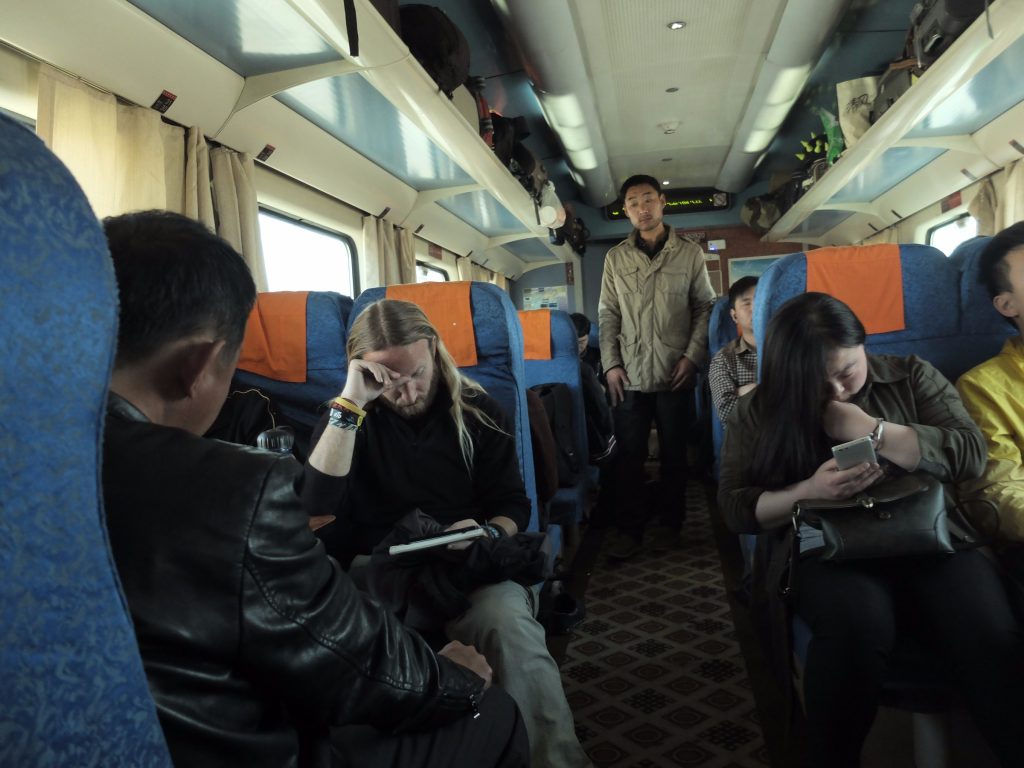
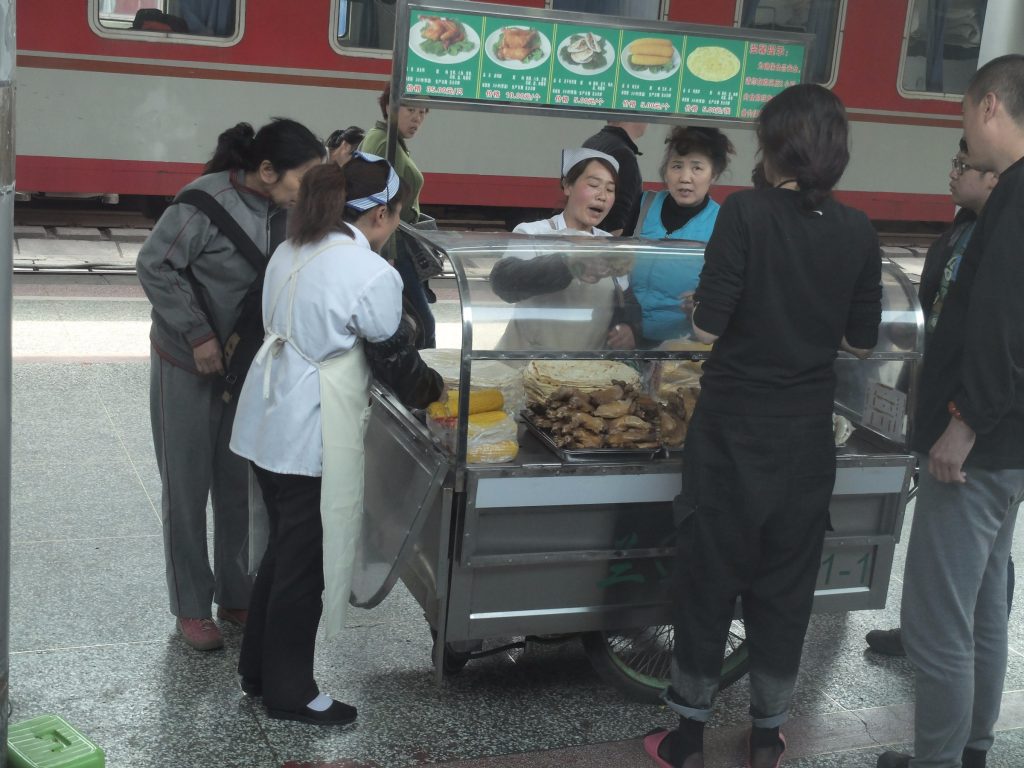
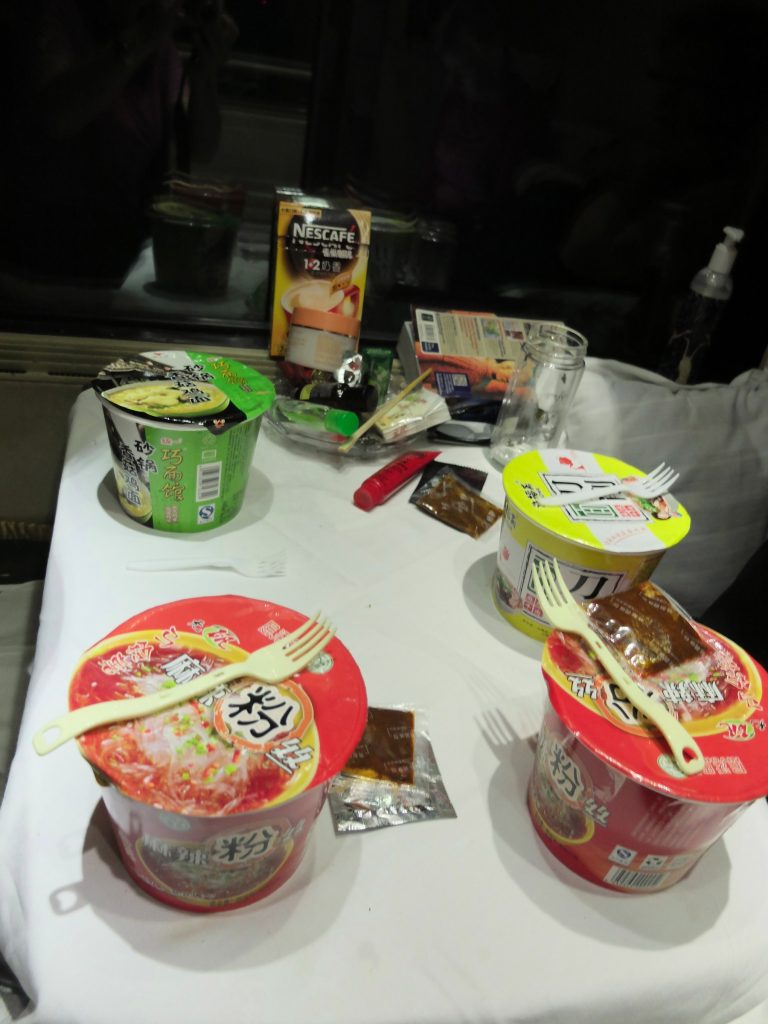
We ate junk food, talked, laughed and eventually tried to sleep while the carriage rocked and rattled through the night.
Not exactly luxury rail travel.
But definitely memorable.
April 25 — Forty Hours on the Train
We woke to cigarette smoke drifting into our supposedly non-smoking carriage and another long day ahead.
The scenery had changed completely. The mountains were mostly gone, replaced by frozen ground, broad brown plains and vast stretches of empty landscape.
To keep ourselves entertained, we invented a rule that only one activity at a time was allowed. Eating a mint counted as an activity. So did drinking tea, opening the curtains, closing the curtains and looking out the window.
We explored the train and quickly decided our first-class compartment was definitely the better option. The second-class and hard-seat carriages looked far less comfortable for such a long journey.
We spent the rest of the day talking, looking through photos and watching China pass by.
It was also ANZAC Day, so we stopped for a minute’s silence.
By evening, we were more than ready to get off the train.
April 26 — Beijing: Tiananmen, Forbidden City and Temple of Heaven
After around 40 hours on the train, we finally arrived in Beijing.
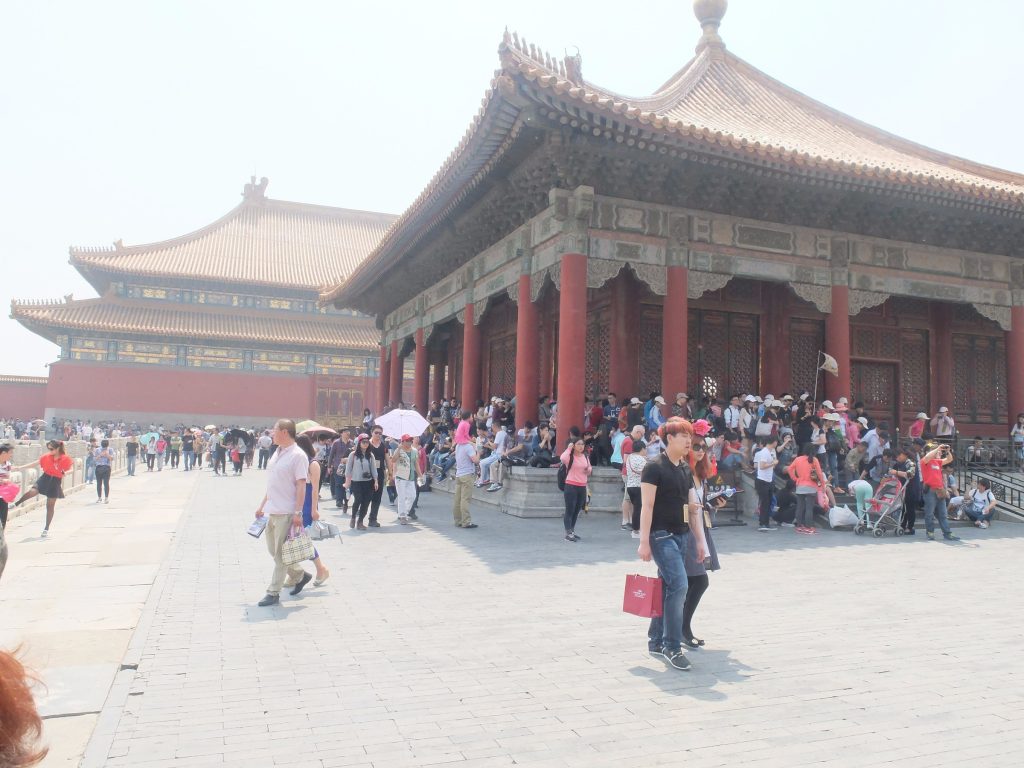
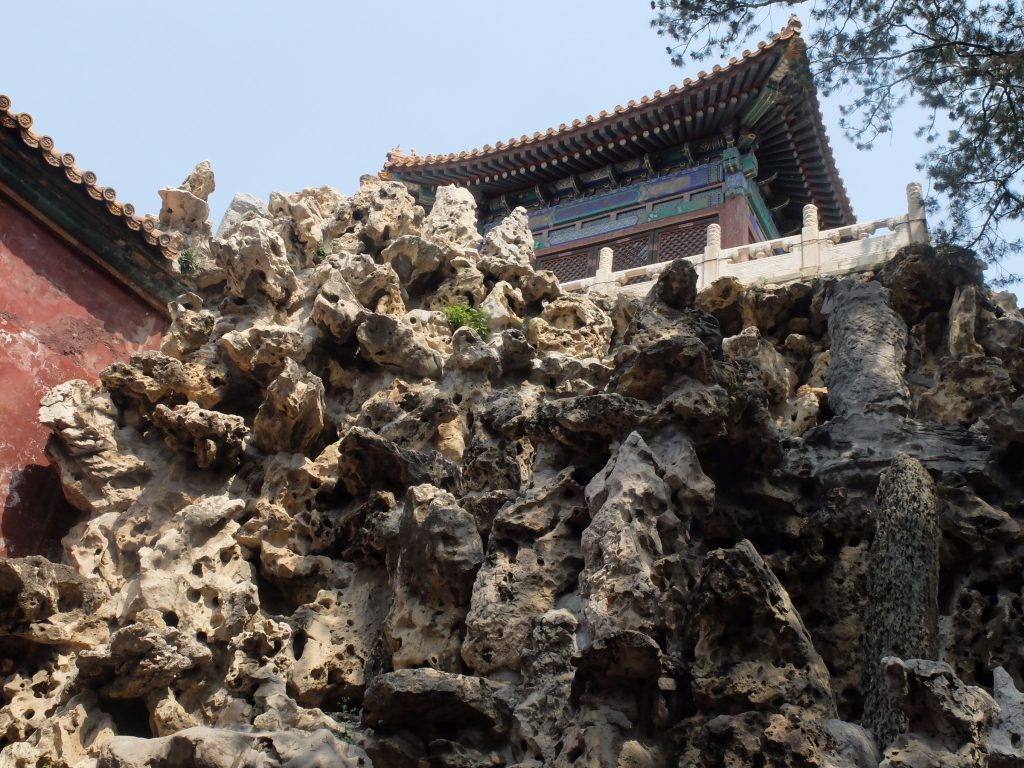
Our first stop was Tiananmen Square, heavily guarded and surrounded by security. From there we entered the enormous Forbidden City, the imperial palace complex that was home to China’s emperors for almost 500 years.
We walked through its grand gates, courtyards and halls, including the Hall of Supreme Harmony, Hall of Middle Harmony and Hall of Preserving Harmony, before reaching the Imperial Garden.
From there we climbed Jingshan Park, the artificial hill behind the Forbidden City, for a great view back over the palace roofs.
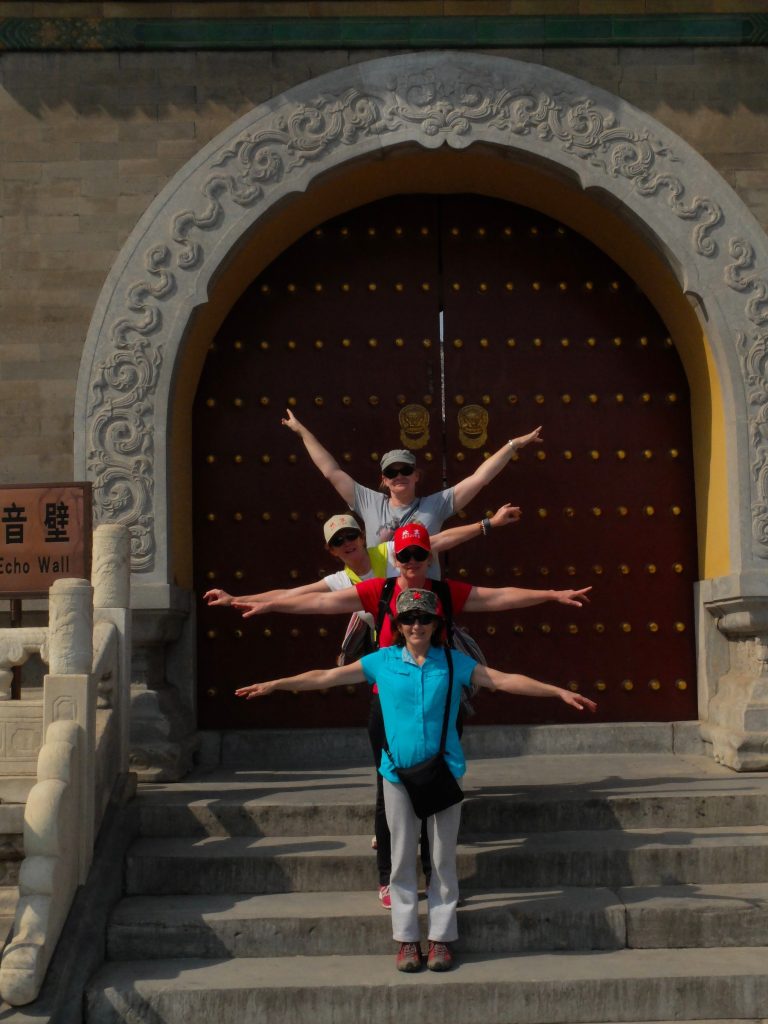
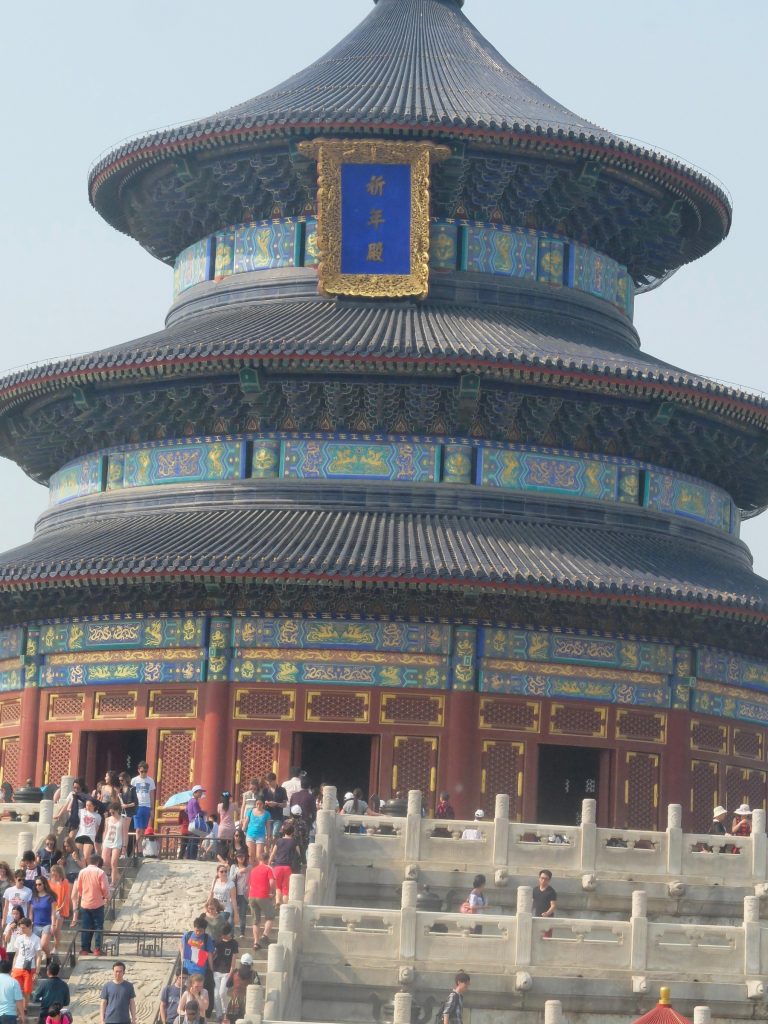
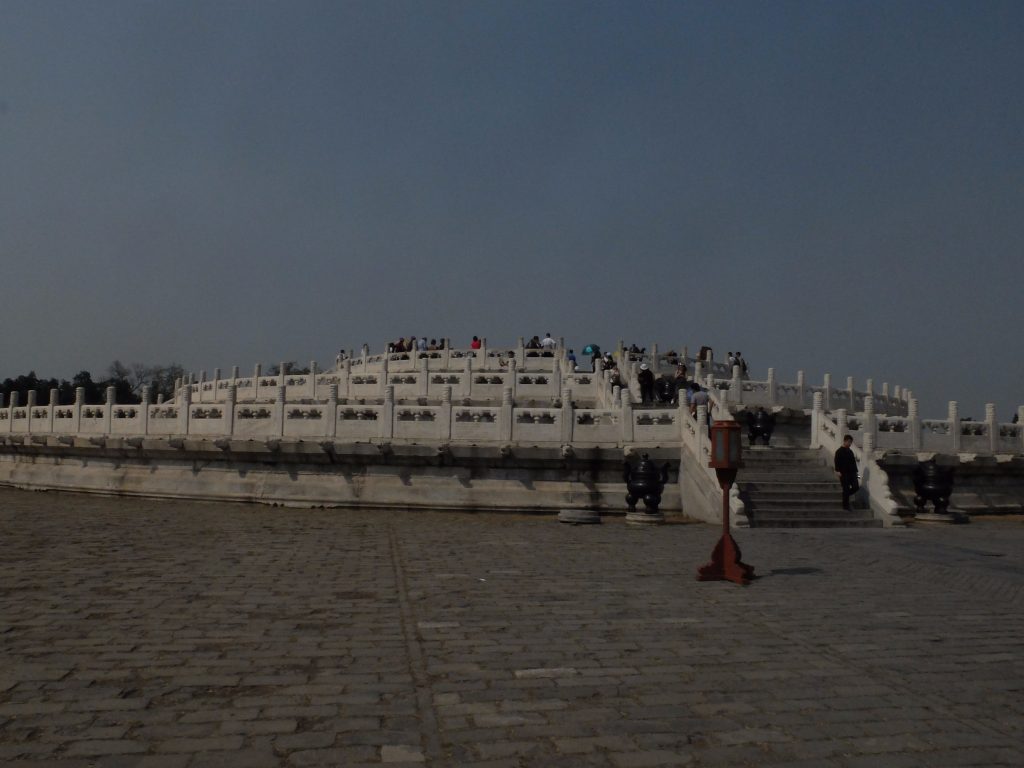
Our final stop was the Temple of Heaven, where emperors once performed ceremonies and prayed for good harvests. The magnificent circular Hall of Prayer for Good Harvests was a highlight.
After two nights on a train, a shower, wine and a proper bed were equally impressive.
April 27 — Temples, Hutongs and Beijing Streets
After a very good night’s sleep, we headed back into Beijing.
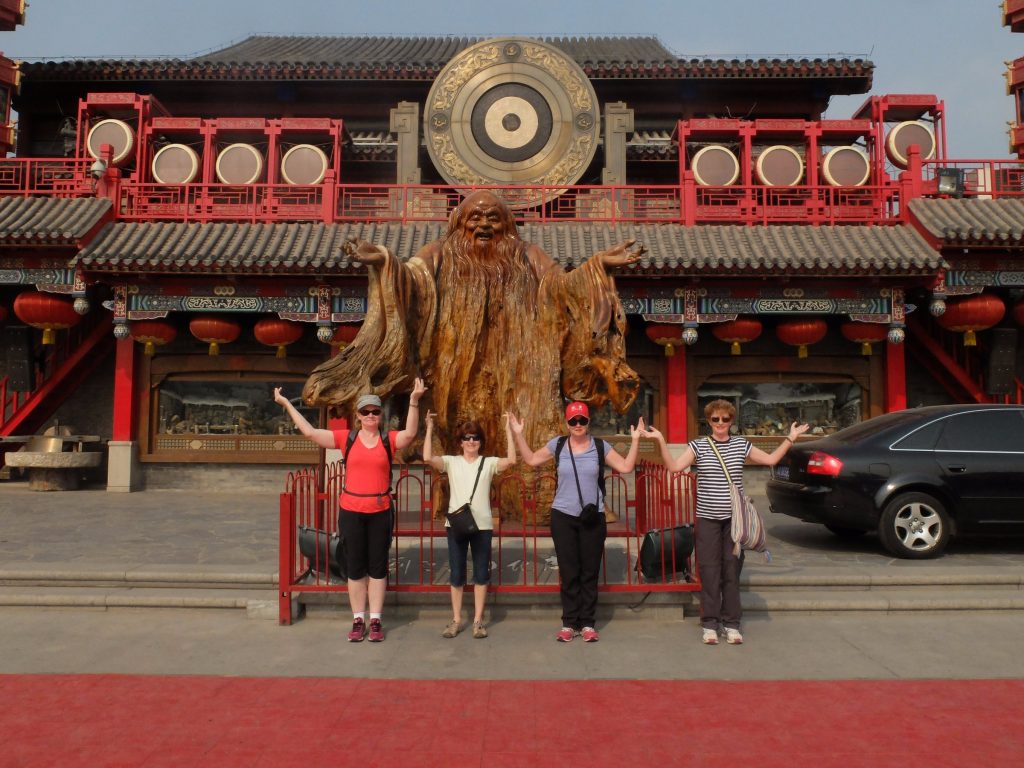
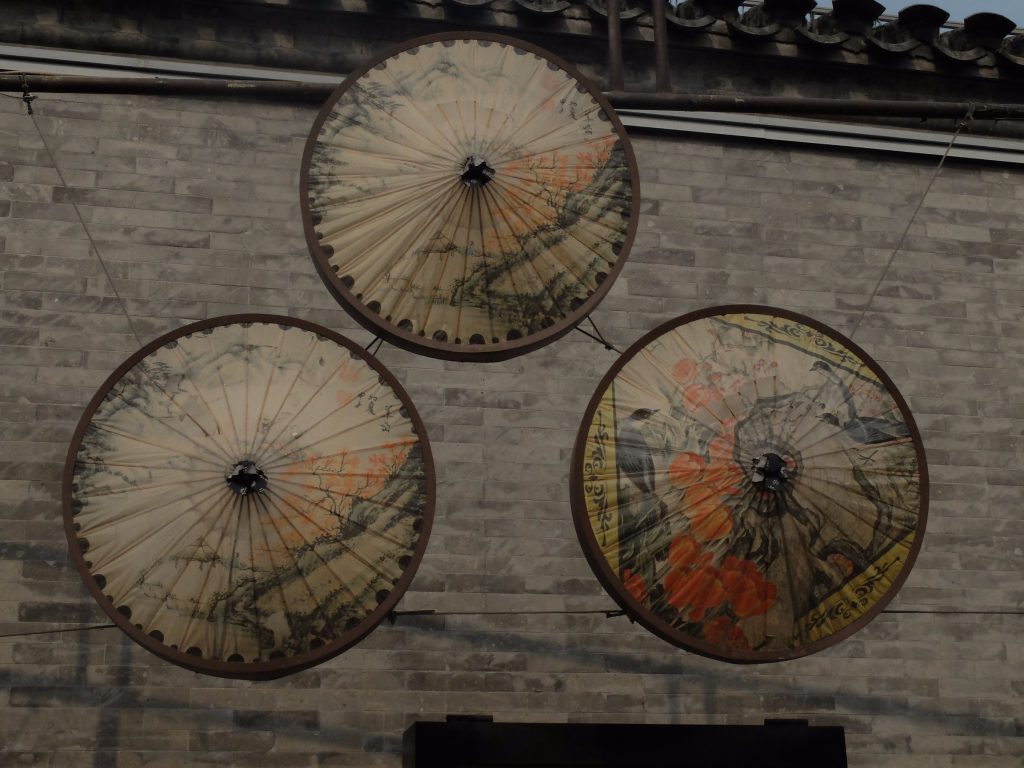
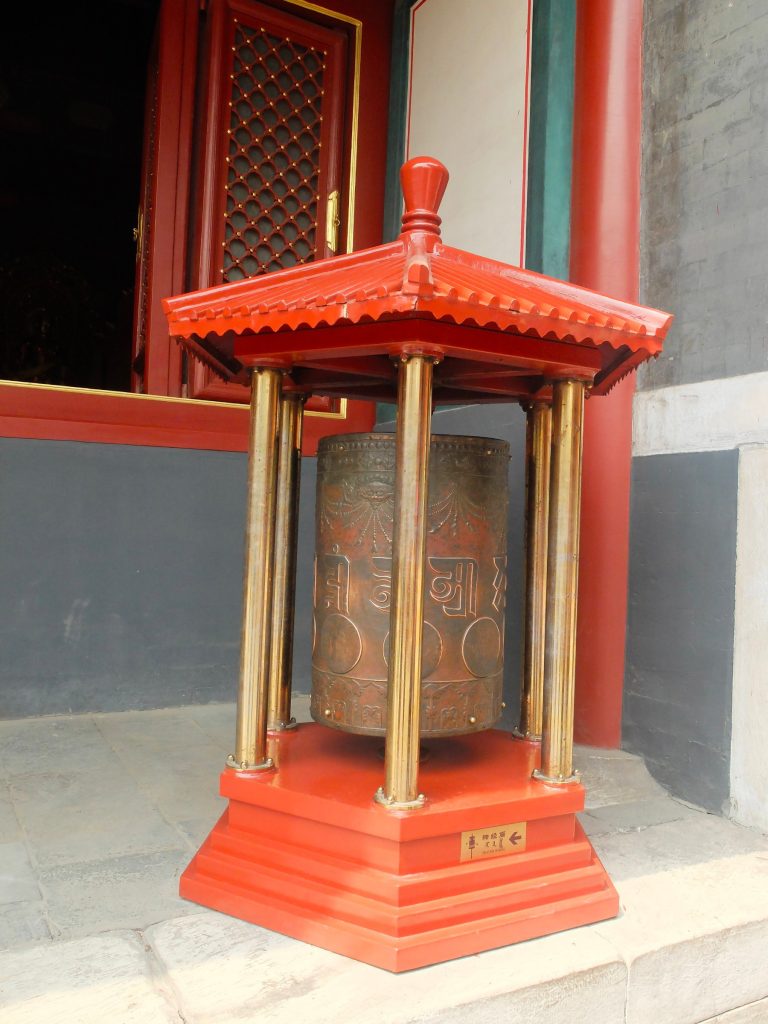
We wandered through traditional shopping streets and an area known for Chinese artists and calligraphers before visiting the Lama Temple, one of Beijing’s most important Tibetan Buddhist temples.
Its most impressive feature was an enormous Buddha carved from a single sandalwood tree.
We then walked through one of Beijing’s traditional hutong neighbourhoods and stopped for an excellent cheap dumpling lunch.
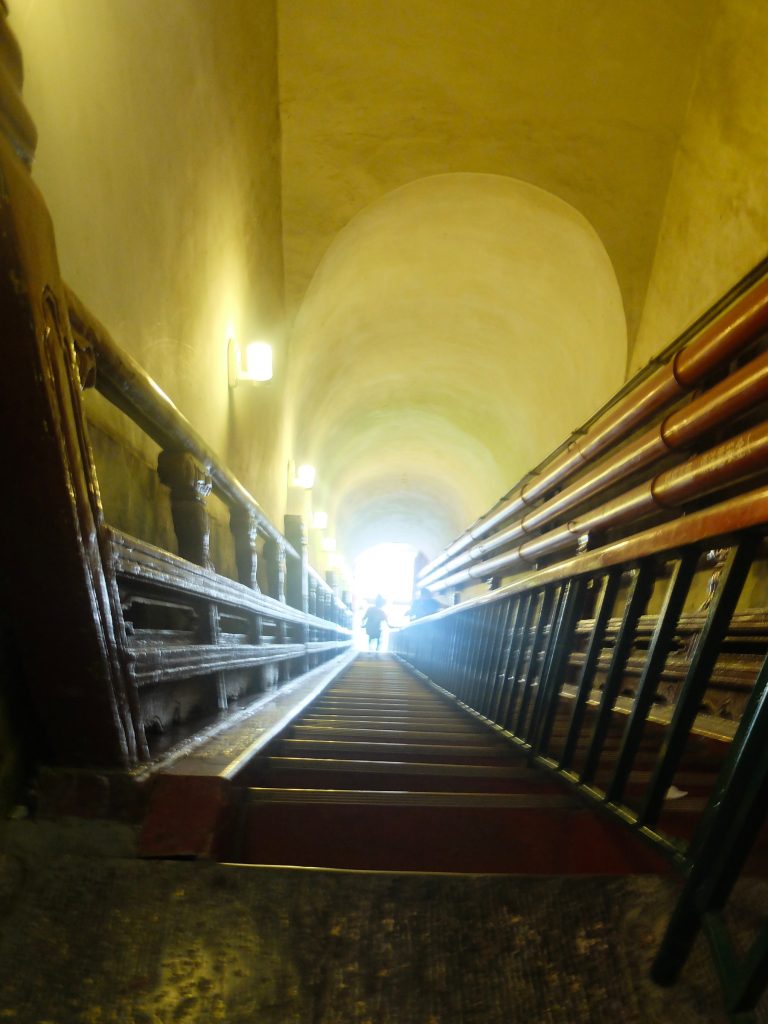
Later we climbed the Drum Tower, once part of Beijing’s official timekeeping system, for another view across the city.
We finished the day wandering around the lakes, bars and streets of central Beijing, followed by some final shopping and coffee.
After weeks of constantly moving, we were beginning to realise that the trip was almost over.
April 28 — Camping on the Great Wall
This was one of the experiences I had been looking forward to most.
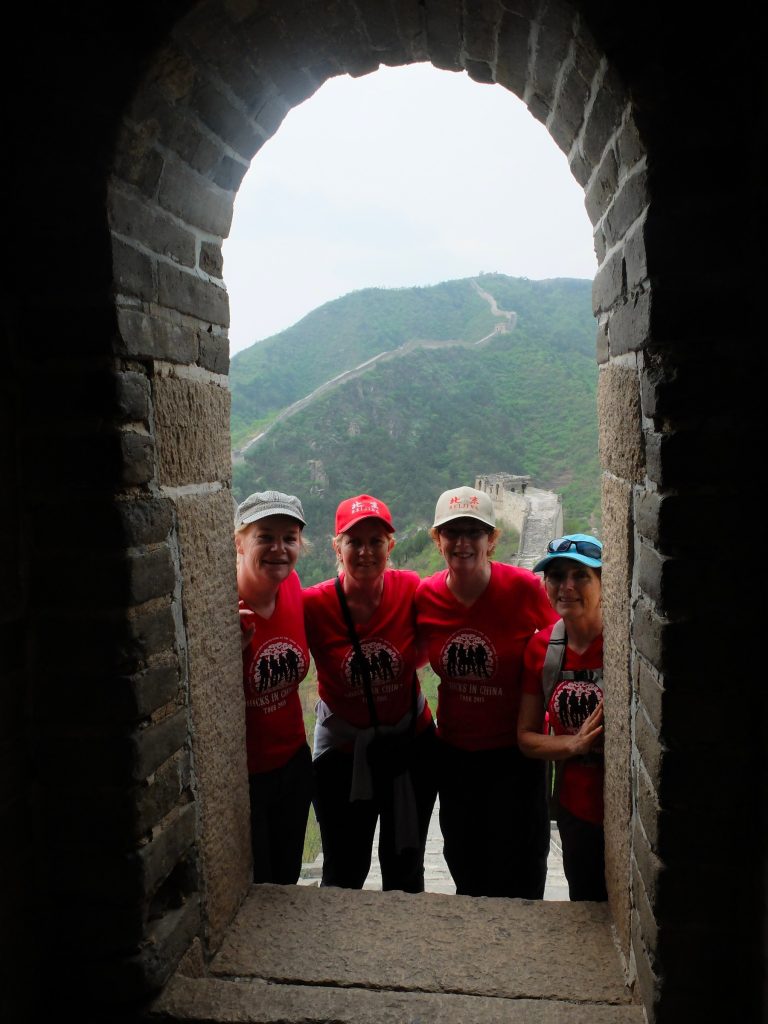
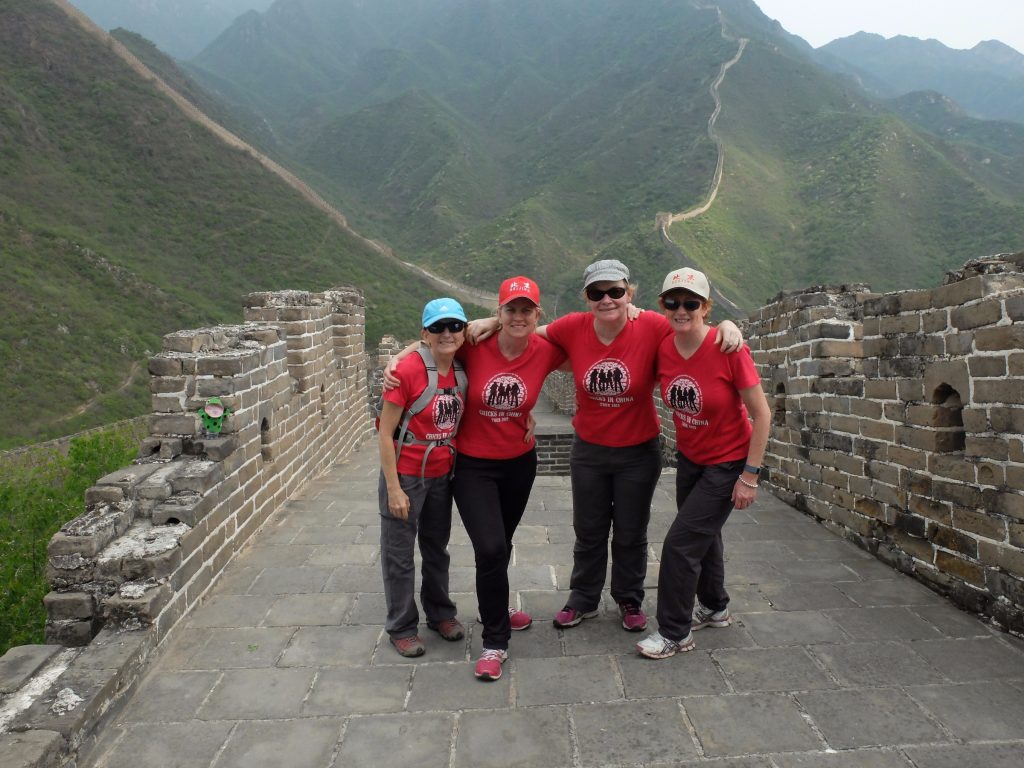
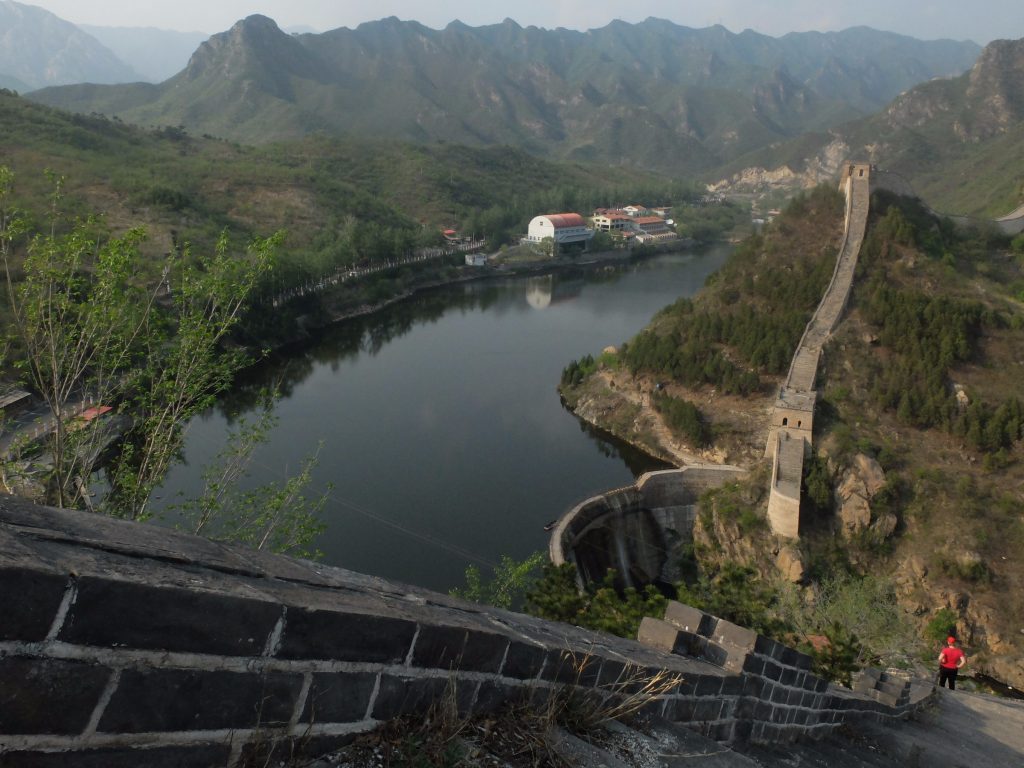
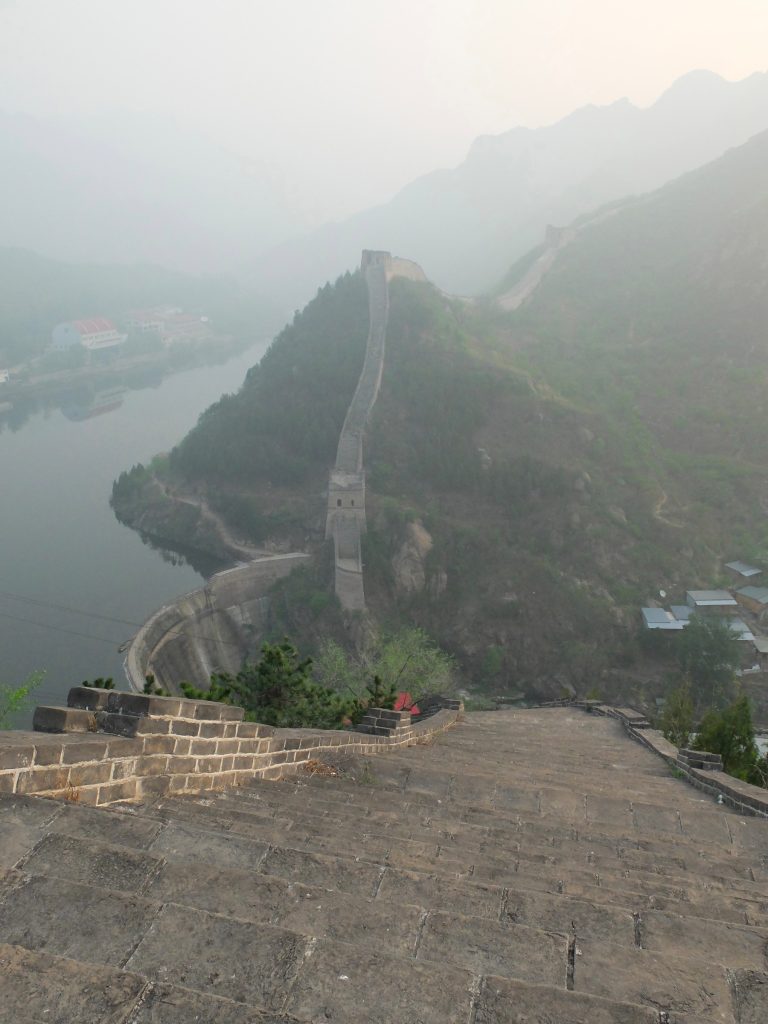
We drove around two hours from Beijing to a quieter section of the Great Wall, where it stretched across the mountains like the spine of some enormous creature.
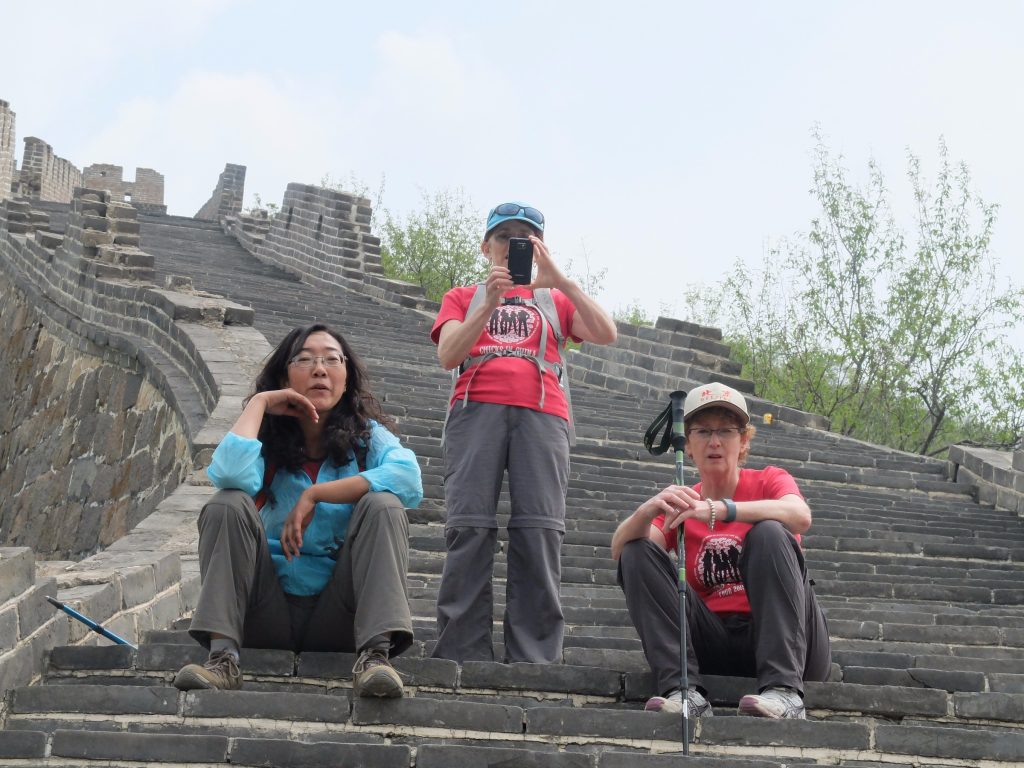
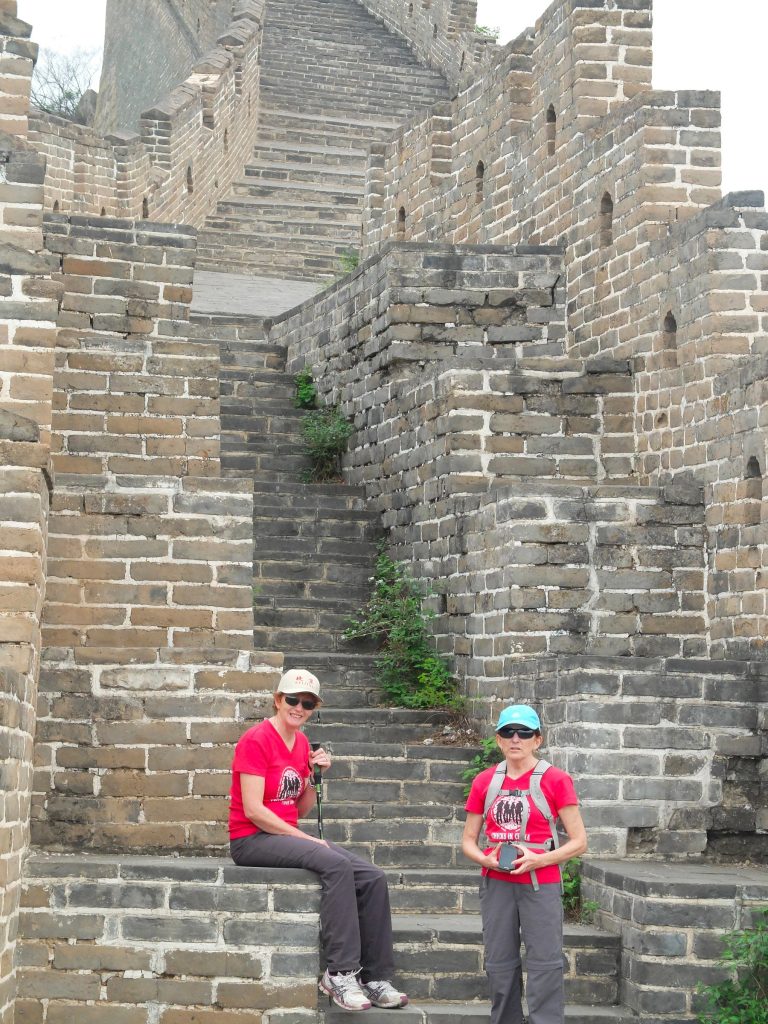
The climb was hard. The steps were steep, uneven and relentless, and parts of the wall seemed to head almost vertically up the ridge. We eventually reached a watchtower with incredible views across the mountains and sat watching the shadows move across the landscape.
After lunch at a small guesthouse, we went into the nearest village looking for wine to celebrate. The local shop didn’t sell any, so the owner sold us a bottle from his own collection, then rode off on his scooter to borrow a bottle opener.
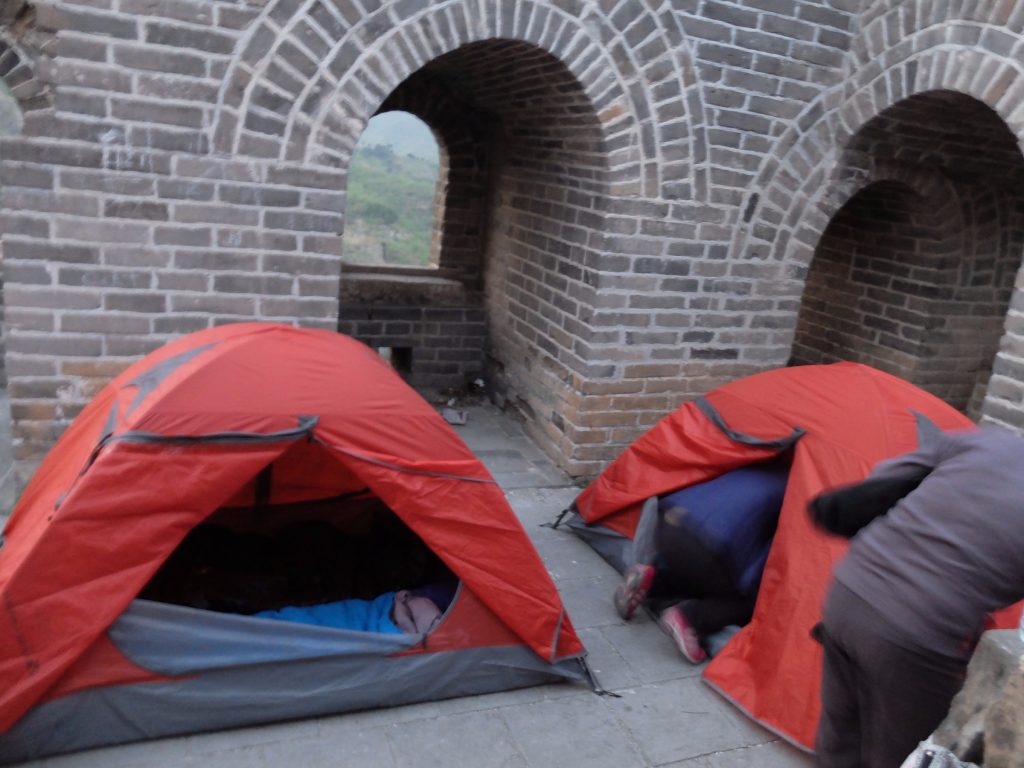
That evening we carried our camping gear back onto the wall and set up inside the first watchtower.
Chinese takeaway, wine, silence and the Great Wall almost entirely to ourselves.
The tent was definitely no Novotel, but it was one of the best nights of the trip.
April 29 — Sunrise, Olympic Park and Summer Palace
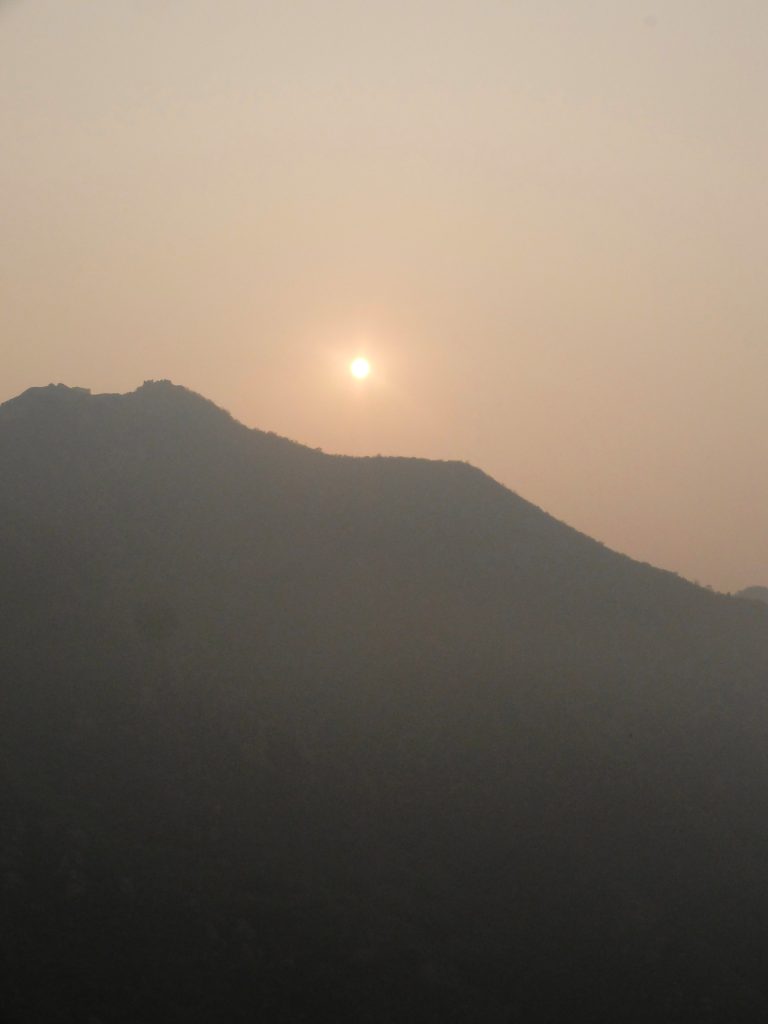
We woke just after sunrise to mist hanging over the mountains and the Great Wall disappearing into the distance.
Not a bad view from a tent.
After packing up, we returned to Beijing and stopped at the 2008 Olympic Park, where we saw the Bird’s Nest Stadium and the Water Cube.
Then it was on to the magnificent Summer Palace.
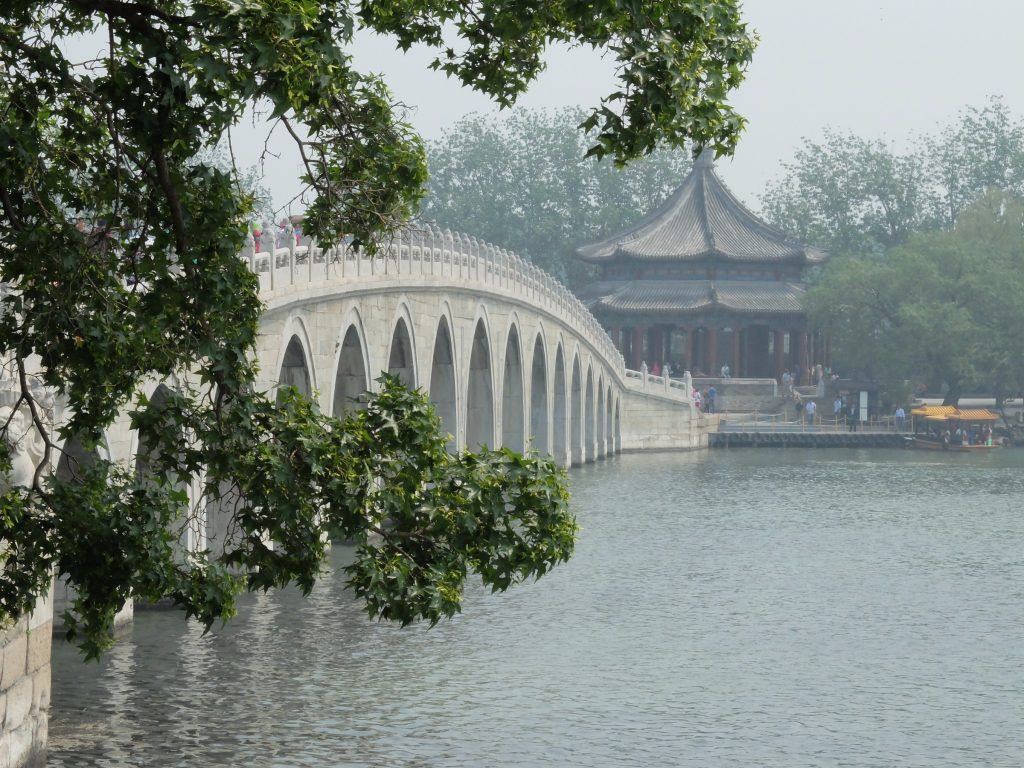
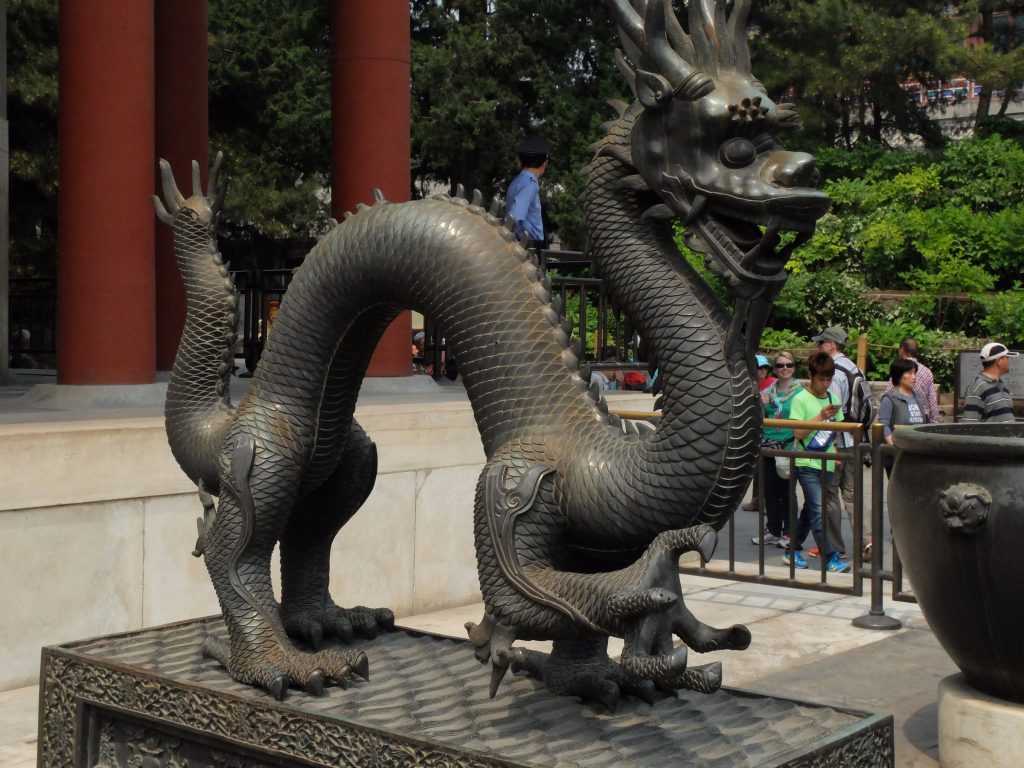
Built around the enormous Kunming Lake, the palace was used as an imperial retreat from Beijing’s summer heat. We walked along the beautifully painted Long Corridor, explored the gardens and crossed the Seventeen-Arch Bridge to South Lake Island.
There was far more to see than we had time for.
That afternoon we squeezed in some final shopping before finishing the day with one essential Beijing experience — Peking duck.
April 30 — Home
Our final morning arrived with mixed feelings.
We had considered visiting Mao’s Mausoleum, then realised none of us actually wanted to go.
So we went shopping instead.
A few final gifts, one last bakery stop and a final coffee later, we were heading for the airport.
There were more luggage inspections, confiscated chargers, confusing connections in Guangzhou and a delayed flight, because apparently the trip wasn’t going to let us leave without one last bit of chaos.
Eventually we made it back to Sydney and finally home.
One month. Four friends.
Shanghai, the Yangtze, Sichuan, pandas, Guilin, Xi’an, Tibet, a 40-hour train ride, Beijing and a night sleeping on the Great Wall.
An epic trip, some ridiculous moments and an enormous number of stories.
And, somehow, the Chicks in China were still friends.